Lightning Protection for Distribution Transformers: Arrester Installation Position Analysis
In China's economic development, the power system holds an extremely important position. Transformers, as devices utilizing electromagnetic induction to convert AC voltage and current, represent a crucial component of the power system. Lightning damage to distribution transformers is quite common, particularly significant in humid tropical areas with frequent lightning activity. A research team has proposed that Y/Z0 connected distribution transformers demonstrate better lightning protection performance than Y/Y0 connected transformers.
Y/Z0 transformers are therefore more suitable for lightning-prone regions. Consequently, lightning protection for distribution transformers should not solely rely on arresters installed on the high-voltage side; protective measures on the low-voltage side must also be strengthened. Installing a set of FYS-0.22 zinc oxide low-voltage arresters on the low-voltage side is an effective method to prevent lightning waves from intruding along low-voltage power lines. This article discusses the installation position of arresters on the high-voltage side of distribution transformers, aiming to enhance the professional knowledge of electrical design engineers.
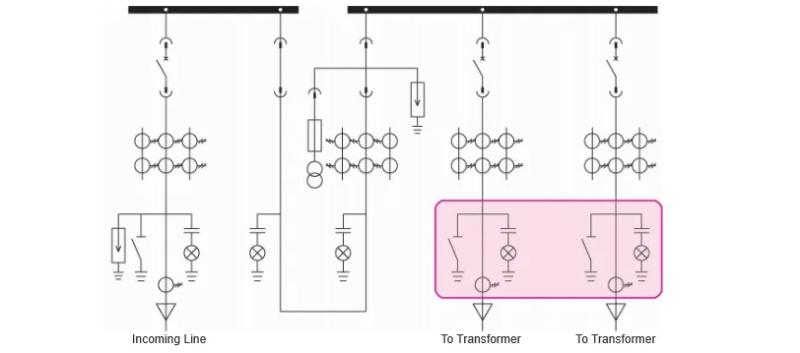
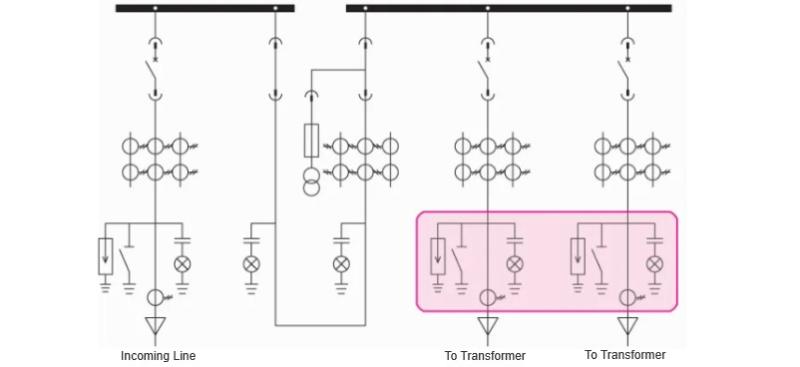
Problem Description and Impacts: In high-voltage distribution system diagrams, the installation position of surge arresters on the high-voltage side of distribution transformers with Yyn0 or Dyn11 connections is often improper, as shown in Figure (a), rendering them ineffective in protecting the transformer's high-voltage winding.
Cause Analysis:
The misunderstanding stems from the requirement that "lightning arresters shall be installed on the high-voltage side of distribution transformers with Yyn0 or Dyn11 connections when located inside a building or attached to its exterior wall." In reality, when "distribution transformers with Yyn0 or Dyn11 connections are installed within a building or attached to its exterior wall," a lightning strike to the building's lightning protection system causes potential rise in the grounding system, which consequently raises the potential of the transformer enclosure.
Since the phase windings on the transformer's high-voltage side are interconnected, they can be considered at the same low potential relative to the high lightning-induced potential on the enclosure. This high potential on the enclosure may break down the insulation of the high-voltage windings. Therefore, arresters must be installed on the high-voltage side. When the arrester flashes over, the high-voltage windings will be at a potential close to that of the enclosure, thus protecting the windings (excerpted from explanatory notes of clause 5, section 4.3.8 of the Code for Design Protection of Structures Against Lightning GB50057-2010).
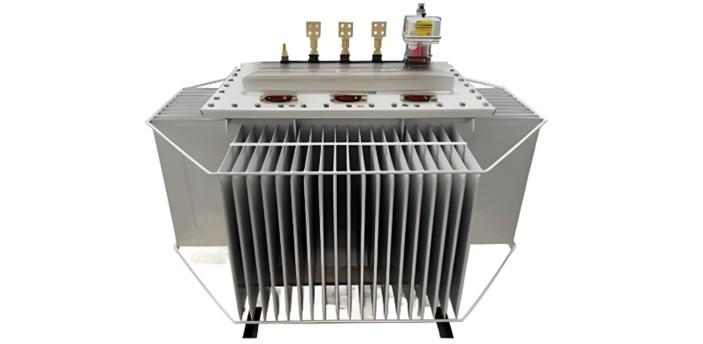
Article 5.5.1 of the Design Code for Overvoltage Protection and Insulation Coordination of AC Electrical Installations GB/T50064-2014 also stipulates: "Metal oxide arresters (MOAs) shall be installed close to the transformer on the high-voltage side of distribution transformers in 10~35kV distribution systems. The grounding conductor of this MOA shall be connected together with the transformer metal enclosure for common grounding."
Corrective Measures:
In high-voltage distribution system diagrams, lightning arresters for distribution transformers with Yyn0 or Dyn11 connections should be installed between the transformer's high-voltage side and the last-stage isolating switch.