• Product
  • Suppliers
  • Manufacturers
  • Solutions
  • Free tools
  • Knowledges
  • Experts
  • Communities
Search


The effect of misplaced coil sets

Encyclopedia
Field: Encyclopedia
0
China

Placing a coil group in the wrong position can have a number of adverse effects on the functionality and safety of the device, depending on the role of the coil group and the type of device on which it is located. Here are some possible effects:


Electrical performance problem


  • Reduced magnetic flux: If the coil is not positioned correctly, it may lead to reduced magnetic flux, affecting the efficiency of the transformer or motor.


  • Magnetic field asymmetry: The wrong position can lead to magnetic field asymmetry, which in turn affects the overall performance of the device, such as torque fluctuations in the motor.


  • Incorrect induction voltage: In a transformer or inductor, the incorrect position of the coil will lead to incorrect induction voltage and affect the output voltage.


Overheating and loss of efficiency


  • Overheating: The wrong coil arrangement may cause local overheating due to uneven current density distribution or improper magnetic field distribution.


  • Reduced efficiency: Due to uneven magnetic field distribution, the overall efficiency of the device may decrease, resulting in more energy loss.


Mechanical problem


  • Increased vibration and noise: In a motor or generator, the wrong placement of coils can lead to increased mechanical vibration and produce noise.


  • Mechanical stress: The wrong location can cause uneven distribution of mechanical stress, causing excessive wear or damage to certain components.


Safety hazard


  • Insulation damage: Improper placement of coils may cause damage to the insulation layer, resulting in short circuit or leakage.


  • Fire risk: Fire may occur due to overheating or damage to insulation.


  • Electric shock hazard: If the coil is not properly installed, live parts may be exposed, increasing the risk of electric shock.


Functional failure


  • Control failure: In a control system, such as a sensor or actuator, a misplaced coil may result in loss or instability of the control signal.


  • Signal interference: Coil placement errors may introduce additional electromagnetic interference, affecting the quality of signal transmission.


Difficult to repair and maintain


  • Accessibility: Misplaced coils can make later repairs and maintenance more difficult because they are not easily accessible.


  • Replacement cost: The cost of replacing a coil can be high if the wrong position of the coil group causes the device to fail.


Illustrate by example


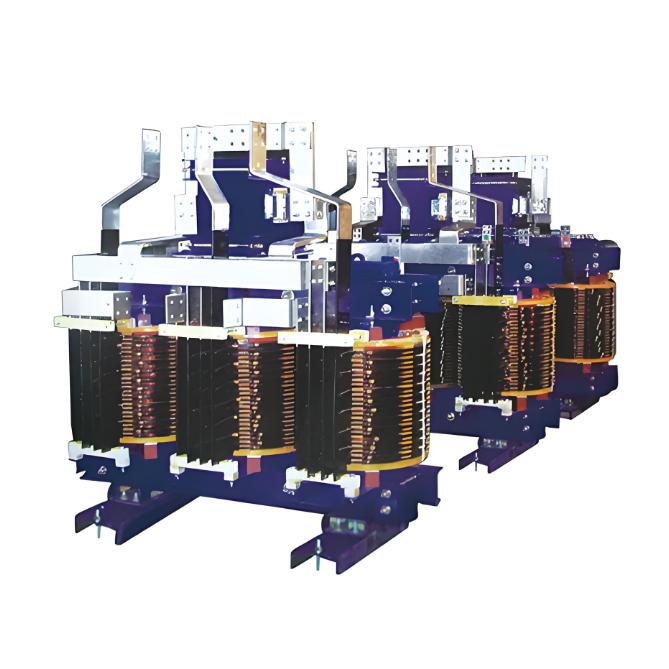
  • Transformer: If the coil in the transformer is placed incorrectly, it may cause the output voltage to be unstable or not reach the expected value.


  • Electric motors: Incorrect coil position in electric motors can cause torque fluctuations, reduced efficiency, and premature wear.


Sum up


Placing the coil group in the wrong position can result in reduced electrical performance, overheating, reduced efficiency, mechanical problems, safety hazards, and functional failures. The correct installation of the coil is the key to ensure the proper operation of the equipment.
Give a tip and encourage the author!

Recommended

Why Must a Transformer Core Be Grounded at Only One Point? Isn't Multi-Point Grounding More Reliable?
Why Does the Transformer Core Need to Be Grounded?During operation, the transformer core, along with the metal structures, parts, and components that fix the core and windings, are all situated in a strong electric field. Under the influence of this electric field, they acquire a relatively high potential with respect to ground. If the core is not grounded, a potential difference will exist between the core and the grounded clamping structures and tank, which may lead to intermittent discharge.I
01/29/2026
What’s the Difference Between Rectifier Transformers and Power Transformers?
What is a Rectifier Transformer?"Power conversion" is a general term encompassing rectification, inversion, and frequency conversion, with rectification being the most widely used among them. Rectifier equipment converts input AC power into DC output through rectification and filtering. A rectifier transformer serves as the power supply transformer for such rectifier equipment. In industrial applications, most DC power supplies are obtained by combining a rectifier transformer with rectifier equ
01/29/2026
How to Judge, Detect and Troubleshoot Transformer Core Faults
1. Hazards, Causes, and Types of Multi-Point Grounding Faults in Transformer Cores1.1 Hazards of Multi-Point Grounding Faults in the CoreUnder normal operation, a transformer core must be grounded at only one point. During operation, alternating magnetic fields surround the windings. Due to electromagnetic induction, parasitic capacitances exist between the high-voltage and low-voltage windings, between the low-voltage winding and the core, and between the core and the tank. The energized windin
01/27/2026
A Brief Discussion on the Selection of Grounding Transformers in Boost Stations
A Brief Discussion on the Selection of Grounding Transformers in Boost StationsThe grounding transformer, commonly referred to as "grounding transformer," operates under the condition of being no-load during normal grid operation and overloaded during short-circuit faults. According to the difference in filling medium, common types can be divided into oil-immersed and dry-type; according to phase number, they can be classified into three-phase and single-phase grounding transformers. The groundi
01/27/2026
Related Products
Send inquiry
+86
Click to upload file
Download
Get the IEE Business Application
Use the IEE-Business app to find equipment, obtain solutions, connect with experts, and participate in industry collaboration anytime, anywhere—fully supporting the development of your power projects and business.