• Product
  • Suppliers
  • Manufacturers
  • Solutions
  • Free tools
  • Knowledges
  • Experts
  • Communities
Search


Backup Protection of Transformers

Encyclopedia
Field: Encyclopedia
0
China

Backup Protection


These over current and earth Fault relays may be of Inverse Definite Minimum Time (IDMT) or Definite Time type relays (DMT). Generally IDMT relays are connected to the in-feed side of the transformer.


Overcurrent relays cannot differentiate between external short circuits, overloads, and internal faults of the transformer. Backup protection, using overcurrent and earth fault protection on the in-feed side, will activate for any of these faults.


Backup protection is usually installed on the in-feed side of the transformer, but it should trip both the primary and secondary circuit breakers.


Overcurrent and earth fault protection relays can also be placed on the load side of the transformer. However, they should not trip the primary side circuit breaker like the backup protection on the in-feed side.

cdee03ff02852655108ee5021de6afcc.jpeg


The operation of these relays is governed by current and time settings, along with the relay’s characteristic curve. This allows the use of the transformer overload capacity and coordination with other relays at about 125% to 150% of the full load current, but below the minimum short circuit current.


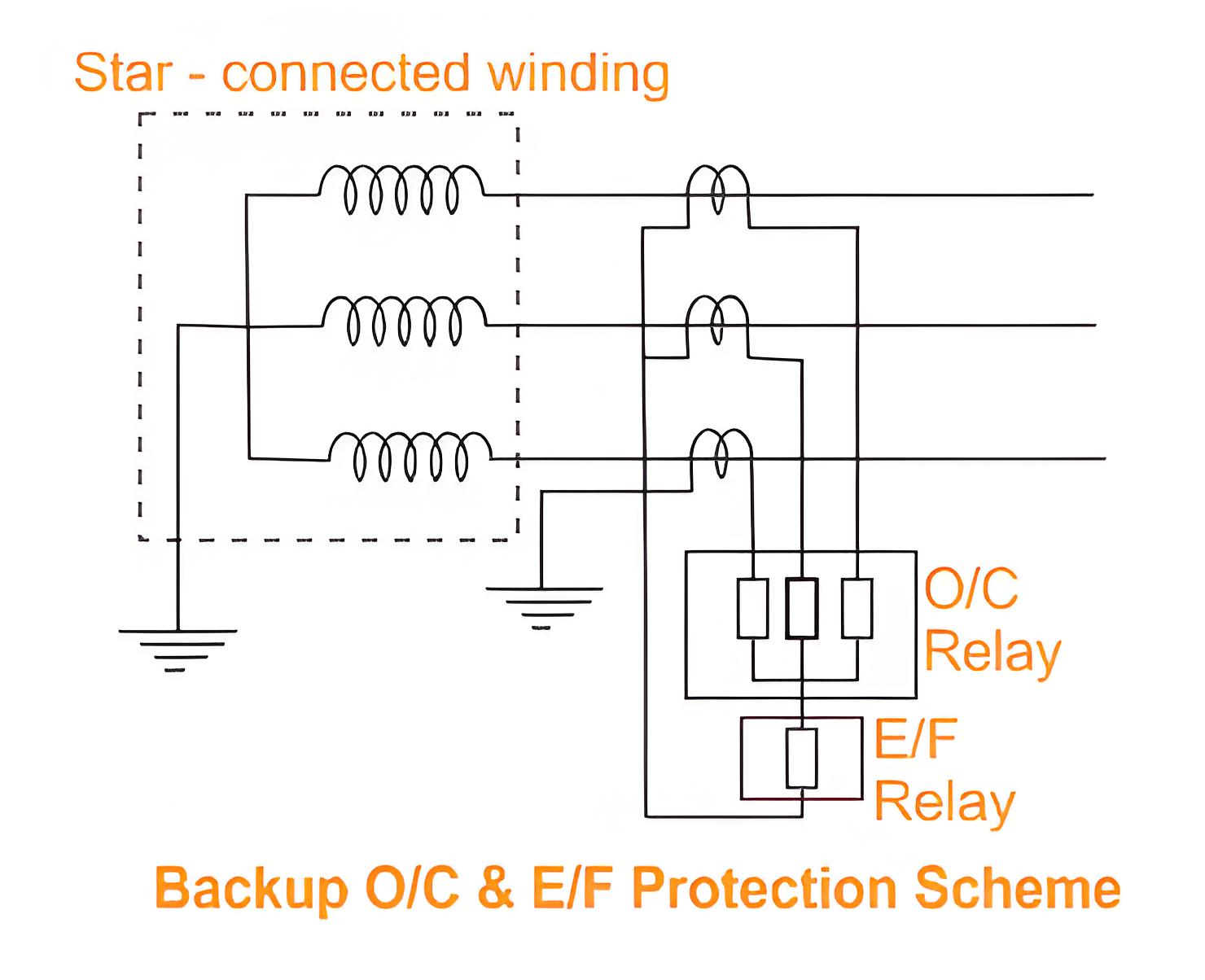
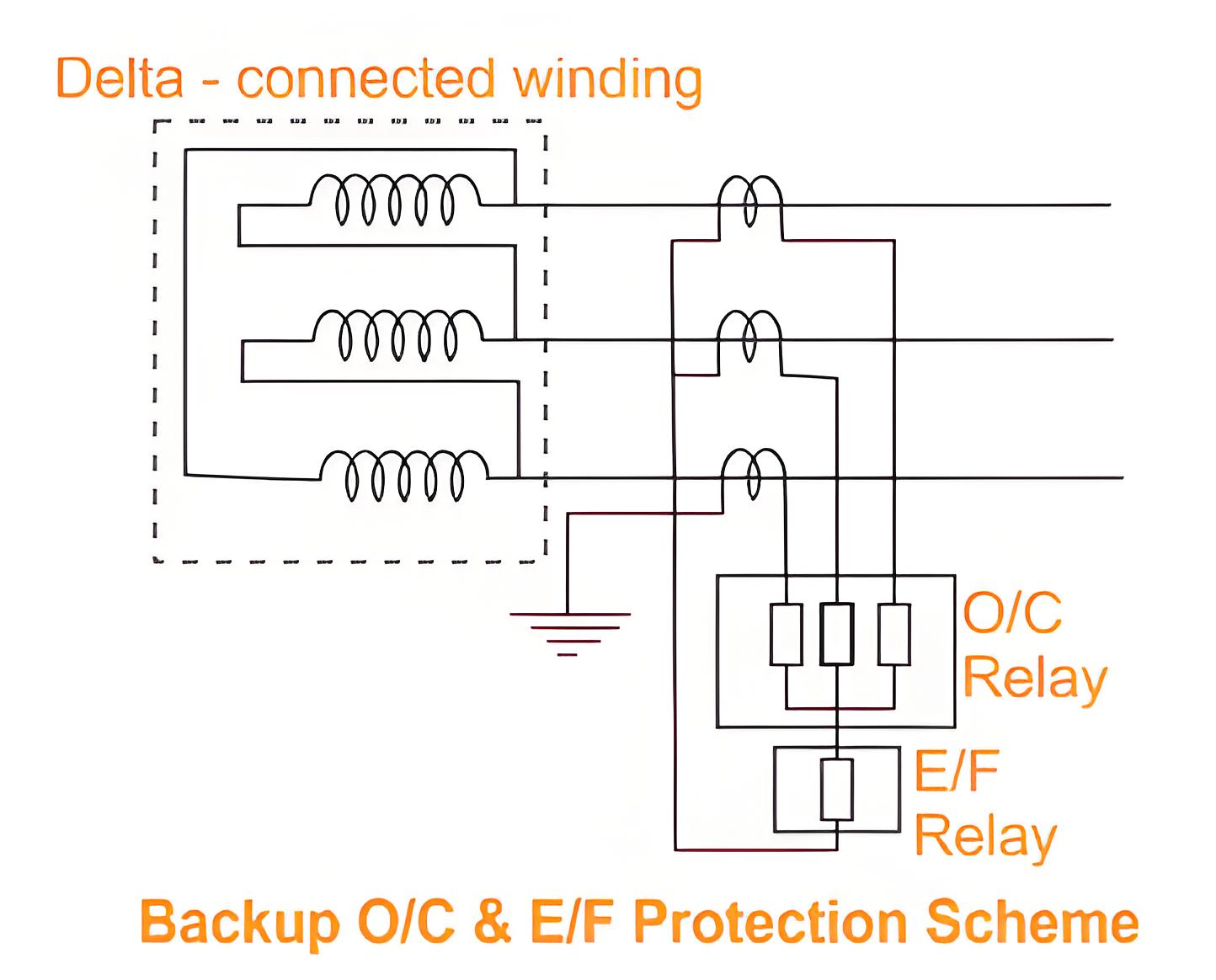
Backup protection of transformer has four elements; three over current relays connected each in each phase and one earth fault relay connected to the common point of three over current relays as shown in the figure. The normal range of current settings available on IDMT over current relays are 50% to 200% and on earth fault relay 20 to 80%.

79f414174e9cad8209407c8c5b242dbf.jpeg


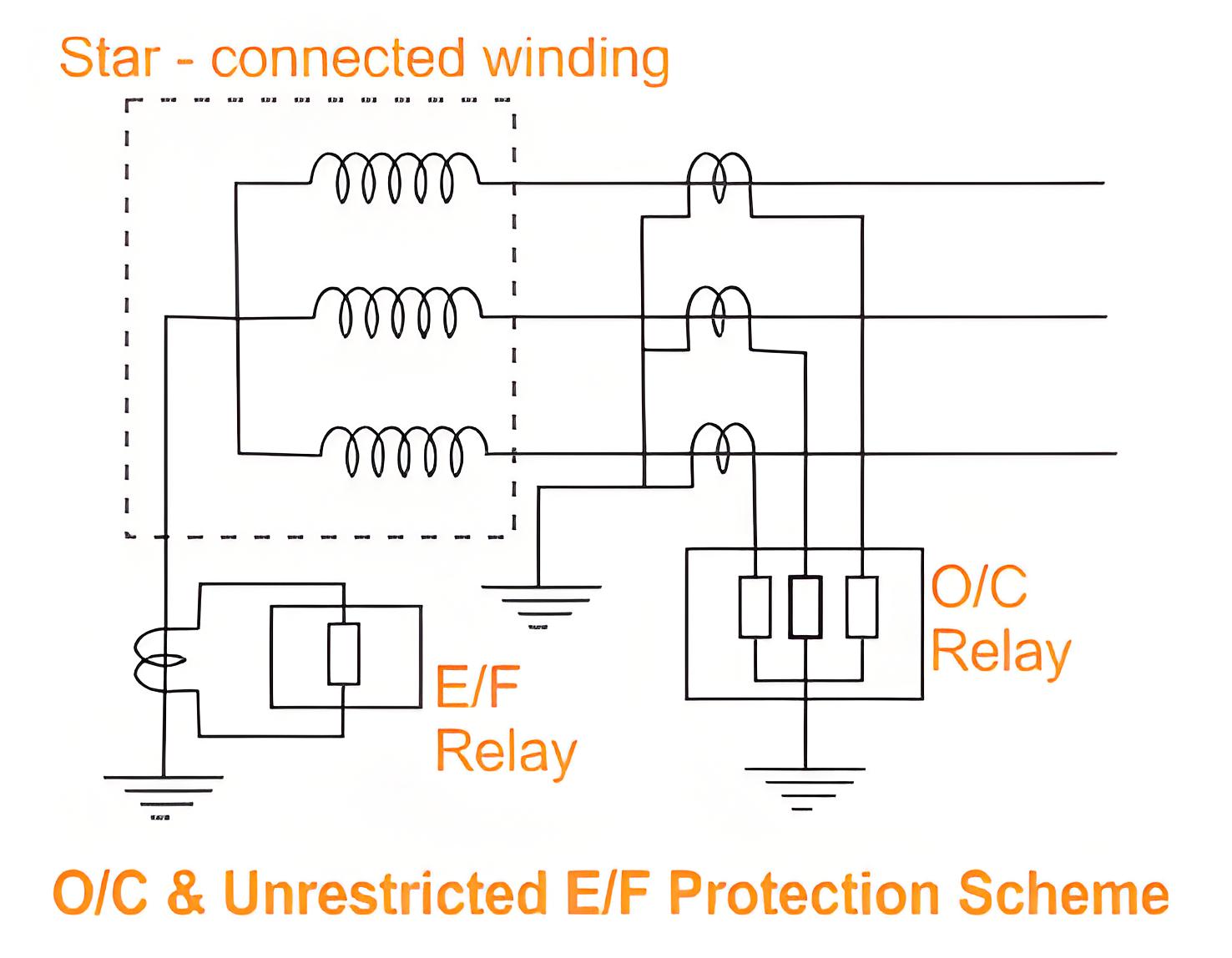
Another range of setting on earth fault relay is also available and may be selected where the earth fault current is restricted due to insertion of impedance in the neutral grounding. In the case of transformer winding with neutral earthed, unrestricted earth fault protection is obtained by connecting an ordinary earth fault relay across a neutral current transformer.


The unrestricted over current and earth fault relays should have proper time lag to co-ordinate with the protective relays of other circuit to avoid indiscriminate tripping.
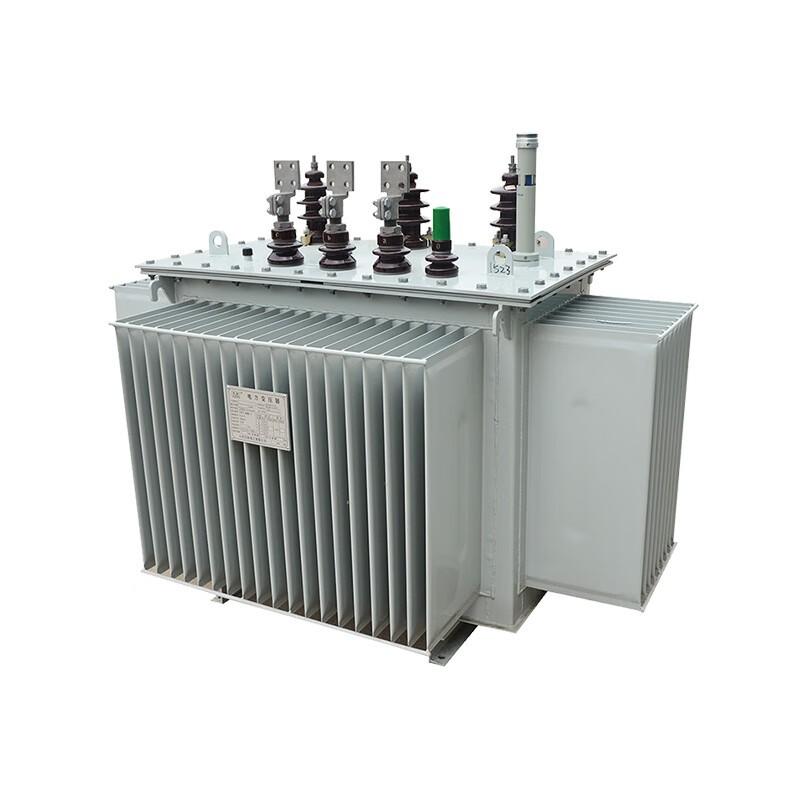
ad29a30f06d76eb298c0e47e72b60ed5.jpeg


Give a tip and encourage the author!

Recommended

Analysis of Lightning Protection Measures for Distribution Transformers
Analysis of Lightning Protection Measures for Distribution TransformersTo prevent lightning surge intrusion and ensure the safe operation of distribution transformers, this paper presents applicable lightning protection measures that can effectively enhance their lightning withstand capability.1. Lightning Protection Measures for Distribution Transformers1.1 Install surge arresters on the high-voltage (HV) side of the distribution transformer.According to SDJ7–79 Technical Code for Overvol
12/24/2025
Transformer Protection Settings: Zero-Sequence & Overvoltage Guide
1. Zero-Sequence Overcurrent ProtectionThe operating current for zero-sequence overcurrent protection of grounding transformers is typically determined based on the transformer's rated current and the maximum allowable zero-sequence current during system ground faults. The general setting range is approximately 0.1 to 0.3 times the rated current, with operating time usually set between 0.5 to 1 second to quickly clear ground faults.2.Overvoltage ProtectionOvervoltage protection is a critical com
12/17/2025
Electrical Protection: Grounding Transformers and Bus Charging
1. High-Resistance Grounding SystemHigh-resistance grounding can limit ground fault current and appropriately reduce ground overvoltage. However, there is no need to connect a large high-value resistor directly between the generator neutral point and ground. Instead, a small resistor can be used together with a grounding transformer. The primary winding of the grounding transformer is connected between the neutral point and ground, while the secondary winding is connected to a small resistor. Ac
12/17/2025
Classification of Equipment Defects for Relay Protection and Safety Automatic Devices in Substations
In daily operations, various equipment defects are inevitably encountered. Whether maintenance personnel, operation and maintenance staff, or specialized management personnel, all must understand the defect classification system and adopt appropriate measures according to different situations.According to Q/GDW 11024-2013 "Operation and Management Guide for Relay Protection and Safety Automatic Devices in Smart Substations," equipment defects are classified into three levels based on severity an
12/15/2025
Related Products
Send inquiry
+86
Click to upload file
Download
Get the IEE Business Application
Use the IEE-Business app to find equipment, obtain solutions, connect with experts, and participate in industry collaboration anytime, anywhere—fully supporting the development of your power projects and business.