• Product
  • Suppliers
  • Manufacturers
  • Solutions
  • Free tools
  • Knowledges
  • Experts
  • Communities
Search


Electrical Protection: Grounding Transformers and Bus Charging

Vziman
Field: Manufacturing
China

1. High-Resistance Grounding System
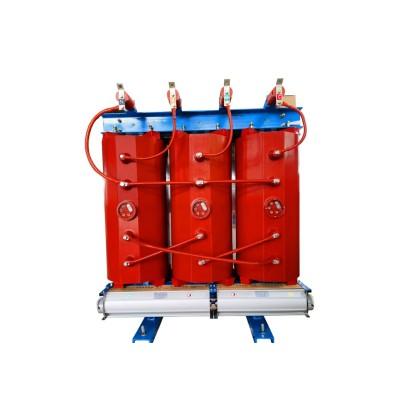
High-resistance grounding can limit ground fault current and appropriately reduce ground overvoltage. However, there is no need to connect a large high-value resistor directly between the generator neutral point and ground. Instead, a small resistor can be used together with a grounding transformer. The primary winding of the grounding transformer is connected between the neutral point and ground, while the secondary winding is connected to a small resistor. According to the formula, the impedance seen on the primary side equals the secondary side resistance multiplied by the square of the transformer turns ratio. Therefore, with a grounding transformer, a small physical resistor can effectively function as a high resistance.

2. Generator Grounding Protection Principle
During generator grounding, there is a voltage between the neutral point and ground. This voltage is applied across the primary winding of the grounding transformer, inducing a corresponding voltage on the secondary side. This secondary voltage can serve as the criterion for generator ground fault protection, allowing the grounding transformer to extract zero-sequence voltage for protection purposes.

3.Generator Shaft Grounding Carbon Brush Function (Turbine Side)
Due to the impossibility of perfectly uniform distribution of the generator stator magnetic field, a potential difference of several volts or higher can develop across the generator rotor. Since the impedance of the circuit formed by the generator rotor, bearings, and earth is very small, significant shaft currents could flow. To prevent the formation of these currents, manufacturers install insulating pads beneath all bearings on the generator exciter side, thereby breaking the shaft current path.

To ensure the generator shaft is at equal potential with ground, preventing electrical corrosion caused by shaft currents.
For grounding protection purposes, avoiding difficulties in monitoring insulation when a single-point ground fault occurs on the rotor.

4.Generator Terminal Carbon Brush Function

The generator excitation current flows through carbon brushes, then via slip rings (commutator) into the rotor winding, creating a rotating magnetic field in the rotor winding.

5.Bus Charging Protection

In a 220kV system, after completion of maintenance on Bus II, when restoring voltage to Bus II by energizing it from Bus I through the bus tie breaker, there is a brief voltage fluctuation during the charging process. Additionally, due to the large charging current, distance protection relays may maloperate. Therefore, bus charging protection must be activated to prevent misoperation and quickly trip the bus tie breaker if necessary.
Give a tip and encourage the author!
Recommended
Intelligent Grounding Transformers for Island Grid Support
1. Project BackgroundDistributed photovoltaic (PV) and energy storage projects are developing rapidly across Vietnam and Southeast Asia, yet face significant challenges:1.1 Grid Instability:Vietnam's power grid experiences frequent fluctuations (particularly in northern industrial zones). In 2023, coal power shortages triggered large-scale blackouts, resulting in daily losses exceeding USD 5 million. Traditional PV systems lack effective neutral grounding management capabilities, making equipmen
12/18/2025
Functions and Selection of Grounding Transformers in Photovoltaic Power Stations
1.Neutral Point Establishment and System StabilityIn photovoltaic power stations, grounding transformers effectively establish a system neutral point. According to relevant power regulations, this neutral point ensures the system maintains certain stability during asymmetric faults, functioning like a "stabilizer" for the entire power system.2.Overvoltage Limitation CapabilityFor photovoltaic power stations, grounding transformers can effectively limit overvoltages. Generally, they can control o
12/17/2025
Transformer Protection Settings: Zero-Sequence & Overvoltage Guide
1. Zero-Sequence Overcurrent ProtectionThe operating current for zero-sequence overcurrent protection of grounding transformers is typically determined based on the transformer's rated current and the maximum allowable zero-sequence current during system ground faults. The general setting range is approximately 0.1 to 0.3 times the rated current, with operating time usually set between 0.5 to 1 second to quickly clear ground faults.2.Overvoltage ProtectionOvervoltage protection is a critical com
12/17/2025
Wiring Methods and Parameters of Grounding Transformers
Grounding Transformer Winding ConfigurationsGrounding transformers are classified by winding connection into two types: ZNyn (zigzag) or YNd. Their neutral points can be connected to an arc suppression coil or a grounding resistor. Currently, the zigzag (Z-type) grounding transformer connected via an arc suppression coil or a low-value resistor is more commonly used.1. Z-Type Grounding TransformerZ-type grounding transformers come in both oil-immersed and dry-type insulation versions. Among them
12/05/2025
Related Products
Send inquiry
Download
Get the IEE Business Application
Use the IEE-Business app to find equipment, obtain solutions, connect with experts, and participate in industry collaboration anytime, anywhere—fully supporting the development of your power projects and business.