From Research to Deployment: The Innovation Leap in the UK's Solid-State Transformer Development

I. Overview of Solid-State Transformers (SST)
A Solid-State Transformer (SST) is an advanced power conversion device that integrates power semiconductors, high-frequency transformers, and control circuits.
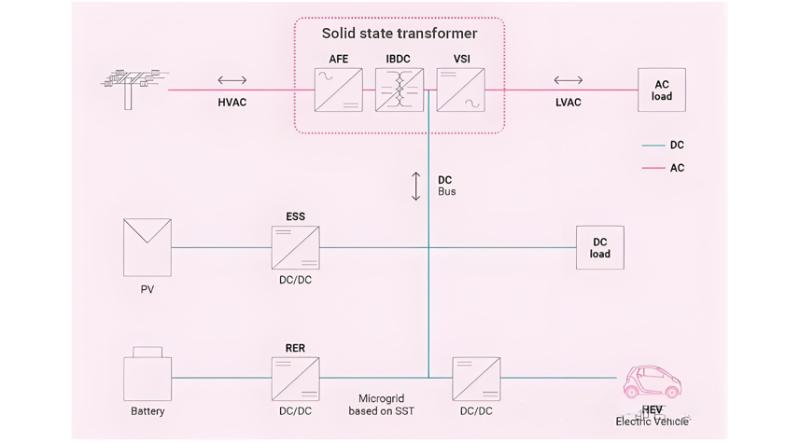
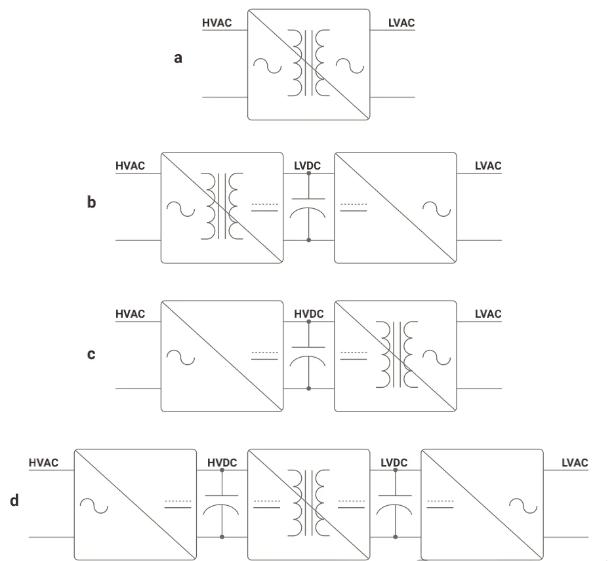
Compared with traditional transformers, SST supports AC/AC, AC/DC, and DC/DC conversions, and features advantages such as bidirectional power flow, intelligent control, and a compact design.Its main topologies include single-stage, two-stage (with LVDC or HVDC links), and three-stage structures, each suitable for specific application scenarios.
II. Advantages of SST
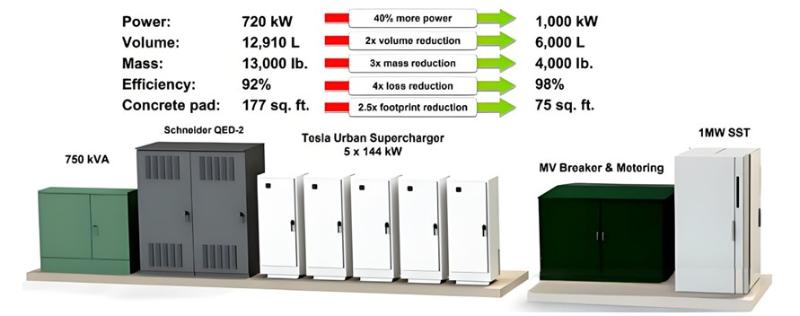
Compact size and lightweight: High-frequency operation reduces volume by up to 80%.
High efficiency: Fewer conversion stages and support for direct DC connection.
Smart grid compatibility: Enables real-time monitoring, voltage regulation, reactive power compensation, and fault isolation.
Integration with renewable energy and energy storage: Directly connects solar, wind, and battery systems.
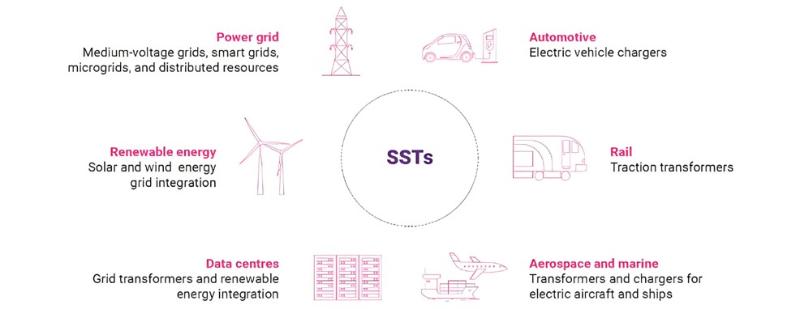
Suitable for high-growth markets: Such as EV fast charging, data centers, and rail transit.
III. Application Fields
Power Grid: Enhances grid flexibility, supports bidirectional power flow, and integrates distributed energy resources.
Electric Vehicle (EV) Charging: Enables ultra-fast charging (350kW+), Vehicle-to-Grid (V2G) functionality, and direct integration of renewable energy.
Rail Transit: Replaces traditional traction transformers, reducing weight and improving efficiency.
Data Centers: Improves energy efficiency, reduces cooling requirements, and supports the integration of renewable energy.
Marine and Aviation: Drives electrification transformation and reduces carbon emissions.
IV. Technical Challenges
High Cost: The cost of SST is 5–10 times that of traditional transformers.
Reliability Issues: Weak short-circuit withstand capacity, and semiconductor devices are susceptible to voltage stress.
EMI Interference: High-frequency switching causes electromagnetic interference, requiring complex filter design.
Insulation and Thermal Management: The performance of insulating materials under high frequencies has not been fully mastered.
Gate Driving and Protection: The design is complex, requiring isolation and high-precision control.
V. Market Opportunities in the UK
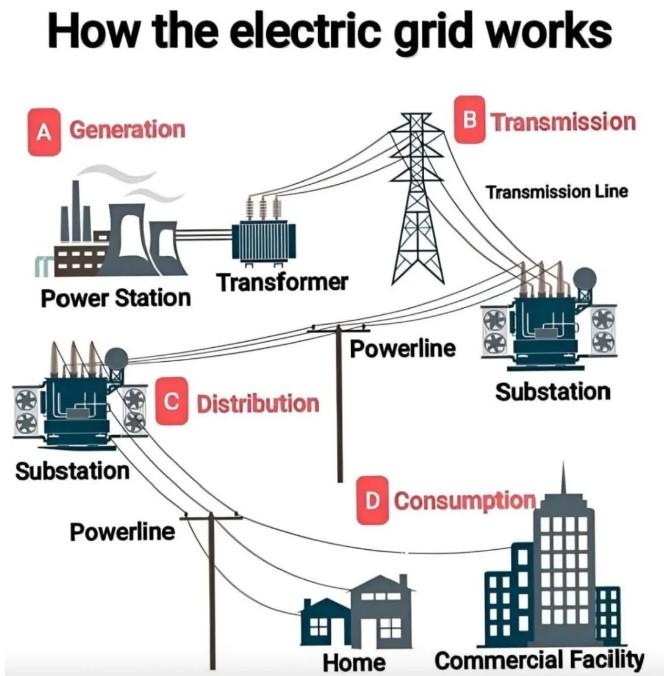
Grid Modernization: The UK has approximately 585,000 substations, among which 230,000 distribution substations can benefit from SST.
Renewable Energy Targets: The 2030 targets include 50GW of offshore wind power and 47GW of solar energy.
EV Charging Infrastructure: It is estimated that 300,000 public charging piles will be needed by 2030, and the ultra-fast charging market has huge potential.
Rail Electrification: Approximately 2,880 diesel locomotives are to be replaced, and the SST market potential exceeds £30 million.
Data Center Growth: Power demand continues to rise, and SST can improve energy efficiency and flexibility.
VII. The Role of CSA Catapult
Provides full-chain technical support for SST, including design, simulation, and prototype verification.
Leads projects such as ASSIST to promote the development of the UK's domestic high-voltage Si device supply chain.
Possesses core capabilities including multi-objective optimization, advanced packaging, and thermal management.

-
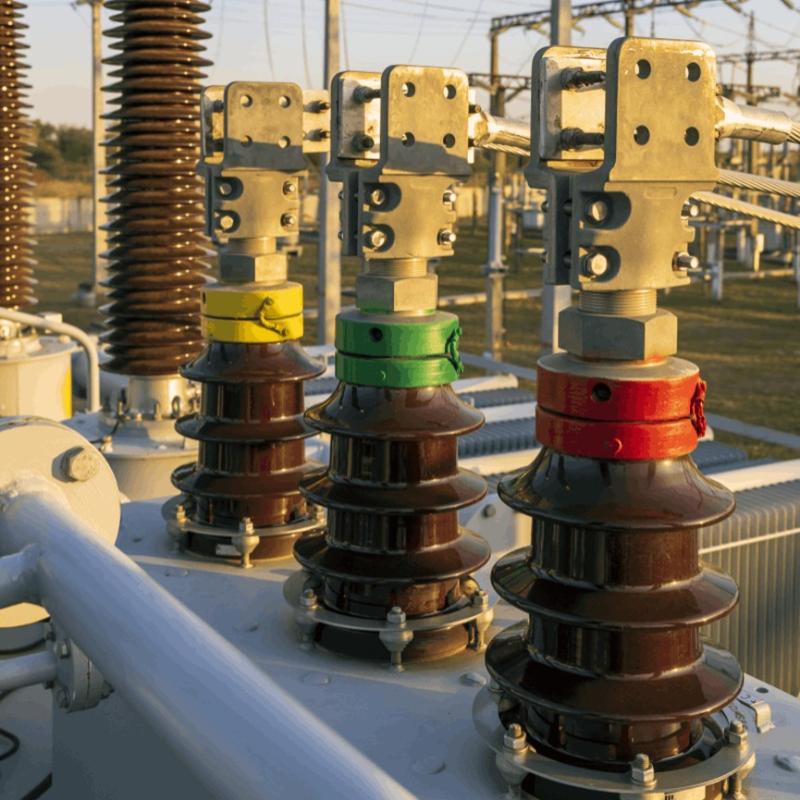
Voltage stabilization and compensation overhead voltage regulator 6kV 6.35kV 11kV 15kV 22kV 33kV – IEEE for Power Industry

-
Automatic Tap - Changing Voltage Regulator – 7.62 kV 11kV 13.8 kV 14.4 kV 19.92 kV 34.5 kV, IEEE compliant for Power Industry

-
11kV 15kV 22kV 33kV Fully automated, maintenance-free 32 step voltage regulator for distribution lines

-
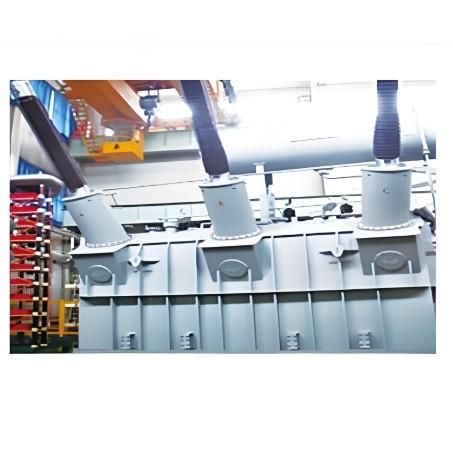
75MVA 220kV three-phase gas-insulated transformer(GTI)