What is the current application status and development trend of medium-voltage switchgear?
With the accelerated automation of power equipment, various medium-voltage switchgear have emerged in the market. Classified by insulation media, they are mainly divided into air-insulated, SF₆ gas-insulated and solid-insulated types, each with its own advantages and disadvantages: solid insulation offers good performance but poor environmental friendliness, SF₆ features excellent arc extinguishing capability but is a greenhouse gas, and air insulation has high cost-performance but larger volume. Enterprises need comprehensive selection to enhance application efficiency.
Development Characteristics
After a century of development, medium-voltage switchgear has a sound technical standard system. User demands have shifted from basic functions/parameters to high reliability and low operation cost; standard-setting focuses more on operation continuity and safety; primary/secondary equipment show clear division of labor with diversified product structures; digital and online detection technologies promote intelligence, reducing operation costs.

Current Development Status
Air-insulated Switchgear
Using air as insulation medium, including ring main units and metal-clad withdrawable switchgear, which are safe and eco-friendly. Metal-clad equipment with large capacity is suitable for high-power supply scenarios, while ring main units are compact, low-cost and easy to install, mainly applied in medium-voltage terminals. Equipped with integrated protection devices and transformers, they can form a complete distribution automation system.
SF₆ Gas-insulated Switchgear
SF₆ gas excels in arc extinguishing and insulation, suitable for medium-high voltage applications, but is regulated due to its greenhouse effect. Vacuum circuit breakers (VCBs) are limited to ≤35kV due to insulation constraints, so SF₆ equipment remains essential for higher voltages. Solutions include using gas mixtures to reduce SF₆ consumption and improving leakage prevention/recycling technologies.
Solid-insulated Switchgear
With fully-sealed epoxy resin casting, it is pollution-proof and altitude-independent, applicable to ≤35kV systems. However, high cost, heat dissipation challenges and difficult epoxy degradation hinder wide adoption. Design optimization is needed to balance sealing and heat dissipation.
Key Technical Advances
Interruption Technology
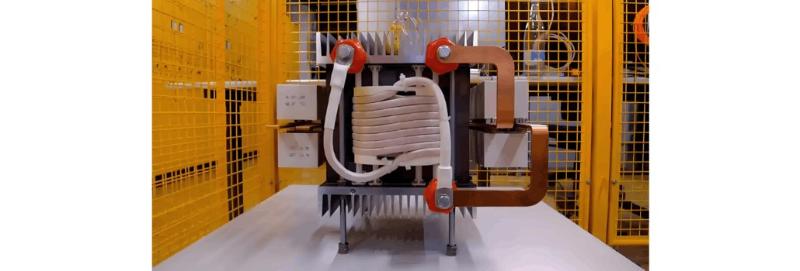
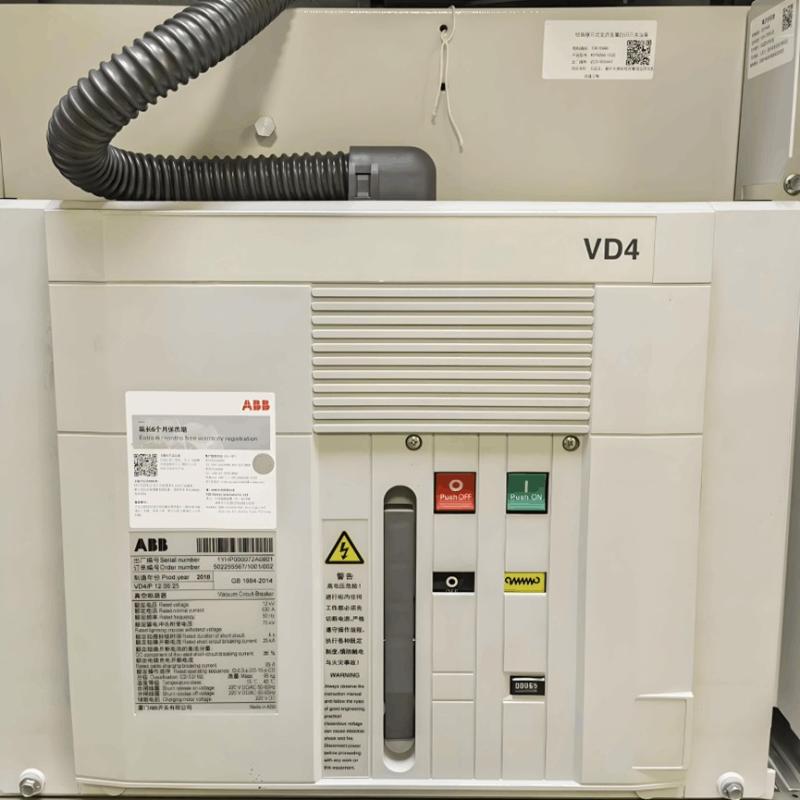
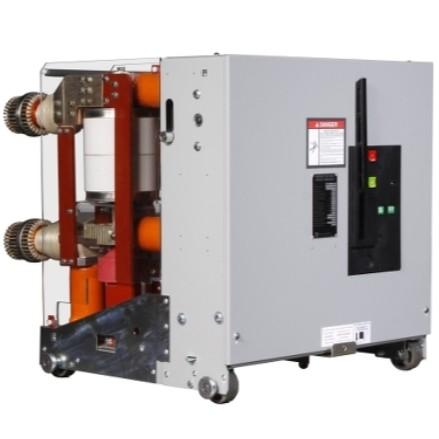
VCBs with CuCr contacts and longitudinal magnetic field structure enhance interruption capability. Ceramic enclosures enable miniaturization and low-cost mass production.
Insulation Technology
Gas-insulated switchgear uses N₂/air instead of SF₆, while solid-insulated switchgear improves environmental resistance via epoxy encapsulation. Both adopt electric field simulation for reliability.
Intelligent Upgrades
Integrated sensors and communication modules enable online condition monitoring. Digital protection devices and electronic transformers are replacing traditional components.

Development Trends
Miniaturization and intelligence are mainstream: miniaturized equipment reduces substation footprint by >30%, lowering land costs; intelligence improves maintenance efficiency via digital twin and 5G technologies. Future efforts should phase out non-essential SF₆ equipment, promote vacuum/solid insulation, and support smart grid development.
Conclusion
Vacuum switchgear currently dominates the market, while SF₆ and solid-insulated products have low penetration. Accelerating intelligent vacuum switch applications and solving solid insulation environmental issues will better meet the green and intelligent needs of power systems.