Power Transformer Condition Monitoring: Reducing Outages & Maintenance Costs
1. Definition of Condition-Based Maintenance
Condition-based maintenance refers to a maintenance approach where repair decisions are determined by the real-time operational status and health condition of equipment. There are no fixed schedules or predetermined maintenance dates. The prerequisite for condition-based maintenance is the establishment of equipment parameter monitoring systems and comprehensive analysis of various operational information, enabling reasonable maintenance decisions based on actual conditions.
Unlike traditional time-based maintenance methods, condition-based maintenance aims to keep equipment running for extended periods, minimizing shutdowns for maintenance unless the equipment approaches a critical state where performance deterioration is imminent. By replacing fixed maintenance cycles with actual operational status as the basis for maintenance decisions, this approach not only reduces power outage frequency but also improves power supply reliability.
More importantly, the reduction in outages minimizes unnecessary economic losses and correspondingly reduces personal safety incidents for power personnel. This method enhances economic benefits and reduces costs. To accelerate national economic development and safeguard people's quality of life, implementing condition-based maintenance strategies with current technology and conditions is both sufficient and necessary.
2. Significance of Condition-Based Maintenance and Maintenance
Power transformers represent one of the critical components for the normal and stable operation of power systems. Positioned at the center of the five segments of power systems—power generation, transmission, transformation, distribution, and consumption—transformers essentially function as static electric machines. As we know, transformers play the vital role of changing voltage levels, serving as energy and power transfer devices, and acting as core hubs in power grids. The stability of transformers directly affects the stability of grid operations.With rapid economic development and national modernization, power grid scale continues to expand, placing increasingly heavy loads on transformers and elevating the importance of maintenance and repair issues.
Statistics show that transformer-related equipment failures account for 49% of all power grid accidents. Therefore, emphasizing transformer maintenance and repair work is a crucial measure to ensure healthy grid operation and prevent power accidents. Additionally, this approach delivers economic benefits to enterprises and power systems. Although scheduled power outages for maintenance and repair are predictable and can be prepared for, they inevitably impact enterprise production and daily life.
With technological advancement and growth in the power industry, residential electricity demand has increased significantly, with higher stability requirements. China's power transformer technology has also matured considerably, especially in online monitoring and fault diagnosis. While research on fault diagnosis methods has been extensive in recent years, studies on fault repair, condition assessment, and maintenance plan formulation remain limited. However, as grid scale continues to expand, the importance of maintenance and management becomes increasingly prominent, with associated costs continuously rising. Therefore, determining appropriate maintenance methods and diagnostic approaches has become urgent. Implementing the most reasonable maintenance plans can save repair costs while ensuring normal operation.
3. Condition Information and Decision-Making
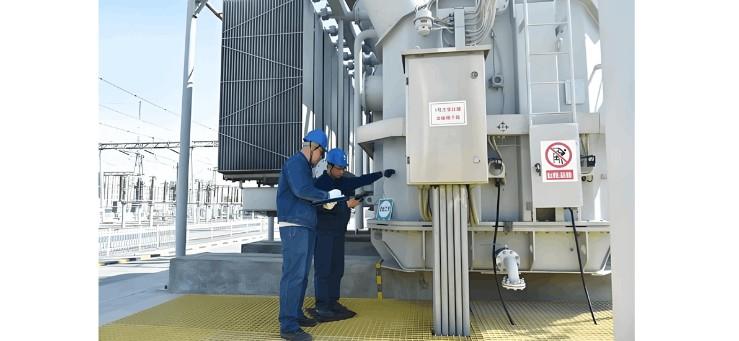
For transformer condition assessment, staff must have comprehensive knowledge, including normal operating conditions and relevant parameter standards. Only with this understanding can they develop comprehensive solutions during condition monitoring. In actual monitoring and diagnostic processes, several methods can be employed to collect status and parameter data.
3.1 Understanding Original Equipment Information
Personnel must thoroughly understand and analyze the original operational status of transformers under their responsibility, familiarizing themselves with relevant parameters. Special attention should be paid to potential parameter changes across different seasons. For new transformers, documentation parameters should be recorded and compared with actual operational parameters. This requires preventive data monitoring of transformers, including basic data, special characteristic data, and updated data following equipment upgrades or repairs. Only with this foundation can staff make reasonable judgments following condition monitoring.
3.2 Preliminary Inspection of Transformers
Preliminary equipment inspection involves more than simply collecting basic data before equipment operation. Ideally, it should incorporate equipment service life, manufacturer information, and operational environment assessment. This is because operating environment and service life cause varying degrees of component degradation. Transformers operating in harsh natural environments require particularly thorough consideration, as this affects the accuracy of inspection work and subsequently influences later condition assessment and maintenance strategy decisions. Products from different manufacturers during different periods may have unique characteristics, requiring targeted monitoring approaches and attention to data variations.
3.3 Familiarity with Relevant Equipment Data
Parameter standards are crucial in transformer testing. Online condition monitoring requires established benchmarks, though these parameter standards aren't static data points. Only reasonable standard data enables meaningful post-monitoring comparisons. Additionally, historical data serves as another reference point. After operating for extended periods, equipment experiences degradation but may not require immediate power outage for repair or replacement.
Therefore, when staff accurately record fault occurrence frequency, timing, and locations, then compare this data with standard and historical benchmarks, they can determine the results of the current condition monitoring. This requires power personnel to be thoroughly familiar with data standards to accurately complete monitoring and diagnostic work. Each inspection and recorded dataset becomes an important reference for subsequent monitoring.
4. Condition-Based Maintenance Evaluation Indicators and Maintenance Plan Determination
The evaluation indicator system consists of the following components:
Safety: Impact of failures on the safe operation of the power grid
Reliability: Includes reduced power supply reliability caused by maintenance and improved reliability from repairs, as well as post-maintenance equipment break-in periods
Economy: Primarily includes equipment repair costs and economic losses caused by power outages during maintenance periods
Others: Required technical expertise for repairs, spare parts and components management, reasonable arrangement of maintenance spare parts and components and storage methods to prevent delayed power restoration while waiting for spare parts
These evaluation indicators, similar to the various maintenance plans proposed following transformer failures (to be introduced below), are input through a human-computer interface with their corresponding evaluation values to complete the decision-making process for condition-based maintenance plans.
5. Conclusion
Condition monitoring for transformers must achieve comprehensive understanding, with data and indicators fully reflecting operational status and performance levels. Today's transformer technology continues to advance, with numerous factors affecting their condition. Any component at any time may have varying degrees of influence, and different perspectives require different maintenance approaches. Therefore, condition evaluation must be scientific and comprehensive to truly achieve the ultimate goal of condition-based maintenance.
To ensure evaluation indicators comprehensively and accurately reflect transformer operational status, principles of scientific validity, feasibility, and comprehensiveness should be followed. Comprehensive monitoring indicators and data should reflect the condition changes of power transformers, thereby further revealing the development trends of transformer equipment.