• Product
  • Suppliers
  • Manufacturers
  • Solutions
  • Free tools
  • Knowledges
  • Experts
  • Communities
Search


How Grounding Resistor Cabinets Protect Transformers?

Edwiin
Edwiin
Field: Power switch
China

In power systems, transformers, as core equipment, are critical to the safe operation of the entire grid. However, due to various reasons, transformers are often exposed to multiple threats. In such cases, the importance of grounding resistor cabinets becomes evident, as they provide indispensable protection for transformers.

Firstly, grounding resistor cabinets can effectively protect transformers from lightning strikes. The instantaneous high voltage caused by lightning can severely damage transformers. By slowing down the rate at which lightning current is discharged into the ground, the grounding resistor cabinet reduces the electromagnetic effects induced by lightning, thereby shielding the transformer from lightning-related hazards.
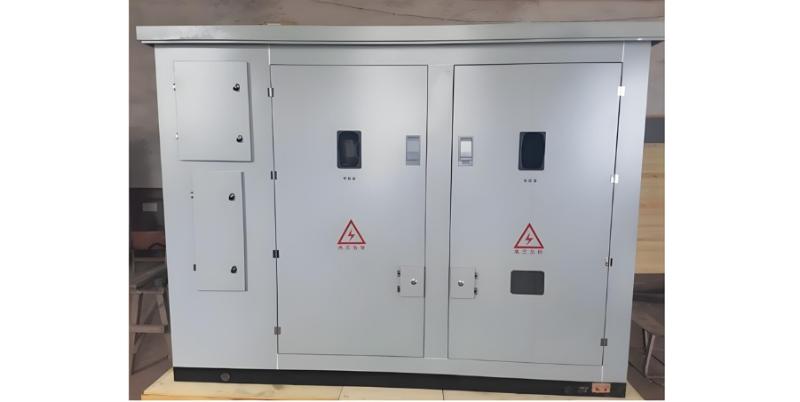
Grounding Resistor Cabinet.jpg

Secondly, grounding resistor cabinets mitigate the impact of switching overvoltages on transformers. In power systems, switching overvoltages frequently occur during operations such as disconnecting unloaded transmission lines or energizing/de-energizing unloaded transformers. The grounding resistor cabinet provides an additional layer of protection by limiting both the magnitude and duration of these switching overvoltages.

Furthermore, grounding resistor cabinets help prevent single-phase-to-ground faults in transformers. Single-phase-to-ground faults are a common type of fault in power systems. By limiting the fault current, the grounding resistor cabinet reduces the extent of damage to the transformer, thus ensuring its normal operation.
Give a tip and encourage the author!
Recommended
H59/H61 Transformer Failure Analysis and Protection Measures
1.Causes of Damage to Agricultural H59/H61 Oil-Immersed Distribution Transformers1.1 Insulation DamageRural power supply commonly uses a 380/220V mixed system. Due to the high proportion of single-phase loads, H59/H61 oil-immersed distribution transformers often operate under significant three-phase load imbalance. In many cases, the degree of three-phase load imbalance far exceeds the limits permitted by operational regulations, causing premature aging, deterioration, and eventual failure of th
Felix Spark
12/08/2025
What lightning protection measures are used for H61 distribution transformers?
What lightning protection measures are used for H61 distribution transformers?A surge arrester should be installed on the high-voltage side of the H61 distribution transformer. According to SDJ7–79 "Technical Code for Design of Overvoltage Protection of Electric Power Equipment," the high-voltage side of an H61 distribution transformer should generally be protected by a surge arrester. The grounding conductor of the arrester, the neutral point on the low-voltage side of the transformer, and the
Felix Spark
12/08/2025
How does the oil in oil-immersed power transformers clean itself?
The self-cleaning mechanism of transformer oil is typically achieved through the following methods: Oil Purifier FiltrationOil purifiers are common purification devices in transformers, filled with adsorbents such as silica gel or activated alumina. During transformer operation, convection caused by oil temperature changes drives the oil to flow downward through the purifier. Moisture, acidic substances, and oxidation byproducts in the oil are absorbed by the adsorbent, thereby maintaining oil c
Echo
12/06/2025
Can the secondary neutral of a control transformer be grounded?
Grounding the secondary neutral of a control transformer is a complex topic involving multiple aspects such as electrical safety, system design, and maintenance.Reasons for Grounding the Secondary Neutral of a Control Transformer Safety considerations: Grounding provides a safe path for current to flow to earth in the event of a fault—such as insulation failure or overload—instead of passing through the human body or other conductive paths, thereby reducing the risk of electric shock. System sta
Echo
12/05/2025
Related Products
Send inquiry
Download
Get the IEE Business Application
Use the IEE-Business app to find equipment, obtain solutions, connect with experts, and participate in industry collaboration anytime, anywhere—fully supporting the development of your power projects and business.