• Product
  • Suppliers
  • Manufacturers
  • Solutions
  • Free tools
  • Knowledges
  • Experts
  • Communities
Search


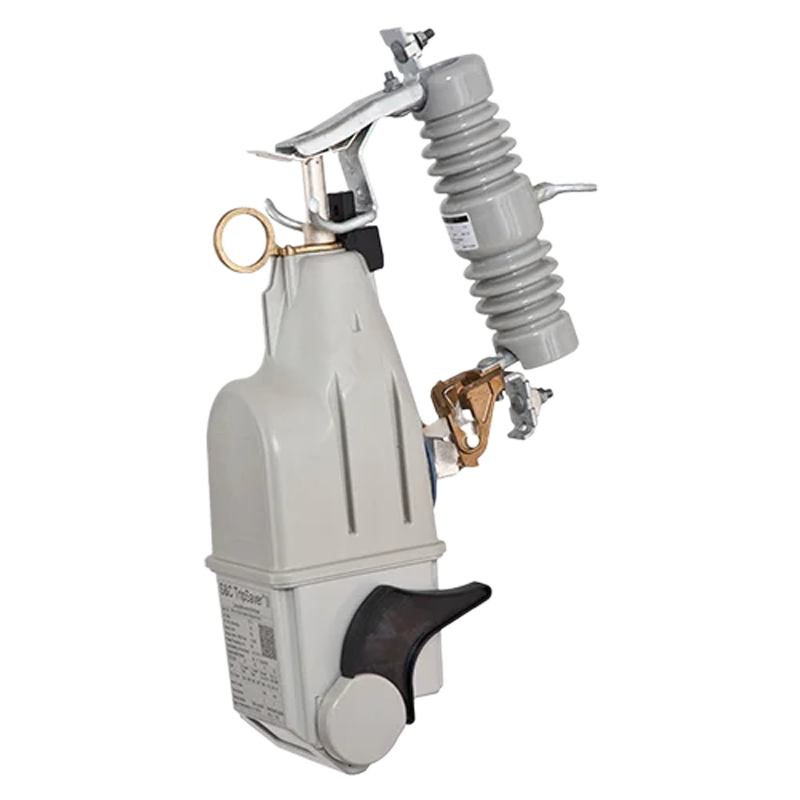
Cutoto-Mounted Reclose

  • Cutoto-Mounted Reclose

Key attributes

Brand RW Energy
Model NO. Cutoto-Mounted Reclose
Rated voltage 25kV
Rated normal current 40A
Rated short circuit breaking current 6.3kA
Series TRIPSAVER II

Product descriptions from the supplier

Description

TripSaver II Cutout-Mounted Recloser enables utilities to improve  reliability for overhead lateral circuit protection at 15 kV and 25 kV by  combining the best aspects of fuse-saving and fuse-blowing.  TripSaver II reclosers keep the power on for more customers and avoid   costly truck rolls for utilities. This strategy adds an additional reclosing  device as close as possible to the source of the problem, so only customers  on the faulted lateral are affected. Power can be restored automatically   for temporary faults, avoiding sustained outages and reducing   momentary outages on feeders by "blinking" only customers   on the faulted lateral. Utilities will see immediate reduction   in the frequency of sustained outages on their system and   a dramatic improvement of reliability scores. 

Key Features of Cutout-Mounted Reclosers 

1. Automatically Distinguishes & Handles Temporary/Permanent Faults, Enabling "Self-Healing" 

  • When faults (e.g., short circuits, overloads) occur in the line, it quickly interrupts fault current (response time in milliseconds) to prevent fault spread.

  • For over 80% of temporary faults in power systems (e.g., lightning strikes, momentary tree contact, brief bird-caused short circuits), it automatically attempts ~3 reclosure cycles (configurable count). If the fault clears, power is restored without manual intervention.

  • If the fault is permanent (e.g., line breakage, equipment damage), it automatically "locks out" (forming a visible circuit gap) after failed reclosures. This completely isolates the faulty section to avoid impacting the entire line, while helping maintenance personnel quickly locate the fault point. 

2. Directly Adapts to Existing Lines, No Additional Infrastructure for Installation

  • No modification to existing lines is required. It can be directly installed on the fuse base of distribution lines (replacing traditional fuses), utilizing the original line’s installation space and wiring.

  • Compact in size, with no complex wiring or independent cabinets. On-site installation only requires standard electrical tools and can be completed by 1-2 maintenance staff. It supports mainstream low-voltage distribution line voltage levels (e.g., 15kV/25kV). 

3. Significantly Improves Power Supply Reliability, Reducing Outage Impact

  • Reduces unnecessary outage duration: Temporary faults are resolved automatically within seconds, eliminating the need to wait for manual repairs (e.g., avoiding prolonged blackouts across an area after a lightning strike).

  • Lowers outage frequency: By isolating permanent faults, only the branch line with the fault is affected (not the entire main line), minimizing the outage scope.

  • Industry data shows it can reduce the distribution line's  SAIDI (System Average Interruption Duration Index) by 80%  and  SAIFI (System Average Interruption Frequency Index) by 60% especially effective for fault-prone branch lines.

4. Safe Arc Extinction + Visual Fault Identification, Reducing Maintenance Risks 

  • Adopts  vacuum interrupter technology: Arc extinction occurs internally during fault interruption, eliminating sparks and high-temperature debris (common with traditional fuses) to prevent fires or burns.

  • After locking out due to permanent faults, it forms a  visible mechanical gap (e.g., the physical gap after contact disconnection). Maintenance personnel can judge the fault status visually without live testing, reducing electric shock risks.

5. Low-Cost Maintenance, Reducing Labor & Resource Consumption

  • No frequent on-site replacements: Traditional fuses require staff to travel to the site for replacement after faults. This device handles temporary faults automatically, and only one on-site reset is needed for permanent faults—reducing over 90% of "unnecessary maintenance trips".

  • No additional energy consumption: It does not require batteries or external power, relying on the line’s own electricity to power the internal microprocessor—lowering long-term operating costs (e.g., a device from a leading brand can recover its cost after just 4 avoided maintenance trips).

6. Supports Smart Grid Integration, Compatible with Remote Monitoring

  • Equipped with remote communication interfaces (supporting mainstream protocols DNP3), it can upload real-time device status (e.g., "open/closed", "locked-out", "fault type") to monitoring platforms.

  • Maintenance personnel can remotely configure parameters (e.g., reclosure count, interrupting current threshold, reclosure interval) via the backend—no on-site adjustments required. This is particularly suitable for maintaining lines in remote areas

Application Scenarios of Cutout-Mounted Reclosers

  1. Medium and Low-Voltage Distribution Branch Lines

  2. Rural and Remote Area Power Grids

  3.  Urban Distribution Networks (Residential & Commercial Zones)

  4. Temporary Power Supply Scenarios

  5. New Energy Access Lines (Distributed PV/Wind)

  6. Fault-Prone Line Segments


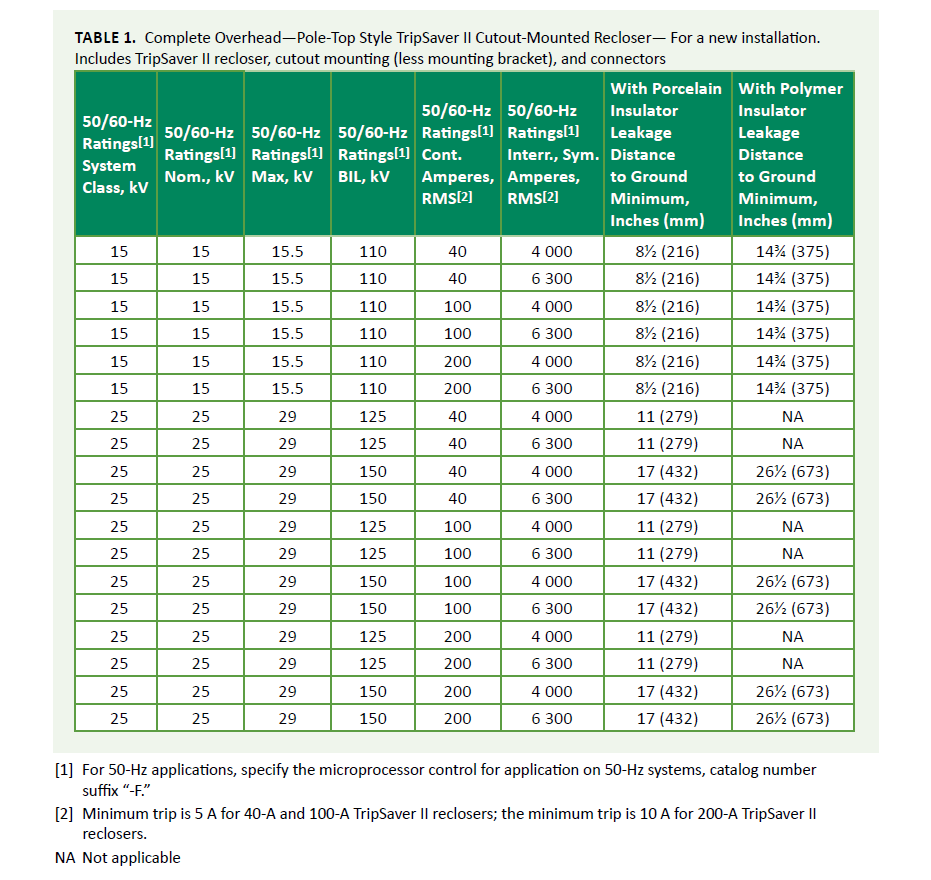
Technology parameters
Know your supplier
Online store
On-time delivery rate
Response time
100.0%
≤4h
Company overview
Workplace: 30000m² Total staff: Highest Annual Export(usD): 100000000
Workplace: 30000m²
Total staff:
Highest Annual Export(usD): 100000000
Services
Business Type: Design/Manufacture/Sales
Main Categories: High Voltage Electrical Apparatus/Low Voltage Electrical Apparatus/Instrument meters/New energy/Tester/Robot
Whole life care manager
Whole-life care management services for equipment procurement, use, maintenance, and after-sales, ensuring safe operation of electrical equipment, continuous control, and worry-free electricity consumption.
The equipment supplier has passed platform qualification certification and technical evaluation, ensuring compliance, professionalism, and reliability from the source.

Related Products

Related Knowledges

  • Faults and Handling of Single-phase Grounding in 10kV Distribution Lines
    Characteristics and Detection Devices for Single-Phase Ground Faults1. Characteristics of Single-Phase Ground FaultsCentral Alarm Signals:The warning bell rings, and the indicator lamp labeled “Ground Fault on [X] kV Bus Section [Y]” illuminates. In systems with a Petersen coil (arc suppression coil) grounding the neutral point, the “Petersen Coil Operated” indicator also lights up.Insulation Monitoring Voltmeter Indications:The voltage of the faulted phase decreases (in
    01/30/2026
  • Neutral point grounding operation mode for 110kV~220kV power grid transformers
    The arrangement of neutral point grounding operation modes for 110kV~220kV power grid transformers shall meet the insulation withstand requirements of transformer neutral points, and shall also strive to keep the zero-sequence impedance of substations basically unchanged, while ensuring that the zero-sequence comprehensive impedance at any short-circuit point in the system does not exceed three times the positive-sequence comprehensive impedance.For 220kV and 110kV transformers in new constructi
    01/29/2026
  • Why Do Substations Use Stones, Gravel, Pebbles, and Crushed Rock?
    Why Do Substations Use Stones, Gravel, Pebbles, and Crushed Rock?In substations, equipment such as power and distribution transformers, transmission lines, voltage transformers, current transformers, and disconnect switches all require grounding. Beyond grounding, we will now explore in depth why gravel and crushed stone are commonly used in substations. Though they appear ordinary, these stones play a critical safety and functional role.In substation grounding design—especially when multiple gr
    01/29/2026
  • Why Must a Transformer Core Be Grounded at Only One Point? Isn't Multi-Point Grounding More Reliable?
    Why Does the Transformer Core Need to Be Grounded?During operation, the transformer core, along with the metal structures, parts, and components that fix the core and windings, are all situated in a strong electric field. Under the influence of this electric field, they acquire a relatively high potential with respect to ground. If the core is not grounded, a potential difference will exist between the core and the grounded clamping structures and tank, which may lead to intermittent discharge.I
    01/29/2026
  • Understanding Transformer Neutral Grounding
    I. What is a Neutral Point?In transformers and generators, the neutral point is a specific point in the winding where the absolute voltage between this point and each external terminal is equal. In the diagram below, pointOrepresents the neutral point.II. Why Does the Neutral Point Need Grounding?The electrical connection method between the neutral point and earth in a three-phase AC power system is called theneutral grounding method. This grounding method directly affects:The safety, reliabilit
    01/29/2026
  • What’s the Difference Between Rectifier Transformers and Power Transformers?
    What is a Rectifier Transformer?"Power conversion" is a general term encompassing rectification, inversion, and frequency conversion, with rectification being the most widely used among them. Rectifier equipment converts input AC power into DC output through rectification and filtering. A rectifier transformer serves as the power supply transformer for such rectifier equipment. In industrial applications, most DC power supplies are obtained by combining a rectifier transformer with rectifier equ
    01/29/2026

Related Solutions

  • Distribution automation systems solutions
    What are the difficulties in overhead line operation and maintenance?Difficulty one:Overhead lines of distribution network have wide coverage,complicatedterrain,many radiation branches and distributed power supply,resultingin "many line faults and difficulty in fault troubleshooting".Difficulty Two:Manual troubleshooting is time-consuming and laborious.Meanwhile,therunning current,voltage and switching state of the line cannot be graspedin real time,because of the lack of intelligent technical m
    04/22/2025
  • RW8000 DMS Distribution Management System Solutions
    OverviewNowadays, the development trend of power grid is intellectualization. As an important part of power grid, the power distribution system is very close to the customers and it has to run properly. The distribution management system (DMS)played an important role in it.Introduction:RW8000 power distribution management system (DMS) is designed for the smart grids. It is based on real-time application, centered on distribution network operation and management, focusing on the business process
    09/07/2023
  • High-Precision Electrical Parameter Monitoring System Solution
    1.Introduction​With the increasingly stringent requirements for power supply quality in high-end facilities such as precision manufacturing, medical diagnosis, and data centers, traditional power monitoring systems, due to their low sampling accuracy and weak data analysis capabilities, can no longer meet the demand for deep insight and precise management of power quality. In response, we are introducing a new generation ​High-Precision Electrical Parameter Monitoring System. With ​millisecond-l
    09/28/2025
Haven't found the right supplier yet? Let matching verified suppliers find you. Get Quotation Now
Haven't found the right supplier yet? Let matching verified suppliers find you.
Get Quotation Now
Send inquiry
+86
Click to upload file
Download
Get the IEE Business Application
Use the IEE-Business app to find equipment, obtain solutions, connect with experts, and participate in industry collaboration anytime, anywhere—fully supporting the development of your power projects and business.