• Product
  • Suppliers
  • Manufacturers
  • Solutions
  • Free tools
  • Knowledges
  • Experts
  • Communities
Search


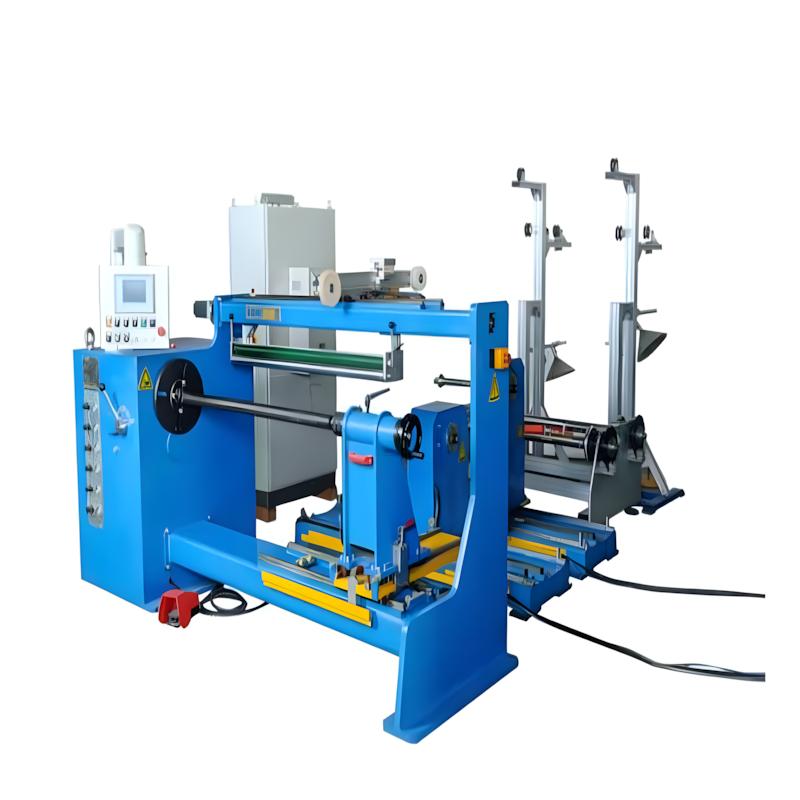
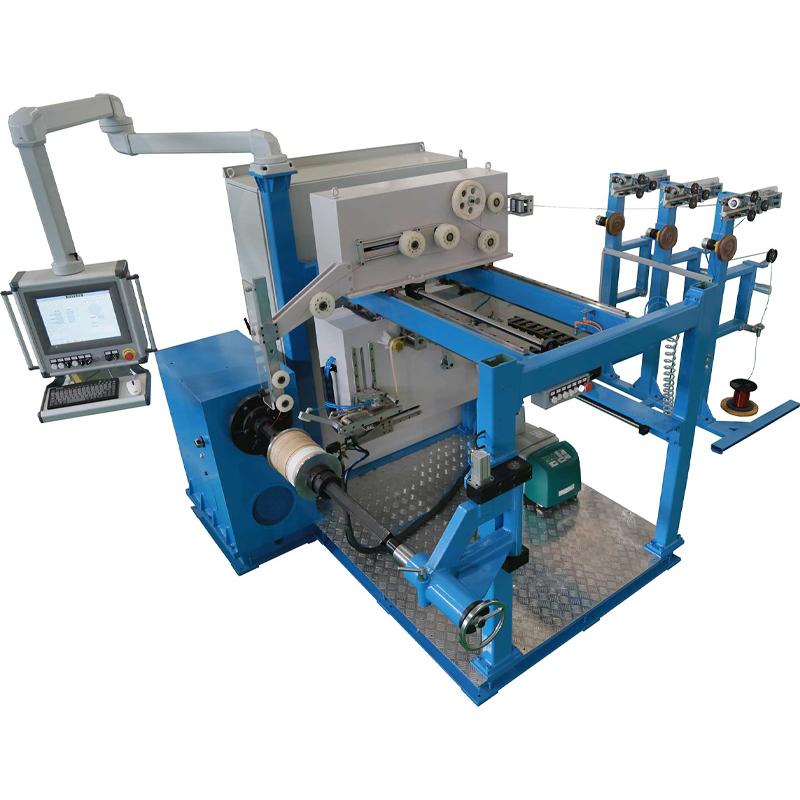
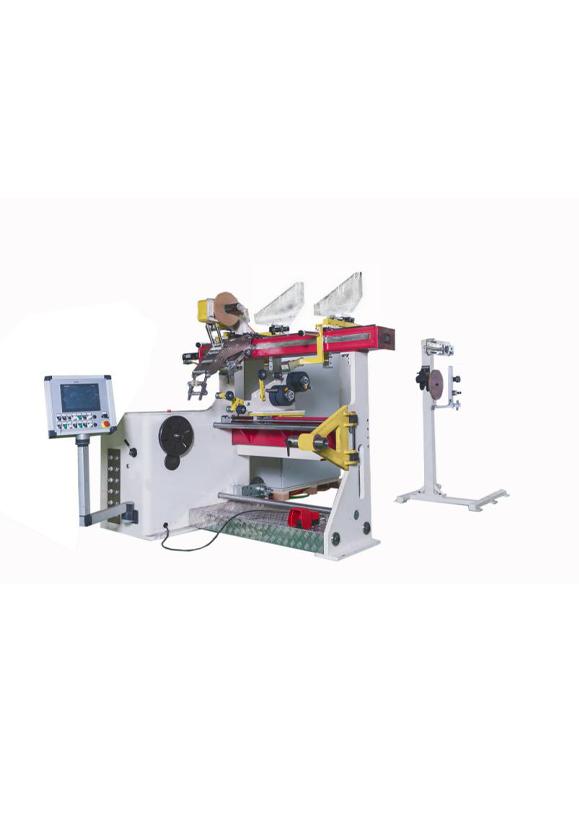
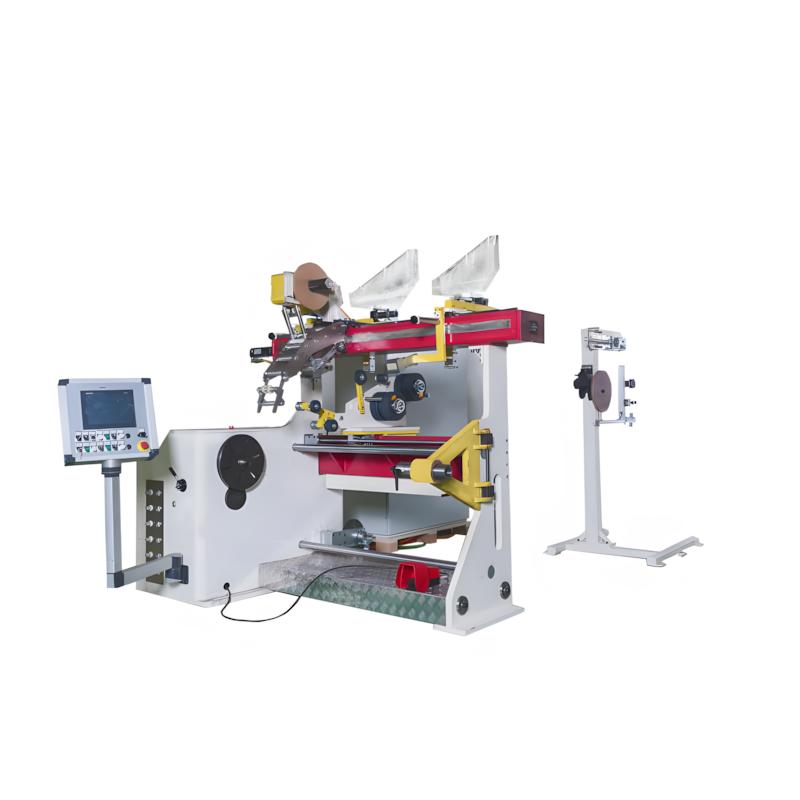
Suitable for fully automatic insulation winding machine for transformers

  • Suitable for fully automatic insulation winding machine for transformers

Key attributes

Brand Switchgear parts
Model NO. Suitable for fully automatic insulation winding machine for transformers
Winding speed 0 ~45rpm/1000Nm
Load Max 500Kg
Center height 850mm
Center distance 1200mm
Max outer diameter 600mm
Max swing diameter 1200mm
Flat wire size 14mmx4mm
Round wire size Ф1mm~Ф4mm
Series TW-850

Product descriptions from the supplier

Description

Application

The Automatic Layer Insulation Winding Machine is a specialized equipment that integrates automatic paper feeding, tension control, precise cutting, and synchronous winding functions. It is designed specifically for the interlayer insulation process of transformer and reactor coils.
The equipment is equipped with a PLC programmable control system and servo drive module, which can automatically adjust the feed speed and paper laying accuracy according to the number of coil turns and insulation paper width, achieving synchronous winding of insulation paper and conductor winding. The core advantage lies in replacing manual paper laying operations, effectively avoiding insulation layer wrinkles and misalignment problems, ensuring uniform insulation thickness between layers, and adapting to the production of dry-type transformers, oil immersed transformers, special transformers, and so on

Features

High efficiency and accuracy
Graded layer insulation is available
Conductor and layer strip winding simultaneously
Layer insulation strip tension is adjustable and stable.
Wire tension is adjustable and stable.
Available for round and flat wire
 
Technical Specifcation

No.

Items

Specification

1

Center height

850mm

2

Center distance

1200mm

3

Winding speed

0 ~ 45rpm/1000Nm

0 ~ 200rpm/300Nm

0 ~ 400rpm/150Nm

4

Load

Max 500Kg

5

Max outer diameter

600mm

6

Max swing diameter

800mm

7

Flat wire size

14mm×4mm

8

Round wire size

Φ1mm~Φ4mm

Documentation Resource Library
Public.
Automatic layer insulation winding machine
Catalogue
English
FAQ
Q: What specifically does the "dual tension adjustable and stable" function of this device refer to, and what are the key impacts on the quality of coil processing?
A:

Double tension adjustable and stable "specifically refers to the independent adjustment of the tension of the insulation tape and the tension of the wire, and the ability to maintain a stable state after adjustment. The key impact on processing quality: ① Stable wire tension: avoid wire stretching deformation or loose winding, ensure the conductivity and structural density of the coil conductor; ② Stable tension of insulation tape: prevent the insulation tape from becoming too loose, falling off, or breaking due to excessive tension, while avoiding insulation tape misalignment, ensuring that the insulation performance of the coil meets the standard, and reducing the risk of interlayer short circuit; ③ Dual tension adjustable: It can accurately match tension parameters according to different wire materials (round/flat) and insulation tape characteristics, and adapt to diverse processing needs.

Q: What is the corresponding relationship between the winding speed and torque of the device, and what is the purpose of this design?
A:

The corresponding relationship between speed and torque is: ① 1000Nm torque corresponds to 0-45rpm speed; ② 300Nm torque corresponds to 200rpm speed; ③ A torque of 150Nm corresponds to a speed of 0-400rpm, showing an inverse relationship where the higher the torque, the lower the speed. The design purpose is to adapt to the processing requirements of different loads and coil specifications - high torque and low speed can meet the winding of thick wire and large load coils (requiring greater power to overcome resistance), while low torque and high speed can adapt to the efficient winding of thin wire and small load coils, balancing processing stability and efficiency.

Q: What are the core adaptation scenarios and wire types of this insulation automatic winding machine, and what are the core differences compared to ordinary winding machines?
A:

The core adaptation scenario is the high voltage coil and small low voltage coil of small and medium-sized transformers; The compatible wires include round wires (1mm-4mm) and flat wires (14mmx4mm). The core difference from ordinary winding machines is that most ordinary winding machines only achieve conductor winding and require separate insulation treatment, while this equipment can achieve synchronous winding of conductors and layer insulation tapes, support graded layer insulation, and have adjustable double tension between layer insulation tapes and wires. It can integrate the "winding+insulation" process, with higher efficiency and more guaranteed insulation accuracy.
Know your supplier
Online store
On-time delivery rate
Response time
100.0%
≤4h
Company overview
Workplace: 1000m² Total staff: Highest Annual Export(usD): 300000000
Workplace: 1000m²
Total staff:
Highest Annual Export(usD): 300000000
Services
Business Type: Sales
Main Categories: Low Voltage Electrical Apparatus/Instrument meters/Production equipment/Tester/High Voltage Electrical Apparatus/Electrical fittings/Equipment Parts
Whole life care manager
Whole-life care management services for equipment procurement, use, maintenance, and after-sales, ensuring safe operation of electrical equipment, continuous control, and worry-free electricity consumption.
The equipment supplier has passed platform qualification certification and technical evaluation, ensuring compliance, professionalism, and reliability from the source.

Related Products

Related Knowledges

  • Faults and Handling of Single-phase Grounding in 10kV Distribution Lines
    Characteristics and Detection Devices for Single-Phase Ground Faults1. Characteristics of Single-Phase Ground FaultsCentral Alarm Signals:The warning bell rings, and the indicator lamp labeled “Ground Fault on [X] kV Bus Section [Y]” illuminates. In systems with a Petersen coil (arc suppression coil) grounding the neutral point, the “Petersen Coil Operated” indicator also lights up.Insulation Monitoring Voltmeter Indications:The voltage of the faulted phase decreases (in
    01/30/2026
  • Neutral point grounding operation mode for 110kV~220kV power grid transformers
    The arrangement of neutral point grounding operation modes for 110kV~220kV power grid transformers shall meet the insulation withstand requirements of transformer neutral points, and shall also strive to keep the zero-sequence impedance of substations basically unchanged, while ensuring that the zero-sequence comprehensive impedance at any short-circuit point in the system does not exceed three times the positive-sequence comprehensive impedance.For 220kV and 110kV transformers in new constructi
    01/29/2026
  • Why Do Substations Use Stones, Gravel, Pebbles, and Crushed Rock?
    Why Do Substations Use Stones, Gravel, Pebbles, and Crushed Rock?In substations, equipment such as power and distribution transformers, transmission lines, voltage transformers, current transformers, and disconnect switches all require grounding. Beyond grounding, we will now explore in depth why gravel and crushed stone are commonly used in substations. Though they appear ordinary, these stones play a critical safety and functional role.In substation grounding design—especially when multiple gr
    01/29/2026
  • Why Must a Transformer Core Be Grounded at Only One Point? Isn't Multi-Point Grounding More Reliable?
    Why Does the Transformer Core Need to Be Grounded?During operation, the transformer core, along with the metal structures, parts, and components that fix the core and windings, are all situated in a strong electric field. Under the influence of this electric field, they acquire a relatively high potential with respect to ground. If the core is not grounded, a potential difference will exist between the core and the grounded clamping structures and tank, which may lead to intermittent discharge.I
    01/29/2026
  • Understanding Transformer Neutral Grounding
    I. What is a Neutral Point?In transformers and generators, the neutral point is a specific point in the winding where the absolute voltage between this point and each external terminal is equal. In the diagram below, pointOrepresents the neutral point.II. Why Does the Neutral Point Need Grounding?The electrical connection method between the neutral point and earth in a three-phase AC power system is called theneutral grounding method. This grounding method directly affects:The safety, reliabilit
    01/29/2026
  • What’s the Difference Between Rectifier Transformers and Power Transformers?
    What is a Rectifier Transformer?"Power conversion" is a general term encompassing rectification, inversion, and frequency conversion, with rectification being the most widely used among them. Rectifier equipment converts input AC power into DC output through rectification and filtering. A rectifier transformer serves as the power supply transformer for such rectifier equipment. In industrial applications, most DC power supplies are obtained by combining a rectifier transformer with rectifier equ
    01/29/2026
Haven't found the right supplier yet? Let matching verified suppliers find you. Get Quotation Now
Haven't found the right supplier yet? Let matching verified suppliers find you.
Get Quotation Now
Send inquiry
+86
Click to upload file
Download
Get the IEE Business Application
Use the IEE-Business app to find equipment, obtain solutions, connect with experts, and participate in industry collaboration anytime, anywhere—fully supporting the development of your power projects and business.