• Product
  • Suppliers
  • Manufacturers
  • Solutions
  • Free tools
  • Knowledges
  • Experts
  • Communities
Search


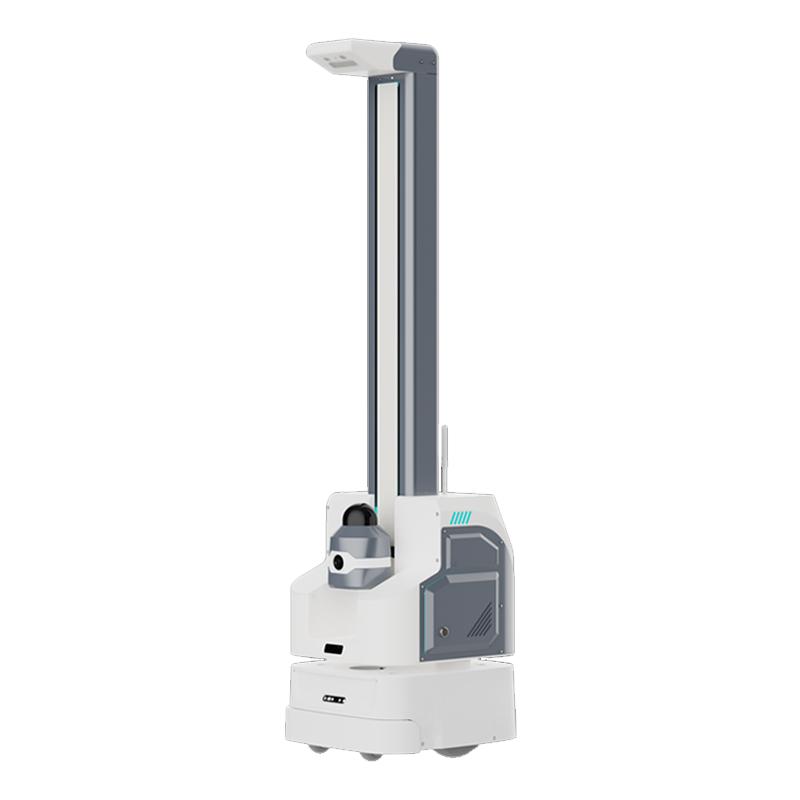
Wheeled lifting inspection robot

  • Wheeled lifting inspection robot

Key attributes

Brand Wone Store
Model NO. Wheeled lifting inspection robot
Series code 200
Product edition code Standard edition
Series RW-200

Product descriptions from the supplier

Description

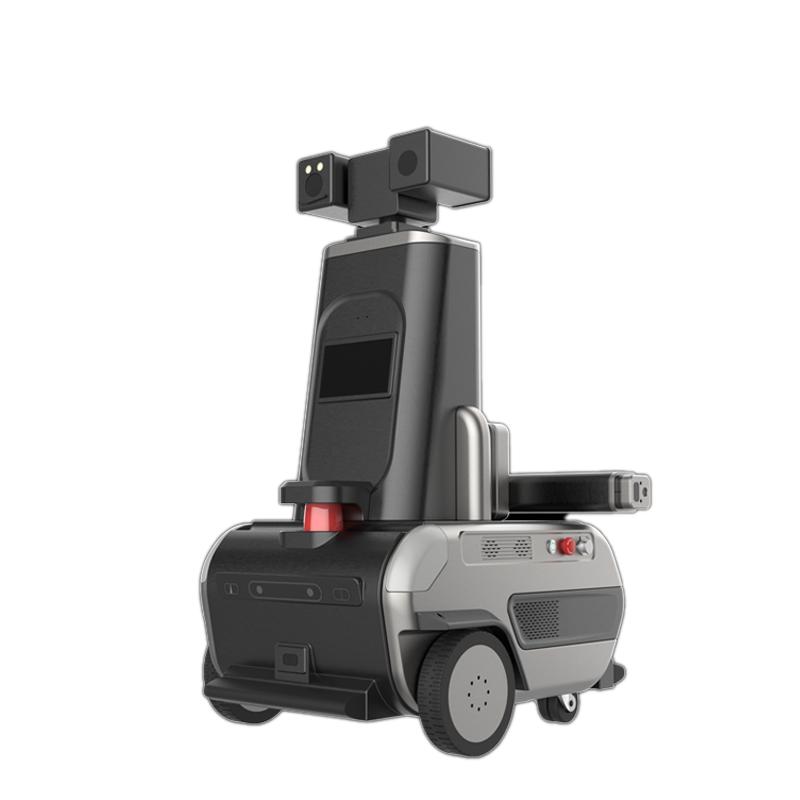
The wheeled lifting inspection robot is an intelligent robot that realizes autonomous movement, self-management, automatic obstacle avoidance, and automatic charging. The intelligent inspection robot can perform continuous and uninterrupted patrol and inspection operations, and it is a solution for automated inspection of equipment status in the site through intelligent robots. The robot is equipped with a visible light camera through a liftable platform, which can flexibly adjust the height of the camera to achieve inspection and detection from different angles, improving inspection efficiency.

The wheeled lifting inspection robot can be applied in indoor workshops such as power plants (indoor production workshops like 0-meter platform / steam turbine platform / water chemical treatment workshop, etc.) / factory production workshops / sewage treatment workshops.

Product function

  • Scheduled and fixed-point cruising

  • Infrared temperature measurement

  • Automatic navigation

  • Fault alarm

  • Visible light video analysis

  • Temperature and humidity monitoring

  • Data analysis

  • Automatic detection

  • Voice intercom

  • 5G communication

  • Equipped with a liftable platform

  • Laser vibration measurement (optional)

  • AI intelligent recognition

Mian feature

  • Thermal Imaging Temperature Measurement
    The robot is equipped with an infrared temperature collection function to detect the temperature in designated areas. When the detected equipment exceeds the set temperature value, the robot can automatically alarm, and the staff can then go to the fault location to check on-site and take corresponding measures. At the same time, this information is stored in the database to provide a basis for subsequent accident handling.

  • Intelligent instrument recognition
    Robots can read data from dials with readings and oil level gauges, automatically record and judge, and issue alarms according to preset alarm values. The reading error is less than 5%. Among them, image recognition, switch state reading, and meter recognition should reach 100%.

  • Equipment noise detection and collection
    The robot is equipped with a pickup, which can collect regional noise data in designated areas during inspections and upload it to the control background. The background can perform frequency domain expansion analysis on the recorded audio segments, calculate the decibel level and regional power spectrum distribution, and then determine whether the equipment is operating normally based on empirical values.

  • Indicator light status recognition
    The robot can identify and confirm the collected equipment status and operation indicator lights on-site. It then sends the recognition results to the background for storage and further status and fault confirmation.

  • Valve leakage identification
    The robot can identify leakage of the collected valve equipment on-site after normalized processing through the learned model. It then sends the identification results to the background for storage and further confirmation of status and faults.

  • Elevatable
    The robot is equipped with a visible light camera via an elevating platform, which can flexibly adjust the height of the camera to achieve inspection and detection from different angles, thereby improving inspection efficiency.

Technology Parameters

Basic Performance Parameters

  • Weight: 103KG

  • Enclosure Protection Rating: IP54

  • Operating Temperature: -25℃~60℃

  • Movement Mode: Four-wheel Drive

  • Shell Material: ABS Resin + Sheet Metal

  • Tire Size: 13 inches

  • Maximum Movement Speed: 1.2m/s on cement road

  • Minimum Turning Diameter: In-place Steering

Lifting Platform

  • Lifting Height: 0-780mm

  • Endurance Time: 6h

  • Automatic Navigation Mode: LiDAR + IMU

  • Lifting Movement Speed: 0.3m/s

  • Detection Distance: 0.06~80m

  • Telescopic Positioning Accuracy: ±10mm

  • Automatic Navigation Repeat Positioning Accuracy: ±30mm

On-board Display Screen

  • Resolution: 1920x1080P

  • Panel Size: 10.1 inches

Gas Composition Detection Module

  • O₂ Detection Range: 0~30%vol

  • EX Measurement Range: 0-100% LEL

  • Optional replacement for ammonia, hydrogen, CO, etc.

  • H₂S Detection Range: 0~500ppm

Visible Light Camera

  • Optical Zoom: 30x

  • Video Resolution: HD 1080P

Infrared Thermal Imaging

  • Temperature Measurement Range: -20~350℃ (optional up to 600℃ measurement range)

  • Imaging Resolution: 384x288P (optional 640x480P)

Communication Method
  • 5G Communication or WIFI MESH Network

Know your supplier
Online store
On-time delivery rate
Response time
100.0%
≤4h
Company overview
Workplace: 1000m² Total staff: Highest Annual Export(usD): 300000000
Workplace: 1000m²
Total staff:
Highest Annual Export(usD): 300000000
Services
Business Type: Sales
Main Categories: Wire cable/High Voltage Electrical Apparatus/Low Voltage Electrical Apparatus/Instrument meters/New energy/Tester/Integrated Electrical Equipment/Production equipment/Generator/Electrical fittings/Instrument Transformer/Equipment Parts
Whole life care manager
Whole-life care management services for equipment procurement, use, maintenance, and after-sales, ensuring safe operation of electrical equipment, continuous control, and worry-free electricity consumption.
The equipment supplier has passed platform qualification certification and technical evaluation, ensuring compliance, professionalism, and reliability from the source.

Related Products

Related Knowledges

  • Faults and Handling of Single-phase Grounding in 10kV Distribution Lines
    Characteristics and Detection Devices for Single-Phase Ground Faults1. Characteristics of Single-Phase Ground FaultsCentral Alarm Signals:The warning bell rings, and the indicator lamp labeled “Ground Fault on [X] kV Bus Section [Y]” illuminates. In systems with a Petersen coil (arc suppression coil) grounding the neutral point, the “Petersen Coil Operated” indicator also lights up.Insulation Monitoring Voltmeter Indications:The voltage of the faulted phase decreases (in
    01/30/2026
  • Neutral point grounding operation mode for 110kV~220kV power grid transformers
    The arrangement of neutral point grounding operation modes for 110kV~220kV power grid transformers shall meet the insulation withstand requirements of transformer neutral points, and shall also strive to keep the zero-sequence impedance of substations basically unchanged, while ensuring that the zero-sequence comprehensive impedance at any short-circuit point in the system does not exceed three times the positive-sequence comprehensive impedance.For 220kV and 110kV transformers in new constructi
    01/29/2026
  • Why Do Substations Use Stones, Gravel, Pebbles, and Crushed Rock?
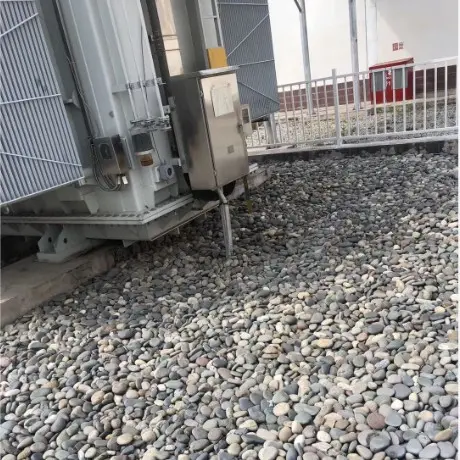
    Why Do Substations Use Stones, Gravel, Pebbles, and Crushed Rock?In substations, equipment such as power and distribution transformers, transmission lines, voltage transformers, current transformers, and disconnect switches all require grounding. Beyond grounding, we will now explore in depth why gravel and crushed stone are commonly used in substations. Though they appear ordinary, these stones play a critical safety and functional role.In substation grounding design—especially when multiple gr
    01/29/2026
  • Why Must a Transformer Core Be Grounded at Only One Point? Isn't Multi-Point Grounding More Reliable?
    Why Does the Transformer Core Need to Be Grounded?During operation, the transformer core, along with the metal structures, parts, and components that fix the core and windings, are all situated in a strong electric field. Under the influence of this electric field, they acquire a relatively high potential with respect to ground. If the core is not grounded, a potential difference will exist between the core and the grounded clamping structures and tank, which may lead to intermittent discharge.I
    01/29/2026
  • Understanding Transformer Neutral Grounding
    I. What is a Neutral Point?In transformers and generators, the neutral point is a specific point in the winding where the absolute voltage between this point and each external terminal is equal. In the diagram below, pointOrepresents the neutral point.II. Why Does the Neutral Point Need Grounding?The electrical connection method between the neutral point and earth in a three-phase AC power system is called theneutral grounding method. This grounding method directly affects:The safety, reliabilit
    01/29/2026
  • What’s the Difference Between Rectifier Transformers and Power Transformers?
    What is a Rectifier Transformer?"Power conversion" is a general term encompassing rectification, inversion, and frequency conversion, with rectification being the most widely used among them. Rectifier equipment converts input AC power into DC output through rectification and filtering. A rectifier transformer serves as the power supply transformer for such rectifier equipment. In industrial applications, most DC power supplies are obtained by combining a rectifier transformer with rectifier equ
    01/29/2026

Related Solutions

  • Dedicated Vacuum Contactor Solution for Port Shore Power Systems
    I. Background and Challenges​Shore power systems have become core technical equipment for ports to reduce carbon emissions and noise pollution. However, these systems face two major challenges in the harsh operational environment of ports:​Severe Environmental Corrosion: High humidity and salt spray in port areas cause serious corrosion to metal components and enclosures of electrical equipment, significantly impacting electrical lifespan and operational reliability.​High Switching Requirements:
    09/13/2025
  • ABB Vacuum Contactor KC2 Power Supply System Technical Transformation Plan
    Issue Overview​The 10kV air compressor starting system of a company utilizes the ABB vacuum contactor KC2 as the control component for the operating circuit. The dedicated wide-voltage power supply module paired with this contactor presents the following issues:​Frequent failures: The power supply module fails to properly transition the voltage from 300V to 12V, resulting in fuse blowouts.​Poor heat dissipation: Enclosed installation of the module leads to insufficient heat dissipation, acceler
    09/13/2025
  • Solution for Medium-Voltage Motor Control and Protection Using Vacuum Contactor-Fuse (VCF) in a Coal Conveying System
    1.Project BackgroundA coal conveying system comprises 15 belt conveyors driven by medium-voltage motors. The system operates under complex conditions, with motors often subjected to heavy loads and frequent starts. To address these challenges and achieve effective control and reliable protection during motor startup, the project comprehensively adopts Vacuum Contactor-Fuse (VCF) combination devices for the 6kV medium-voltage motor power distribution. This solution details the technical features,
    09/13/2025
Haven't found the right supplier yet? Let matching verified suppliers find you. Get Quotation Now
Haven't found the right supplier yet? Let matching verified suppliers find you.
Get Quotation Now
Send inquiry
+86
Click to upload file
Download
Get the IEE Business Application
Use the IEE-Business app to find equipment, obtain solutions, connect with experts, and participate in industry collaboration anytime, anywhere—fully supporting the development of your power projects and business.