• Product
  • Suppliers
  • Manufacturers
  • Solutions
  • Free tools
  • Knowledges
  • Experts
  • Communities
Search


What are the criteria for selection of distribution transformer?

Master Electrician
Field: Basic Electrical
0
China

Transformer Selection Criteria: Essential Factors for Optimal Performance

Selecting the appropriate transformer is critical for ensuring power distribution reliability across industrial, commercial, and residential systems. This process requires meticulous evaluation of load dynamics, environmental constraints, and regulatory standards. Below we outline key selection criteria to guide engineers and designers in making informed decisions.
4d8504bc18cb91822df438a0a59ea6b5.png


1. Maximum Demand Assessment

The transformer’s capacity (kVA) must exceed the system’s peak power requirement.

  • Calculation Methodology:
    Maximum Demand (kVA)=Power FactorTotal Connected Load (kW)×Demand Factor

    • Demand Factor: Typically 0.6–0.9 based on load simultaneity .

    • Safety Margin: Select a transformer with 20–30% excess capacity to accommodate future load growth.

2. Future Expansion Planning

Anticipate scalability needs to prevent premature obsolescence:

  • Incorporate projected changes (e.g., facility expansions, equipment upgrades).

  • Example: A 500kVA transformer for a 400kVA current load ensures headroom for 25% growth.

3. Load Characteristics Analysis

Linear vs. Non-Linear Loads:

  • Linear Loads (resistive/inductive): Standard transformers suffice (e.g., lighting, heaters).

  • Non-Linear Loads (harmonic-generating):

    • Use K-rated transformers (e.g., K13/K20) for systems with VFDs, UPS, or IT loads .

    • Validate inrush current tolerance for motor-driven equipment.

4. Voltage Configuration

  • Primary Voltage: Align with grid supply (e.g., 11kV, 33kV).

  • Secondary Voltage: Match end-use requirements (e.g., 400V, 480V).

  • Tap Changers: Essential for ±5% voltage regulation in fluctuating grids.

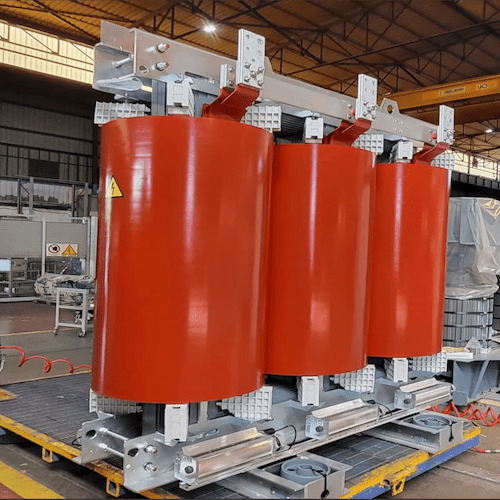
5. Transformer Type Comparison

Type Advantages Limitations Applications
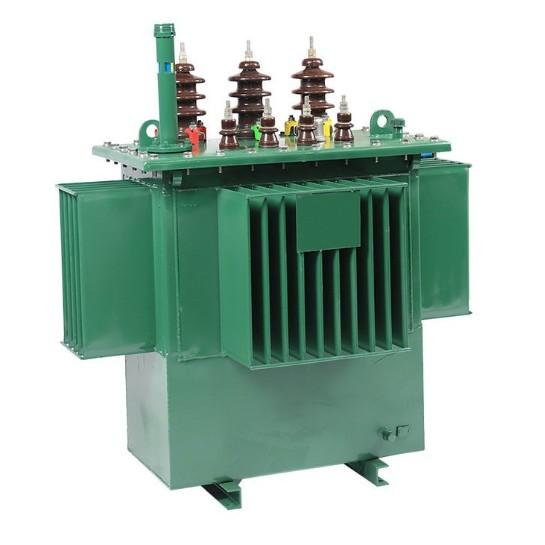
Oil-Filled Higher efficiency, better cooling Fire risk, maintenance-intensive Outdoor substations
Dry-Type Fire-safe, low maintenance Lower efficiency Hospitals, data centers
Amorphous Core 70% lower no-load losses Higher upfront cost High-uptime facilities

6. Efficiency & Loss Optimization

  • No-Load Losses (core losses): Fixed, independent of load.

  • Load Losses (copper losses): Vary with current.

  • Compliance Standards:

    • DOE 2016 (US), IS 1180 (India), or EU Tier 3 for minimum efficiency .

7. Environmental Resilience

  • Outdoor Installations:

    • IP55+ enclosure rating for dust/rain resistance.

    • C2/C3 corrosion protection for coastal areas.

  • Indoor/Confined Spaces:

    • Dry-type transformers mandatory for fire safety (e.g., NFPA 99 compliance).

8. Cooling System Design

Cooling Method Transformer Type Use Case
ONAN (Oil-Natural) Oil-Filled Low-density installations
ONAF (Oil-Forced) Oil-Filled High-load substations
AF (Air-Forced) Dry-Type Ventilation-limited sites

9. Safety & Protection

  • Critical Protections:

    • Buchholz relays (oil-filled) for gas-detection faults.

    • IP2X touch-proof barriers for public access areas.

    • Thermal sensors for overload prevention.

  • Standards Compliance: IEC 60076, IS 2026, or IEEE C57.12.00.


Conclusion

Optimal transformer selection balances technical specifications, environmental adaptability, and lifecycle economics. By integrating these criteria—from load analytics to safety protocols—engineers can deploy transformers that deliver reliability, efficiency, and scalability. For complex projects, collaborate with certified manufacturers (e.g., ABB, Siemens) to validate design assumptions and leverage digital sizing tools 


Give a tip and encourage the author!

Recommended

Distribution Equipment Transformer Testing, Inspection, and Maintenance
1.Transformer Maintenance and Inspection Open the low-voltage (LV) circuit breaker of the transformer under maintenance, remove the control power fuse, and hang a “Do Not Close” warning sign on the switch handle. Open the high-voltage (HV) circuit breaker of the transformer under maintenance, close the grounding switch, fully discharge the transformer, lock the HV switchgear, and hang a “Do Not Close” warning sign on the switch handle. For dry-type transformer maintenance: first clean the porcel
12/25/2025
How to Test Insulation Resistance of Distribution Transformers
In practical work, insulation resistance of distribution transformers is generally measured twice: the insulation resistance between thehigh-voltage (HV) windingand thelow-voltage (LV) winding plus the transformer tank, and the insulation resistance between theLV windingand theHV winding plus the transformer tank.If both measurements yield acceptable values, it indicates that the insulation among the HV winding, LV winding, and transformer tank is qualified. If either measurement fails, pairwise
12/25/2025
Design Principles for Pole-Mounted Distribution Transformers
Design Principles for Pole-Mounted Distribution Transformers(1) Location and Layout PrinciplesPole-mounted transformer platforms should be located near the load center or close to critical loads, following the principle of “small capacity, multiple locations” to facilitate equipment replacement and maintenance. For residential power supply, three-phase transformers may be installed nearby based on current demand and future growth projections.(2) Capacity Selection for Three-Phase Pole-Mounted Tr
12/25/2025
Risk Identification and Control Measures for Distribution Transformer Replacement Work
1.Electric Shock Risk Prevention and ControlAccording to typical design standards for distribution network upgrades, the distance between the transformer’s drop-out fuse and the high-voltage terminal is 1.5 meters. If a crane is used for replacement, it is often impossible to maintain the required minimum safety clearance of 2 meters between the crane boom, lifting gear, slings, wire ropes, and the 10 kV live parts, posing a severe risk of electric shock.Control Measures:Measure 1:De-energize th
12/25/2025
Related Products
Send inquiry
+86
Click to upload file
Download
Get the IEE Business Application
Use the IEE-Business app to find equipment, obtain solutions, connect with experts, and participate in industry collaboration anytime, anywhere—fully supporting the development of your power projects and business.