• Product
  • Suppliers
  • Manufacturers
  • Solutions
  • Free tools
  • Knowledges
  • Experts
  • Communities
Search


What is everything you need to know about copper winding wire?

Encyclopedia
Field: Encyclopedia
0
China

Basic Knowledge of Copper Winding Wire

Copper winding wire, also known as electromagnetic wire, is a type of insulated wire specifically designed for manufacturing coils or windings in electrical products. Its primary function is to generate a magnetic field through current flow or to produce current by cutting magnetic lines of force, thus enabling the mutual conversion between electric and magnetic energy. Here are some key points about copper winding wire:

1. Definition and Purpose

Copper winding wires are conductive metal wires with insulating layers, mainly used for manufacturing coils or windings in motors, electrical appliances, instruments, transformers, and other equipment. These coils realize the conversion of electric and magnetic energy through the principle of electromagnetic induction.

2. Type and Characteristics

Copper winding wires can be divided into enameled wire, coated wire, enameled coated wire, and inorganic insulation wire according to the different insulation layers. Enameled wire is suitable for high-speed winding and is widely used in small and medium-sized motors; coated wire is applicable to large and medium-sized electrical products and can withstand overvoltage and overload loads; inorganic insulation winding wires are resistant to high temperatures and radiation, making them suitable for extreme environments; special winding wires are designed for specific occasions and have special insulation structures and properties.

3. Differences with ordinary wires

The main difference between copper winding wires and ordinary wires lies in their insulation and application. Ordinary wires are typically used for power transmission, while copper winding wires are specifically designed for manufacturing components of devices that require electromagnetic effects.

4. Material Selection

Copper winding wires are usually made of copper or aluminum. Copper is widely used due to its excellent conductivity and mechanical properties, despite the higher cost. Aluminum, although cheaper, has inferior conductivity and mechanical properties compared to copper and is more susceptible to corrosion, requiring more maintenance and protection.

5. Detection of winding wires

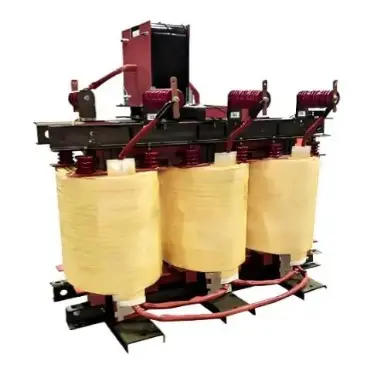
For the material of dry-type transformer winding, non-destructive testing can be carried out by using a transformer winding material analyzer. This instrument utilizes the Seebeck effect and the thermal conductivity characteristics of metals to heat specific parts of the transformer winding, and comprehensively judges the winding material according to the law of thermoelectric potential measured and the time domain characteristics of heat conduction.

6. Advantages of Winding Wire

Text: Copper strands, compared to single wires of the same cross-sectional area, have higher mechanical flexibility and can lower operating temperatures, making them widely used in high "Q" value lines.

In summary, copper winding wires are an indispensable part of electrical products. Understanding their definition, types, characteristics, material selection, testing methods, and advantages is crucial for designing and selecting the appropriate winding wires.
Give a tip and encourage the author!

Recommended

Why Must a Transformer Core Be Grounded at Only One Point? Isn't Multi-Point Grounding More Reliable?
Why Does the Transformer Core Need to Be Grounded?During operation, the transformer core, along with the metal structures, parts, and components that fix the core and windings, are all situated in a strong electric field. Under the influence of this electric field, they acquire a relatively high potential with respect to ground. If the core is not grounded, a potential difference will exist between the core and the grounded clamping structures and tank, which may lead to intermittent discharge.I
01/29/2026
What’s the Difference Between Rectifier Transformers and Power Transformers?
What is a Rectifier Transformer?"Power conversion" is a general term encompassing rectification, inversion, and frequency conversion, with rectification being the most widely used among them. Rectifier equipment converts input AC power into DC output through rectification and filtering. A rectifier transformer serves as the power supply transformer for such rectifier equipment. In industrial applications, most DC power supplies are obtained by combining a rectifier transformer with rectifier equ
01/29/2026
How to Judge, Detect and Troubleshoot Transformer Core Faults
1. Hazards, Causes, and Types of Multi-Point Grounding Faults in Transformer Cores1.1 Hazards of Multi-Point Grounding Faults in the CoreUnder normal operation, a transformer core must be grounded at only one point. During operation, alternating magnetic fields surround the windings. Due to electromagnetic induction, parasitic capacitances exist between the high-voltage and low-voltage windings, between the low-voltage winding and the core, and between the core and the tank. The energized windin
01/27/2026
A Brief Discussion on the Selection of Grounding Transformers in Boost Stations
A Brief Discussion on the Selection of Grounding Transformers in Boost StationsThe grounding transformer, commonly referred to as "grounding transformer," operates under the condition of being no-load during normal grid operation and overloaded during short-circuit faults. According to the difference in filling medium, common types can be divided into oil-immersed and dry-type; according to phase number, they can be classified into three-phase and single-phase grounding transformers. The groundi
01/27/2026
Related Products
Send inquiry
+86
Click to upload file
Download
Get the IEE Business Application
Use the IEE-Business app to find equipment, obtain solutions, connect with experts, and participate in industry collaboration anytime, anywhere—fully supporting the development of your power projects and business.