Operating Conditions in National Standard GB 6450-1986
Ambient temperature:
Maximum ambient temperature: +40°C
Daily average maximum temperature: +30°C
Annual average maximum temperature: +20°C
Minimum temperature: -30°C (outdoor); -5°C (indoor)
Horizontal axis: Product load;
Vertical axis: Average coil temperature rise in Kelvin (note: not in Celsius).
For Class H insulation products, the long-term temperature resistance of insulation materials is stipulated by the state as 180°C. However, the insulation materials used in CEEG’s SG (B) series transformer products include NOMEX paper (Class C, 220°C) and insulation coatings (Class H, 180°C or Class C, 220°C), which provide a large margin for product overload.
Examples
a. When the transformer operates at 70% load, its average coil temperature rise is 57K. If the ambient temperature is 25°C, the average temperature of the coil is calculated as:
T = Coil temperature rise + Ambient temperature = 57 + 25 = 82°C.
b. When the transformer operates at 120% load with an ambient temperature of 40°C, the average temperature of the coil is calculated as:
T = 133 + 40 = 173°C (which is lower than 200°C). The local hot spot temperature inside the coil is 185°C (173 × 1.07).
Note
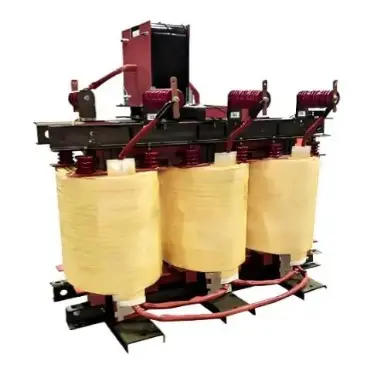
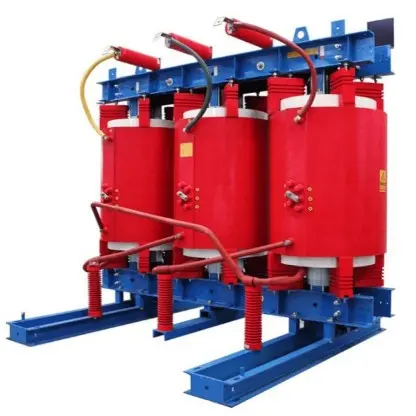
SG (B) series transformers can achieve 120% load without fans; with fan cooling, they can handle short-term overloads of more than 50%. Although long-term overload operation is not recommended, this indicates that SG10 products have the capability to provide additional load in emergency situations, and also proves that the products have a sufficiently long service life under rated load conditions, reducing long-term investment costs.
Producing Class H (180°C) products using Class C (220°C) insulation materials is far superior to Japanese epoxy resin products (which are produced using Class F (155°C) materials and have no overload margin).
Sufficient overload capacity can withstand severe electric field interference and ensure stable power supply. This makes SG10 transformers highly reliable equipment, suitable for locations with unstable power supply, industries with high overload requirements, and industries with strict power stability requirements. Examples include the glass industry, iron and steel industry, automobile manufacturing, commercial buildings, microelectronics industry, cement industry, water treatment and pump stations, petrochemical industry, hospitals, and data centers.
Key Term Explanations
Class H/C/F insulation: Standard classifications for insulation materials in electrical equipment, defined by their maximum long-term allowable operating temperatures (Class H: 180°C, Class C: 220°C, Class F: 155°C), in line with international insulation classification norms.
Temperature rise in Kelvin (K): A unit of temperature difference where 1K = 1°C; using Kelvin for temperature rise avoids confusion with absolute temperature in Celsius, which is a common practice in electrical engineering.
NOMEX paper: A high-temperature resistant insulation paper (Class C) widely used in transformers, known for excellent thermal stability and dielectric properties.