• Product
  • Suppliers
  • Manufacturers
  • Solutions
  • Free tools
  • Knowledges
  • Experts
  • Communities
Search


Advantages of Dry-Type Transformers: Enhancing Safety and Environmental Performance

Vziman
Field: Manufacturing
China

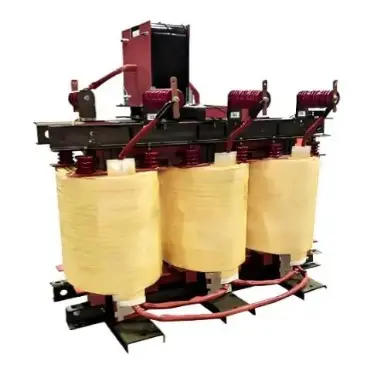
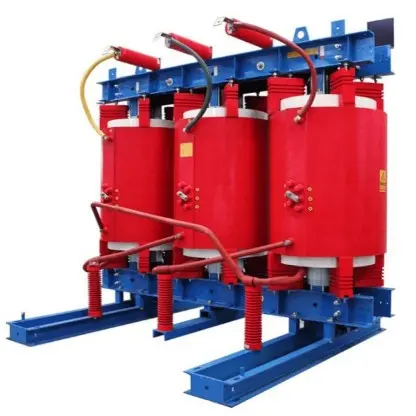
Compared to traditional oil-filled transformers, dry-type transformers offer several advantages. Key benefits of dry-type transformers include:

Safety: Dry-type transformers are considered safer as they lack flammable liquid insulation (such as oil). They eliminate risks associated with oil leaks, spills, and related fire hazards. This makes them suitable for indoor installations, especially in areas where fire safety is a priority, such as commercial buildings, hospitals, and schools.

Environmental Friendliness: Dry-type transformers are more environmentally friendly than oil-filled types. They do not require oil as an insulating medium, reducing the risk of oil leaks and soil contamination. Furthermore, they typically use non-toxic, recyclable solid insulation materials, contributing to a greener, more sustainable solution.

Reduced Maintenance: Dry-type transformers generally require less maintenance than oil-filled units. They do not need regular oil sampling, testing, or replacement. This saves time, effort, and maintenance costs associated with oil upkeep and disposal.

Compact and Lightweight: Dry-type transformers are usually more compact and lighter than oil-filled transformers of similar ratings. This facilitates easier transportation, installation, and integration into existing electrical systems. Their smaller footprint also helps optimize space utilization.

Enhanced Fire Resistance: Dry-type transformers are designed with fire-resistant insulation materials such as epoxy or cast resin. These materials offer higher fire resistance compared to oil. In the event of a fire, the risk of fire spread and damage is reduced, making them ideal for applications where fire safety is critical.

No Cooling System Required: Dry-type transformers use air as the cooling medium, eliminating the need for additional cooling equipment like oil pumps or radiators. Designed with ventilated enclosures or heat sinks, they rely on natural convection for heat dissipation, resulting in simpler design and operation.

Suitability for Indoor Applications: Dry-type transformers are well-suited for indoor installations because they do not release pollutants, odors, or gases. They can be installed closer to the load, reducing cable length and improving voltage regulation and power quality.

Lower Noise Levels: Dry-type transformers typically produce lower noise levels compared to oil-filled transformers. This is beneficial in noise-sensitive environments such as hospitals, office buildings, and residential areas.

It should be noted that the suitability of dry-type transformers depends on specific application requirements, load characteristics, and safety regulations. It is recommended to consult qualified engineers or transformer manufacturers to determine the most appropriate transformer for a given application.
Give a tip and encourage the author!

Recommended

Why Must a Transformer Core Be Grounded at Only One Point? Isn't Multi-Point Grounding More Reliable?
Why Does the Transformer Core Need to Be Grounded?During operation, the transformer core, along with the metal structures, parts, and components that fix the core and windings, are all situated in a strong electric field. Under the influence of this electric field, they acquire a relatively high potential with respect to ground. If the core is not grounded, a potential difference will exist between the core and the grounded clamping structures and tank, which may lead to intermittent discharge.I
01/29/2026
What’s the Difference Between Rectifier Transformers and Power Transformers?
What is a Rectifier Transformer?"Power conversion" is a general term encompassing rectification, inversion, and frequency conversion, with rectification being the most widely used among them. Rectifier equipment converts input AC power into DC output through rectification and filtering. A rectifier transformer serves as the power supply transformer for such rectifier equipment. In industrial applications, most DC power supplies are obtained by combining a rectifier transformer with rectifier equ
01/29/2026
How to Judge, Detect and Troubleshoot Transformer Core Faults
1. Hazards, Causes, and Types of Multi-Point Grounding Faults in Transformer Cores1.1 Hazards of Multi-Point Grounding Faults in the CoreUnder normal operation, a transformer core must be grounded at only one point. During operation, alternating magnetic fields surround the windings. Due to electromagnetic induction, parasitic capacitances exist between the high-voltage and low-voltage windings, between the low-voltage winding and the core, and between the core and the tank. The energized windin
01/27/2026
A Brief Discussion on the Selection of Grounding Transformers in Boost Stations
A Brief Discussion on the Selection of Grounding Transformers in Boost StationsThe grounding transformer, commonly referred to as "grounding transformer," operates under the condition of being no-load during normal grid operation and overloaded during short-circuit faults. According to the difference in filling medium, common types can be divided into oil-immersed and dry-type; according to phase number, they can be classified into three-phase and single-phase grounding transformers. The groundi
01/27/2026
Related Products
Send inquiry
+86
Click to upload file
Download
Get the IEE Business Application
Use the IEE-Business app to find equipment, obtain solutions, connect with experts, and participate in industry collaboration anytime, anywhere—fully supporting the development of your power projects and business.