• Product
  • Suppliers
  • Manufacturers
  • Solutions
  • Free tools
  • Knowledges
  • Experts
  • Communities
Search


Inverter-Integrated Transformers: Functions, Applications, and Benefits in Renewable Energy

Vziman
Field: Manufacturing
China

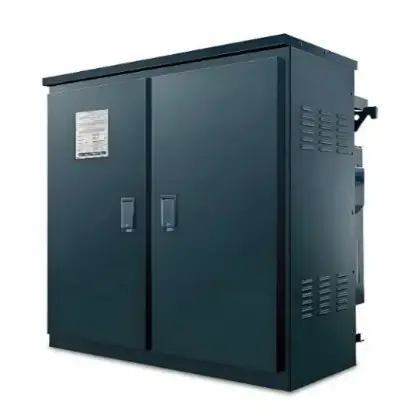
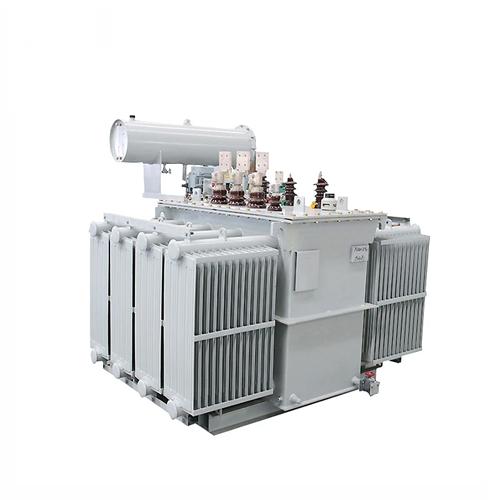
An inverter-integrated transformer is a power conversion device that combines the functions of an inverter and a transformer into a single unit. Widely utilized in renewable energy systems such as solar photovoltaic (PV) and wind power generation, its primary role is to convert direct current (DC) to alternating current (AC) while adjusting voltage levels (stepping up or down) via the transformer, ensuring compatibility with grid requirements or specific load demands.

1. Basic Functions and Operating Principles
1.1 Inverter Functions

  • DC-to-AC Conversion: The core function of the inverter is to convert DC power from solar panels or wind turbines into AC power. This conversion process requires precise control to maintain the output AC at the correct frequency and voltage.

  • Power Quality Assurance: Inverter-integrated transformers deliver high-quality power output by minimizing harmonic distortion, ensuring stable and reliable electricity supply.

1.2 Transformer Functions

  • Voltage Regulation: The integrated transformer adjusts the AC voltage output by the inverter to levels suitable for transmission/distribution grids or specific applications, including both step-up (low to high voltage) and step-down (high to low voltage) capabilities.

  • Electrical Isolation: The transformer provides electrical isolation, enhancing system safety by preventing faults on the DC side from affecting the AC side, and vice versa.

2. Application Scenarios
2.1 Solar Photovoltaic Systems

  • Residential and Commercial Solar Installations: Inverter-integrated transformers convert DC power from solar panels into AC power for household or commercial use, while adjusting voltage to match grid standards.

  • Large-Scale PV Power Plants: These devices centrally manage power output from multiple PV arrays, optimizing energy distribution and system efficiency.

2.2 Wind Power Systems

  • Distributed Wind Power: In distributed applications, inverter-integrated transformers convert DC or low-voltage AC from wind turbines into high-voltage AC compatible with the grid.

  • Wind Farms: In large-scale wind farms, they centrally coordinate power output from multiple turbines, improving overall system efficiency and stability.

3. Key Advantages

  • Compact Design: By integrating the inverter and transformer, the number of components and space requirements are reduced, making them ideal for space-constrained environments such as urban buildings or small wind farms.

  • Enhanced Efficiency: The integrated design minimizes energy losses during conversion, boosting overall system efficiency.

  • Simplified Installation and Maintenance: Fewer connections reduce installation complexity, while consolidated components streamline maintenance and system management.

  • Improved Reliability: Reduced inter-component connection points lower the risk of failure, enhancing overall system reliability.

4. Technological Advancements and Market Trends

With ongoing technological progress, inverter-integrated transformers are continuously improving in efficiency, reliability, and intelligence. Modern models often feature smart monitoring and management systems, enabling real-time status tracking, fault diagnosis, and predictive maintenance. These advancements further enhance operational efficiency and reliability, solidifying their role in the growing renewable energy sector.
Give a tip and encourage the author!

Recommended

Faults and Handling of Single-phase Grounding in 10kV Distribution Lines
Characteristics and Detection Devices for Single-Phase Ground Faults1. Characteristics of Single-Phase Ground FaultsCentral Alarm Signals:The warning bell rings, and the indicator lamp labeled “Ground Fault on [X] kV Bus Section [Y]” illuminates. In systems with a Petersen coil (arc suppression coil) grounding the neutral point, the “Petersen Coil Operated” indicator also lights up.Insulation Monitoring Voltmeter Indications:The voltage of the faulted phase decreases (in
01/30/2026
Neutral point grounding operation mode for 110kV~220kV power grid transformers
The arrangement of neutral point grounding operation modes for 110kV~220kV power grid transformers shall meet the insulation withstand requirements of transformer neutral points, and shall also strive to keep the zero-sequence impedance of substations basically unchanged, while ensuring that the zero-sequence comprehensive impedance at any short-circuit point in the system does not exceed three times the positive-sequence comprehensive impedance.For 220kV and 110kV transformers in new constructi
01/29/2026
Why Do Substations Use Stones, Gravel, Pebbles, and Crushed Rock?
Why Do Substations Use Stones, Gravel, Pebbles, and Crushed Rock?In substations, equipment such as power and distribution transformers, transmission lines, voltage transformers, current transformers, and disconnect switches all require grounding. Beyond grounding, we will now explore in depth why gravel and crushed stone are commonly used in substations. Though they appear ordinary, these stones play a critical safety and functional role.In substation grounding design—especially when multiple gr
01/29/2026
HECI GCB for Generators – Fast SF6 Circuit Breaker
1.Definition and Function1.1 Role of the Generator Circuit BreakerThe Generator Circuit Breaker (GCB) is a controllable disconnect point located between the generator and the step-up transformer, serving as an interface between the generator and the power grid. Its primary functions include isolating generator-side faults and enabling operational control during generator synchronization and grid connection. The operating principle of a GCB is not significantly different from that of a standard c
01/06/2026
Related Products
Send inquiry
+86
Click to upload file
Download
Get the IEE Business Application
Use the IEE-Business app to find equipment, obtain solutions, connect with experts, and participate in industry collaboration anytime, anywhere—fully supporting the development of your power projects and business.