• Product
  • Suppliers
  • Manufacturers
  • Solutions
  • Free tools
  • Knowledges
  • Experts
  • Communities
Search


Comprehensive Guide to Power Transformer Types and Working Principles

Vziman
Field: Manufacturing
China

Power transformers can be classified into several categories based on their purpose, structure, and other characteristics:

  • According to purpose:

    • Step-up transformer: Increases voltage from low to high levels, enabling efficient long-distance power transmission.

    • Step-down transformer: Decreases voltage from high to low levels, supplying power to local or nearby loads through distribution networks.

  • According to phase number:

    • Single-phase transformer

    • Three-phase transformer

  • According to winding arrangement:

    • Single-winding transformer (autotransformer), providing two voltage levels

    • Double-winding transformer

    • Triple-winding transformer

  • According to winding material:

    • Copper wire transformer

    • Aluminum wire transformer

  • According to voltage regulation:

    • No-load tap changer transformer

    • On-load tap changer transformer

  • According to cooling medium and method:

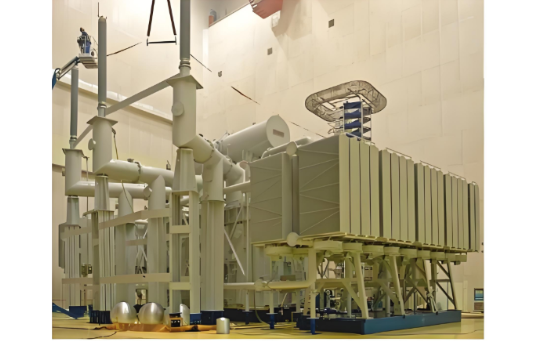
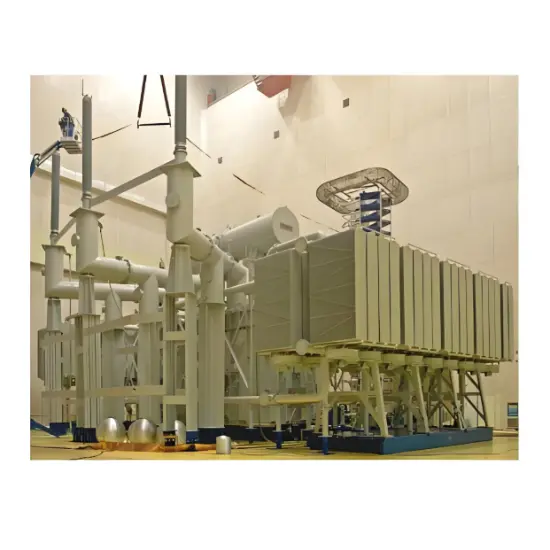
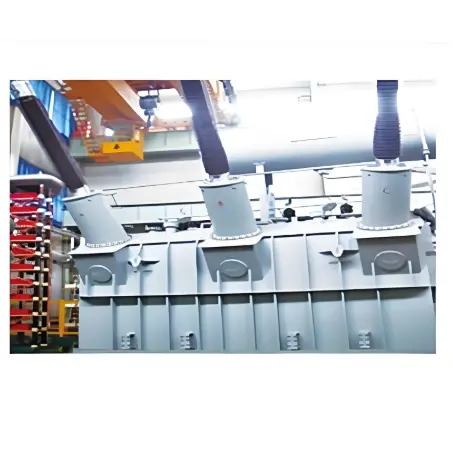
    • Oil-immersed transformer: Cooling methods include natural cooling, forced air cooling (using fans on radiators), and forced oil circulation with air or water cooling, commonly used in large power transformers.

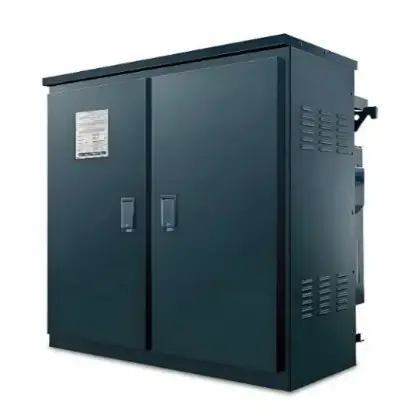
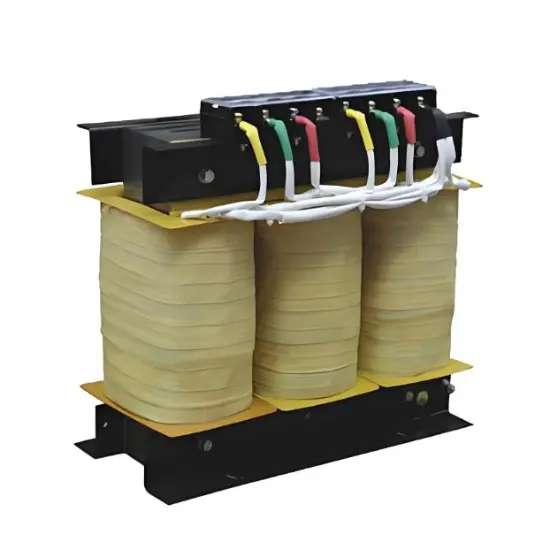
    • Dry-type transformer: Windings are either exposed to a gaseous medium (such as air or sulfur hexafluoride) or encapsulated in epoxy resin. Widely used as distribution transformers, dry-type units are currently available up to 35 kV and have strong application potential.

Working Principle of Transformers:

Transformers operate on the principle of electromagnetic induction. Unlike rotating machines such as motors and generators, transformers function at zero rotational speed (i.e., they are static). The core components are the windings and the magnetic core. During operation, the windings form the electrical circuit, while the core provides the magnetic path and mechanical support.

When AC voltage is applied to the primary winding, an alternating magnetic flux is established in the core (converting electrical energy into magnetic energy). This changing flux links with the secondary winding, inducing an electromotive force (EMF). When a load is connected, current flows in the secondary circuit, delivering electrical energy (converting magnetic energy back into electrical energy). This "electric–magnetic–electric" energy conversion process constitutes the fundamental operation of a transformer.
Give a tip and encourage the author!

Recommended

Faults and Handling of Single-phase Grounding in 10kV Distribution Lines
Characteristics and Detection Devices for Single-Phase Ground Faults1. Characteristics of Single-Phase Ground FaultsCentral Alarm Signals:The warning bell rings, and the indicator lamp labeled “Ground Fault on [X] kV Bus Section [Y]” illuminates. In systems with a Petersen coil (arc suppression coil) grounding the neutral point, the “Petersen Coil Operated” indicator also lights up.Insulation Monitoring Voltmeter Indications:The voltage of the faulted phase decreases (in
01/30/2026
Neutral point grounding operation mode for 110kV~220kV power grid transformers
The arrangement of neutral point grounding operation modes for 110kV~220kV power grid transformers shall meet the insulation withstand requirements of transformer neutral points, and shall also strive to keep the zero-sequence impedance of substations basically unchanged, while ensuring that the zero-sequence comprehensive impedance at any short-circuit point in the system does not exceed three times the positive-sequence comprehensive impedance.For 220kV and 110kV transformers in new constructi
01/29/2026
Why Do Substations Use Stones, Gravel, Pebbles, and Crushed Rock?
Why Do Substations Use Stones, Gravel, Pebbles, and Crushed Rock?In substations, equipment such as power and distribution transformers, transmission lines, voltage transformers, current transformers, and disconnect switches all require grounding. Beyond grounding, we will now explore in depth why gravel and crushed stone are commonly used in substations. Though they appear ordinary, these stones play a critical safety and functional role.In substation grounding design—especially when multiple gr
01/29/2026
What’s the Difference Between Rectifier Transformers and Power Transformers?
What is a Rectifier Transformer?"Power conversion" is a general term encompassing rectification, inversion, and frequency conversion, with rectification being the most widely used among them. Rectifier equipment converts input AC power into DC output through rectification and filtering. A rectifier transformer serves as the power supply transformer for such rectifier equipment. In industrial applications, most DC power supplies are obtained by combining a rectifier transformer with rectifier equ
01/29/2026
Related Products
Send inquiry
+86
Click to upload file
Download
Get the IEE Business Application
Use the IEE-Business app to find equipment, obtain solutions, connect with experts, and participate in industry collaboration anytime, anywhere—fully supporting the development of your power projects and business.