• Product
  • Suppliers
  • Manufacturers
  • Solutions
  • Free tools
  • Knowledges
  • Experts
  • Communities
Search


How does a transformer work?

Rockwell
Field: Manufacturing
China

Transformer Operation Principle

A transformer is an electrical device that operates on the principle of electromagnetic induction to transfer electrical energy from one circuit to another. It enables the adjustment of voltage levels within an alternating current (AC) system, either stepping up (increasing) or stepping down (decreasing) voltage while maintaining the same frequency.

Working Principle:

Basic Components
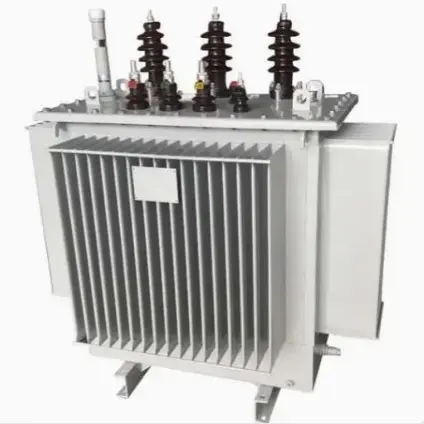
A transformer consists of two coils, known as windings—the "primary winding" connected to the AC power source, and the "secondary winding" connected to the load. These windings are wound around a core typically made of magnetic material (such as iron). The core serves to concentrate and guide the magnetic field generated by the current flowing through the primary winding.

Principle of Electromagnetic Induction
When AC current flows through the primary winding, it produces a continuously changing magnetic field. According to Faraday's Law of Electromagnetic Induction, this changing magnetic field induces a voltage (electromotive force, or EMF) in the secondary winding, even though the two windings are not electrically connected.

Voltage Transformation
The voltage induced in the secondary winding depends on the turns ratio—the ratio of the number of turns in the secondary winding to that in the primary winding. If the secondary has more turns than the primary, the voltage is stepped up; if it has fewer turns, the voltage is stepped down.

Current Transformation
Due to the conservation of power, there is an inverse relationship between voltage and current. When voltage is stepped up, current decreases, and when voltage is stepped down, current increases, thereby maintaining power balance.

Load Connection
The load (such as appliances or machinery) is connected to the secondary winding, which supplies the transformed voltage to power the load.

Isolation and Galvanic Separation
Transformers provide electrical isolation and galvanic separation between the primary and secondary circuits. This means there is no direct electrical connection between the windings, enhancing safety and preventing unwanted current flow between circuits.

In summary, transformers operate on electromagnetic induction, where a changing magnetic field from the primary winding induces a voltage in the secondary winding. By varying the number of turns in the windings, transformers can step up or step down voltage while maintaining power balance between the primary and secondary circuits. Transformers are essential components in power distribution and transmission systems, enabling efficient and safe electricity delivery.
Give a tip and encourage the author!

Recommended

Why Must a Transformer Core Be Grounded at Only One Point? Isn't Multi-Point Grounding More Reliable?
Why Does the Transformer Core Need to Be Grounded?During operation, the transformer core, along with the metal structures, parts, and components that fix the core and windings, are all situated in a strong electric field. Under the influence of this electric field, they acquire a relatively high potential with respect to ground. If the core is not grounded, a potential difference will exist between the core and the grounded clamping structures and tank, which may lead to intermittent discharge.I
01/29/2026
What’s the Difference Between Rectifier Transformers and Power Transformers?
What is a Rectifier Transformer?"Power conversion" is a general term encompassing rectification, inversion, and frequency conversion, with rectification being the most widely used among them. Rectifier equipment converts input AC power into DC output through rectification and filtering. A rectifier transformer serves as the power supply transformer for such rectifier equipment. In industrial applications, most DC power supplies are obtained by combining a rectifier transformer with rectifier equ
01/29/2026
How to Judge, Detect and Troubleshoot Transformer Core Faults
1. Hazards, Causes, and Types of Multi-Point Grounding Faults in Transformer Cores1.1 Hazards of Multi-Point Grounding Faults in the CoreUnder normal operation, a transformer core must be grounded at only one point. During operation, alternating magnetic fields surround the windings. Due to electromagnetic induction, parasitic capacitances exist between the high-voltage and low-voltage windings, between the low-voltage winding and the core, and between the core and the tank. The energized windin
01/27/2026
A Brief Discussion on the Selection of Grounding Transformers in Boost Stations
A Brief Discussion on the Selection of Grounding Transformers in Boost StationsThe grounding transformer, commonly referred to as "grounding transformer," operates under the condition of being no-load during normal grid operation and overloaded during short-circuit faults. According to the difference in filling medium, common types can be divided into oil-immersed and dry-type; according to phase number, they can be classified into three-phase and single-phase grounding transformers. The groundi
01/27/2026
Related Products
Send inquiry
+86
Click to upload file
Download
Get the IEE Business Application
Use the IEE-Business app to find equipment, obtain solutions, connect with experts, and participate in industry collaboration anytime, anywhere—fully supporting the development of your power projects and business.