• Product
  • Suppliers
  • Manufacturers
  • Solutions
  • Free tools
  • Knowledges
  • Experts
  • Communities
Search


Can a circuit breaker be racked out when in the closed position?

Encyclopedia
Field: Encyclopedia
0
China

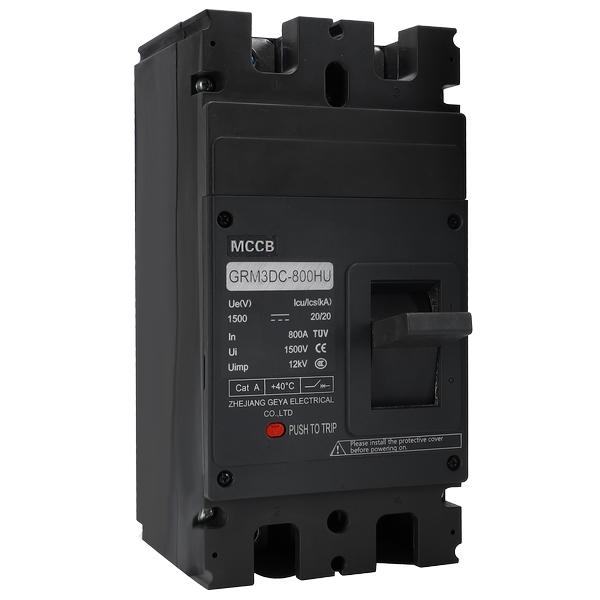
The circuit breaker cannot normally be pulled out directly while in the closed position.

First, safety design considerations

Prevent arc hazards

When the circuit breaker is in the closed position, current usually passes through the circuit. If the circuit breaker is forcibly pulled out at this time, an electric arc may occur. Arcing is a high-temperature, high-energy discharge phenomenon that can pose a serious burn and electric shock hazard to operators. For example, in high-voltage circuits, the temperature of an arc can reach thousands of degrees, which can instantly melt metal and destroy insulating materials.

To avoid this danger, circuit breakers are usually designed to operate only after the circuit is disconnected. This ensures that no arcing occurs during operation and ensures the safety of the operator.

Protection equipment and systems

Forcibly pulling out a circuit breaker in the closed position can cause serious damage to electrical equipment and power systems. For example, it may cause faults such as short circuit, overload, or overvoltage of the device, or even cause serious consequences such as fire or explosion.

The correct operation sequence of the circuit breaker is to disconnect the circuit first, and then perform other operations to protect the safe and stable operation of the device and system.

2. Restrictions on operation mechanism

Mechanical interlocking device

Many circuit breakers are equipped with mechanical interlocks to prevent operation at the wrong time. These interlocks typically lock the circuit breaker's position while it is in the closed position, making it impossible to pull it out. For example, some circuit breakers may have a latch on the operating handle that can only be unlocked and operated when the circuit breaker is in the off position.

The purpose of the mechanical interlocking device is to ensure that the operator performs the operation in the correct order to avoid danger and damage caused by misoperation.

Electrical interlocking system

In some complex power systems, the circuit breaker may also be connected to other devices and control systems by electrical interlocking. These interlocking systems monitor the state of the circuit and prevent the circuit breaker from being pulled out when it is in the closed position. For example, when a circuit breaker controls a significant load, the system may set an interlock that allows the circuit breaker to be operated only if certain conditions are met, such as when other equipment has been safely shut down.

The electrical interlocking system can improve the safety and reliability of the power system and prevent accidents caused by misoperation.



Give a tip and encourage the author!

Recommended

Analysis of Lightning Protection Measures for Distribution Transformers
Analysis of Lightning Protection Measures for Distribution TransformersTo prevent lightning surge intrusion and ensure the safe operation of distribution transformers, this paper presents applicable lightning protection measures that can effectively enhance their lightning withstand capability.1. Lightning Protection Measures for Distribution Transformers1.1 Install surge arresters on the high-voltage (HV) side of the distribution transformer.According to SDJ7–79 Technical Code for Overvol
12/24/2025
Transformer Protection Settings: Zero-Sequence & Overvoltage Guide
1. Zero-Sequence Overcurrent ProtectionThe operating current for zero-sequence overcurrent protection of grounding transformers is typically determined based on the transformer's rated current and the maximum allowable zero-sequence current during system ground faults. The general setting range is approximately 0.1 to 0.3 times the rated current, with operating time usually set between 0.5 to 1 second to quickly clear ground faults.2.Overvoltage ProtectionOvervoltage protection is a critical com
12/17/2025
Electrical Protection: Grounding Transformers and Bus Charging
1. High-Resistance Grounding SystemHigh-resistance grounding can limit ground fault current and appropriately reduce ground overvoltage. However, there is no need to connect a large high-value resistor directly between the generator neutral point and ground. Instead, a small resistor can be used together with a grounding transformer. The primary winding of the grounding transformer is connected between the neutral point and ground, while the secondary winding is connected to a small resistor. Ac
12/17/2025
Case Studies of Installation and Manufacturing Defects in 110kV HV Circuit Breaker Porcelain Insulators
1. SF6 gas leakage occurred in the ABB LTB 72 D1 72.5 kV circuit breaker.Inspection revealed gas leakage at the fixed contact and cover plate area. This was caused by improper or careless assembly, where the dual O-rings slipped and were misplaced, resulting in gas leakage over time.2. Manufacturing Defects on the Outer Surface of 110kV Circuit Breaker Porcelain InsulatorsAlthough high-voltage circuit breakers typically have their porcelain insulators protected with covering materials during tra
12/16/2025
Related Products
Send inquiry
+86
Click to upload file
Download
Get the IEE Business Application
Use the IEE-Business app to find equipment, obtain solutions, connect with experts, and participate in industry collaboration anytime, anywhere—fully supporting the development of your power projects and business.