• Product
  • Suppliers
  • Manufacturers
  • Solutions
  • Free tools
  • Knowledges
  • Experts
  • Communities
Search


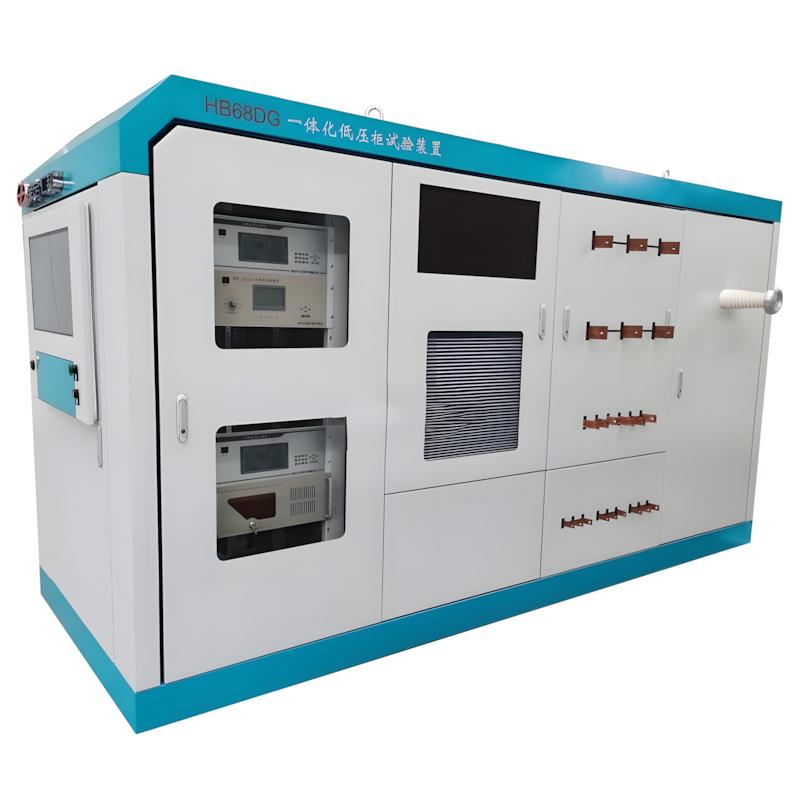
Integrated Low Voltage Cabinet Test Device

  • Integrated Low Voltage Cabinet Test Device

Key attributes

Brand Switchgear parts
Model NO. Integrated Low Voltage Cabinet Test Device
type Integrated testing platform
Series HB68DG

Product descriptions from the supplier

Description

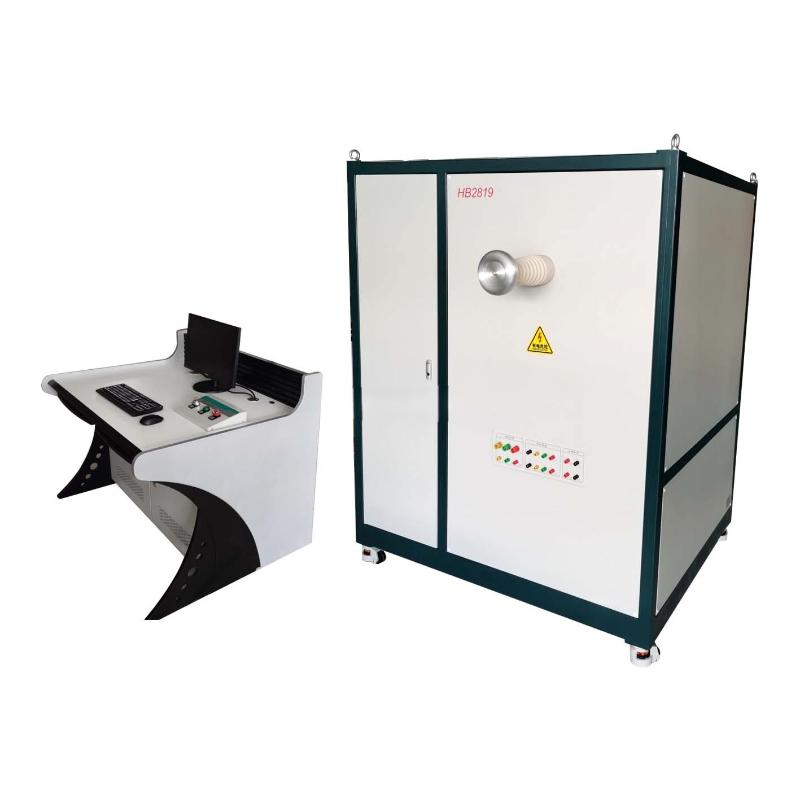
The experimental device adopts an integrated design and is centrally controlled by an industrial computer to automatically complete various electrical tests of high-voltage switch equipment. At the same time, this workstation is equipped with HB37TS switchgear lifting test device and HB37PZ mechanical collision impact test device, which can meet the B-level testing and inspection of low-voltage cabinet equipment.

Features

The testing system can be used to detect low voltage switchgear such as JP cabinets, 0.4KV cable branch boxes, and low voltage switchgear,
The experimental system can complete multiple tests such as dielectric performance, protection level of complete equipment, power on operation test, power frequency overvoltage protection test, temperature rise test, etc.
The experimental system integrates dielectric strength testing unit, grounding wire resistance testing unit, insulation resistance testing unit, impulse voltage testing device, multi-channel three-phase high current generator, multi-channel AC/DC operating power supply and other equipment. All equipment is controlled by an industrial computer and automatically completes various tests.
The experimental system is equipped with multiple wireless humidity rise temperature acquisition devices, which facilitate temperature testing arrangements
The experimental system is equipped with an LED Chinese character display protection screen, which displays the system's working status at any time to ensure the safety of the testing personnel
The trial picking system has information technology functions and is connected to the cloud platform management system through the network to complete data exchange.

Technical Parameters

Class C test equipment

Model

Technical parameters

Grounding resistance tester

HB5878

Test current automatic: 200mA, 1A,5A,10A

Insulation Resistance Meter

HB5805

Accuracy: ± (10%+5 characters), measurement range: 0.1M–200GΩ, test voltage: 0.5, 1, 2.5, 5 (kV)

Power frequency withstand voltage tester

HB2620-5

Output voltage: 0-10kV, output current: 50mA

Impact generating device

HBCI-20

Output voltage: 1–20kV, output waveform: 1.2/50us

Integrated single-phase control power supply


Output voltage: 0-250V, output current: 12A

Integrated three-phase AC power supply


Output voltage: 0-500V, output current: 15A

Integrated DC power supply


Output voltage: 0-300V, output current: 10A

Class B test equipment

Model

Technical parameters

IP gauge


Measurement range:(0-1) mm

Integrated power measurement module

HB2811

Measuring voltage: 100V, accuracy 0.2%, measuring current: 5A, accuracy 0.2%

Wireless temperature detector

HB6305

Route 64

Integrated three-phase current generator

HBDDL-200

Output current: 0-200 (A), 3 channels

Integrated three-phase current generator

HBDDL-400

Output current: 0-400 (A), 2 channels

Integrated three-phase current generator

HBDDL-1000

Output current: 0-1000 (A), 2 channels

Test control

HB2819Z-4

Automatic test switching and test range switching of each project tester, AC and DC power supply control measurement, electrical control of high current generator, data communication, safety protection system.

Computer systems and software

HB2819GL-4

Test system login, test personnel management, test sample identification, test item setting, test data setting, project switching, status reading, data upload, environmental parameter reading and judgment.

Device structure and accessories

HB2819ZN-4

Detection equipment bearing, electric switch switching, secret time structure.

FAQ
Q: What advantages does the Integrated Low Voltage Cabinet Test Device have over traditional split-type testing tools?
A:
Compared with split instruments (single-function insulation tester, relay tester), it has obvious competitive advantages:
 
  1. One-stop testing, high efficiency: One-time wiring completes 6+ core tests, reducing wiring time by 70% and avoiding human errors from repeated disconnection/connection;
  2. Full automation, labor-saving: Supports one-click automatic testing and unattended operation, no need for manual switching of test tools, reducing labor costs by 40%~60%;
  3. High precision, standard compliance: Adopts 16-bit high-speed ADC sampling and digital signal processing (DSP) technology, test data meets IEC 61439/GB 7251 standards, suitable for factory certification;
  4. Portable & multi-scene adaptation: Lightweight portable models (≤15kg) are easy to carry for on-site commissioning; bench-top models are designed for mass production testing in factories;
  5. Intelligent data management: Built-in software supports data storage, historical comparison, PDF report export, and WiFi/USB data transmission, facilitating test record archiving.
Q: What are the core functions and working principles?
A:

It is a high-integration precision testing instrument designed for comprehensive performance detection of low-voltage (LV) cabinets, switchgear, and distribution cabinets. Core functions include insulation resistance testing, continuity & loop resistance testing, protection relay (overcurrent/undervoltage/earth fault) testing, on-load switch performance testing, and auxiliary circuit function verification.

Working principle: Connect the device to the LV cabinet’s incoming/outgoing terminals, protection devices, and auxiliary circuits once. The embedded control unit automatically switches test circuits, outputs standard test signals (voltage/current), collects real-time data via high-precision sampling modules, and compares results with IEC 61439, GB 7251 standards to generate qualified test reports. It integrates multiple test functions into one device, avoiding repeated wiring and improving testing efficiency.
Know your supplier
Online store
On-time delivery rate
Response time
100.0%
≤4h
Company overview
Workplace: 1000m² Total staff: Highest Annual Export(usD): 300000000
Workplace: 1000m²
Total staff:
Highest Annual Export(usD): 300000000
Services
Business Type: Sales
Main Categories: Low Voltage Electrical Apparatus/Instrument meters/Production equipment/Tester/High Voltage Electrical Apparatus/Electrical fittings/Equipment Parts
Whole life care manager
Whole-life care management services for equipment procurement, use, maintenance, and after-sales, ensuring safe operation of electrical equipment, continuous control, and worry-free electricity consumption.
The equipment supplier has passed platform qualification certification and technical evaluation, ensuring compliance, professionalism, and reliability from the source.

Related Products

Related Knowledges

  • Faults and Handling of Single-phase Grounding in 10kV Distribution Lines
    Characteristics and Detection Devices for Single-Phase Ground Faults1. Characteristics of Single-Phase Ground FaultsCentral Alarm Signals:The warning bell rings, and the indicator lamp labeled “Ground Fault on [X] kV Bus Section [Y]” illuminates. In systems with a Petersen coil (arc suppression coil) grounding the neutral point, the “Petersen Coil Operated” indicator also lights up.Insulation Monitoring Voltmeter Indications:The voltage of the faulted phase decreases (in
    01/30/2026
  • Neutral point grounding operation mode for 110kV~220kV power grid transformers
    The arrangement of neutral point grounding operation modes for 110kV~220kV power grid transformers shall meet the insulation withstand requirements of transformer neutral points, and shall also strive to keep the zero-sequence impedance of substations basically unchanged, while ensuring that the zero-sequence comprehensive impedance at any short-circuit point in the system does not exceed three times the positive-sequence comprehensive impedance.For 220kV and 110kV transformers in new constructi
    01/29/2026
  • Why Do Substations Use Stones, Gravel, Pebbles, and Crushed Rock?
    Why Do Substations Use Stones, Gravel, Pebbles, and Crushed Rock?In substations, equipment such as power and distribution transformers, transmission lines, voltage transformers, current transformers, and disconnect switches all require grounding. Beyond grounding, we will now explore in depth why gravel and crushed stone are commonly used in substations. Though they appear ordinary, these stones play a critical safety and functional role.In substation grounding design—especially when multiple gr
    01/29/2026
  • Why Must a Transformer Core Be Grounded at Only One Point? Isn't Multi-Point Grounding More Reliable?
    Why Does the Transformer Core Need to Be Grounded?During operation, the transformer core, along with the metal structures, parts, and components that fix the core and windings, are all situated in a strong electric field. Under the influence of this electric field, they acquire a relatively high potential with respect to ground. If the core is not grounded, a potential difference will exist between the core and the grounded clamping structures and tank, which may lead to intermittent discharge.I
    01/29/2026
  • Understanding Transformer Neutral Grounding
    I. What is a Neutral Point?In transformers and generators, the neutral point is a specific point in the winding where the absolute voltage between this point and each external terminal is equal. In the diagram below, pointOrepresents the neutral point.II. Why Does the Neutral Point Need Grounding?The electrical connection method between the neutral point and earth in a three-phase AC power system is called theneutral grounding method. This grounding method directly affects:The safety, reliabilit
    01/29/2026
  • What’s the Difference Between Rectifier Transformers and Power Transformers?
    What is a Rectifier Transformer?"Power conversion" is a general term encompassing rectification, inversion, and frequency conversion, with rectification being the most widely used among them. Rectifier equipment converts input AC power into DC output through rectification and filtering. A rectifier transformer serves as the power supply transformer for such rectifier equipment. In industrial applications, most DC power supplies are obtained by combining a rectifier transformer with rectifier equ
    01/29/2026
Haven't found the right supplier yet? Let matching verified suppliers find you. Get Quotation Now
Haven't found the right supplier yet? Let matching verified suppliers find you.
Get Quotation Now
Send inquiry
+86
Click to upload file
Download
Get the IEE Business Application
Use the IEE-Business app to find equipment, obtain solutions, connect with experts, and participate in industry collaboration anytime, anywhere—fully supporting the development of your power projects and business.