• Product
  • Suppliers
  • Manufacturers
  • Solutions
  • Free tools
  • Knowledges
  • Experts
  • Communities
Search


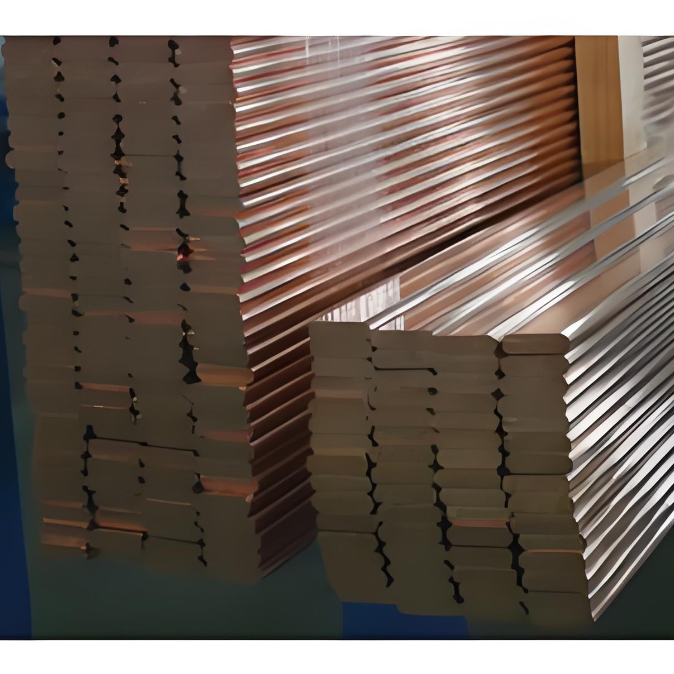
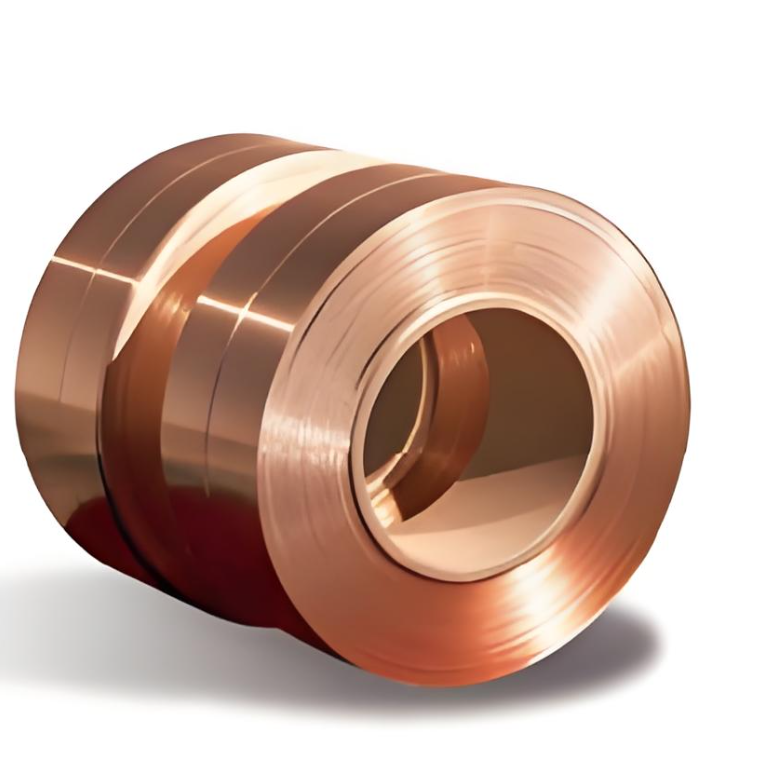
T/TU Series Copper Strip

  • T/TU Series Copper Strip
  • T/TU Series Copper Strip
  • T/TU Series Copper Strip

Key attributes

Brand Wone Store
Model NO. High tensile copper strip 5mm c2680 c1201 soft metal brass copper strip/foil/coil
Thickness 0.05-2.0mm
Width 10-500mm
Series T/TU

Product descriptions from the supplier

Description

Product application

Copper strips for Radio frequency cable, copper strips for cable shielding, copper strips for photovoltaic

solder strip, copper strip for transformer, copper strips for cylinder liner, electrical and electronic components, etc.

enforce Standard

1721633408073_修复后.png

Trade Mark.State. Specification

1721633511313_修复后.png

Size and Tolerance

1721633631837_修复后.png

Electrical and Mechanical Properties

1721633757922_修复后.png


Q: What are the main uses of copper strip? 

A: Copper strips are widely used. In the field of electronics, it can be used to make connection lines on circuit boards, ensuring signal transmission with its good electrical conductivity. In electrical equipment, such as transformers, motors, etc., copper strips can be used for winding or connecting parts to help in the conversion and transmission of electrical energy. In the architectural decoration industry, copper strips can be processed into decorative strips to add beauty and unique texture. 

Q: What are the advantages of copper strip

A: There are many advantages. The first is good electrical conductivity, which is a characteristic of copper and can effectively reduce resistance. Secondly, the copper strip has good ductility, is easy to process and form, and can be rolled into various thicknesses and widths to meet different needs. Moreover, the corrosion resistance of the copper strip is relatively good, and it can maintain stable performance in a certain environment for a long time.

Know your supplier
Online store
On-time delivery rate
Response time
100.0%
≤4h
Company overview
Workplace: 1000m² Total staff: Highest Annual Export(usD): 300000000
Workplace: 1000m²
Total staff:
Highest Annual Export(usD): 300000000
Services
Business Type: Sales
Main Categories: Wire cable/High Voltage Electrical Apparatus/Low Voltage Electrical Apparatus/Instrument meters/New energy/Tester/Integrated Electrical Equipment/Production equipment/Generator/Electrical fittings/Instrument Transformer/Equipment Parts
Whole life care manager
Whole-life care management services for equipment procurement, use, maintenance, and after-sales, ensuring safe operation of electrical equipment, continuous control, and worry-free electricity consumption.
The equipment supplier has passed platform qualification certification and technical evaluation, ensuring compliance, professionalism, and reliability from the source.

Related Products

Related Knowledges

  • How Much Current Can a 0.75 mm² Copper Wire Carry?
    The current-carrying capacity of a 0.75 mm² copper wire depends on several factors, including the operating environment, type of insulation, whether the wire is installed in conduit, and the number of wires. Here are some common scenarios and their corresponding current ratings:1. Household PVC-Insulated Copper WireAccording to general experience and standards, the safe current-carrying capacity of household PVC-insulated copper wire is as follows:Safe Current Rating: 6 A per square millimeter.S
    11/06/2024
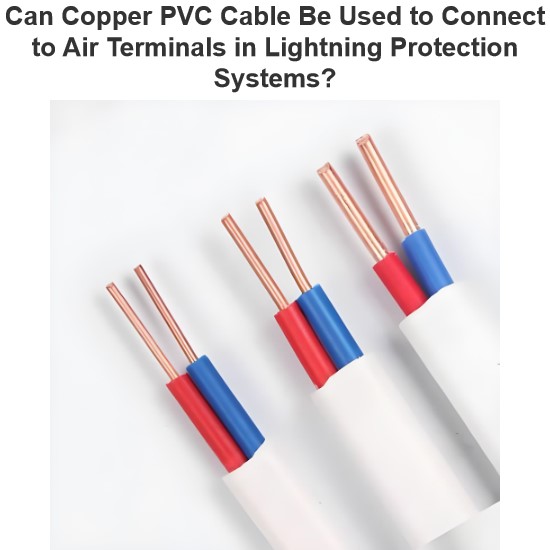
  • Can Copper PVC Cable Be Used to Connect to Air Terminals in Lightning Protection Systems?
    In lightning protection systems, the selection of conductive materials and types for connecting air terminals (lightning rods) is very important. Using copper PVC cable to connect to air terminals is not the best choice, and the main reasons are as follows:1. Conductivity Copper Wire: Copper is an excellent conductor and can effectively carry lightning current. PVC Insulation Layer: The PVC insulation layer may melt or burn due to high temperatures during a lightning strike, affecting conductivi
    11/04/2024
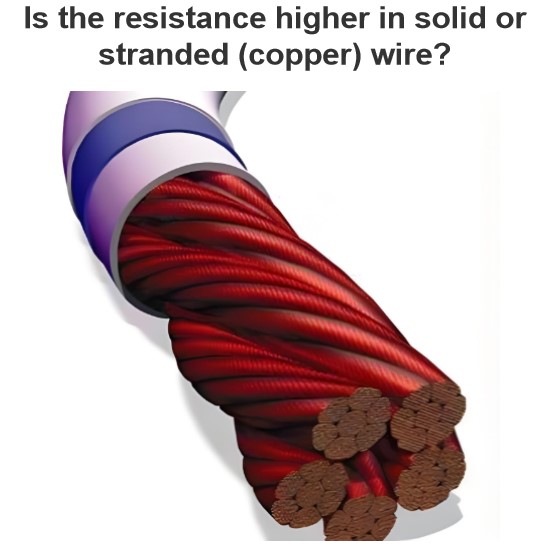
  • Is the resistance higher in solid or stranded (copper) wire?
    Solid wire and stranded wire are both commonly used types of conductors, each with their own advantages and disadvantages. When discussing resistance, we need to consider factors such as the total cross-sectional area, material, temperature, and the geometric shape of the conductor. Below is some basic information about the resistance characteristics of solid wire and stranded wire:Solid WireSolid wire is made from a single piece of metal conductor without any internal gaps or seams. This type o
    10/23/2024
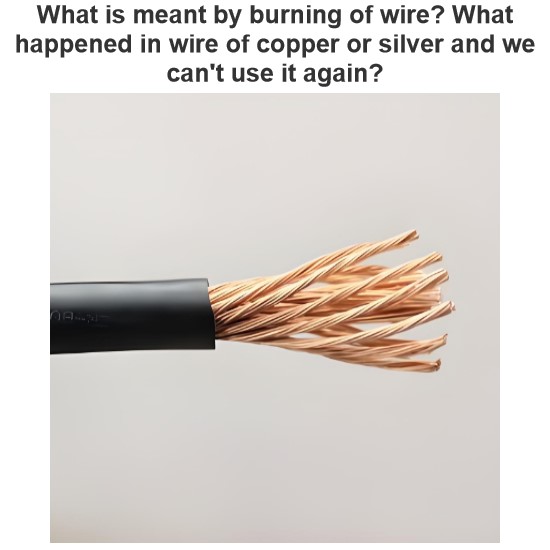
  • What is meant by burning of wire? What happened in wire of copper or silver and we can't use it again?
    Meaning and Causes of Wire BurnoutWire burning out typically refers to a situation where wires lose their ability to function normally due to changes in their physical or chemical properties caused by overheating or other reasons. This may involve the melting of wire insulation, damage to conductors, or failure of connection points, among other issues.The specific situation that led to the wire burning out1.Overload UseWhen the current carried by a wire exceeds its design capacity, it can cause
    10/21/2024
  • How do you know the maximum number of groups of coils in a three-phase electric motor?
    The maximum number of coil groups in a three-phase motor can be determined by considering the relationship between the number of poles, phases, and slot positions in the motor. Here's how to calculate it:Pole and Slot Count: In a three-phase motor, the slot count is usually a multiple of 3 because each phase has its own coil group evenly distributed around the stator. The relationship between the slot count (S) and the pole count (P) is directly related through the three-phase winding mode: S =
    10/05/2024
  • What type of wire is typically used for making electric cables?
    Electric cables are composed of one or more wires enclosed in a protective covering. The choice of wire material depends on several factors including conductivity, cost, flexibility, strength, and resistance to corrosion. The most commonly used types of wire for making electric cables include:Copper (Cu) High Conductivity: Copper has excellent electrical conductivity, second only to silver among common metals. Good Flexibility: Copper is relatively soft and ductile, which makes it easy to work w
    09/30/2024
Haven't found the right supplier yet? Let matching verified suppliers find you. Get Quotation Now
Haven't found the right supplier yet? Let matching verified suppliers find you.
Get Quotation Now
Send inquiry
+86
Click to upload file
Download
Get the IEE Business Application
Use the IEE-Business app to find equipment, obtain solutions, connect with experts, and participate in industry collaboration anytime, anywhere—fully supporting the development of your power projects and business.