• Product
  • Suppliers
  • Manufacturers
  • Solutions
  • Free tools
  • Knowledges
  • Experts
  • Communities
Search


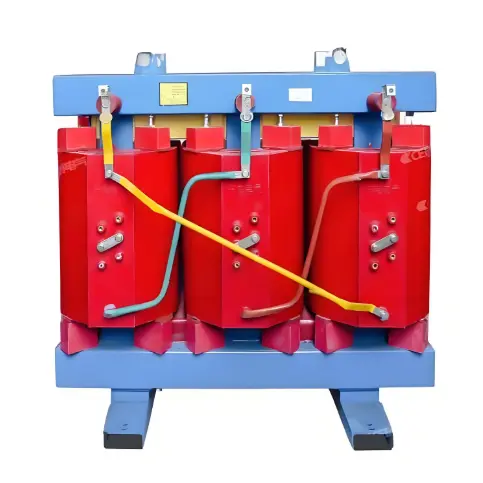
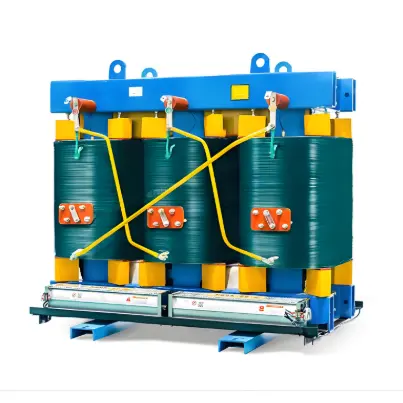
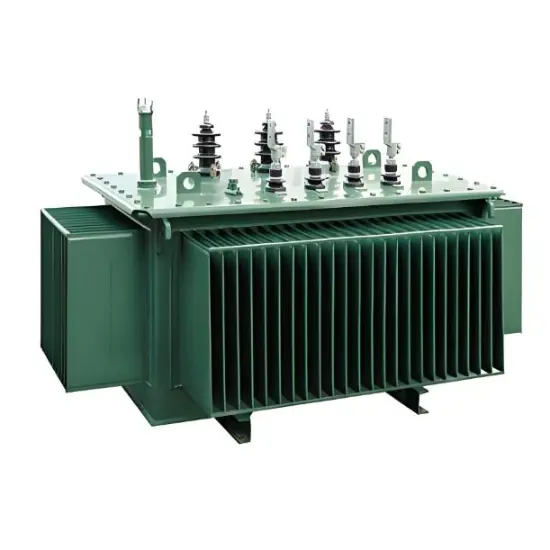
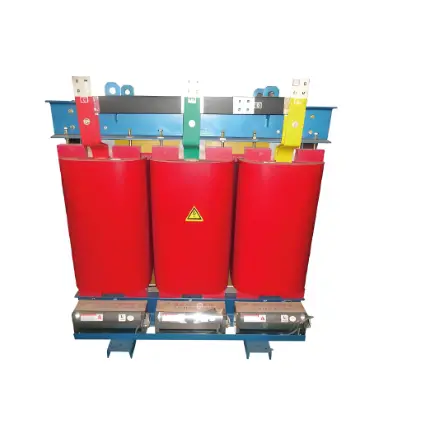
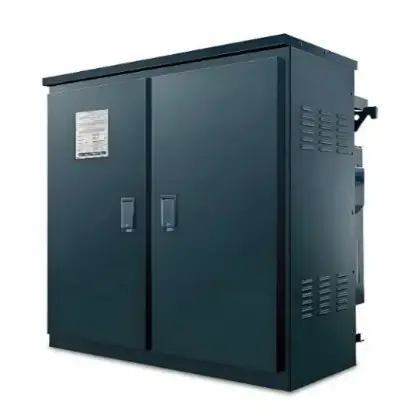
Amorphous alloy dry-type transformer 200kVA 250kVA 315kVA 400kVA

  • Amorphous alloy dry-type transformer 200kVA 250kVA 315kVA 400kVA

Key attributes

Brand Vziman
Model NO. Amorphous alloy dry-type transformer 200KVA 250KVA 315KVA 400KVA
Rated capacity 400kVA
Voltage grade 15KV
Series SC (B) H15

Product descriptions from the supplier

Description

Description

The amorphous alloy dry-type transformer represents a mature energy-saving solution in dry-type transformer technology. This product stands out for its low no-load loss, flame-retardant self-extinguishing properties, moisture resistance, crack resistance, and maintenance-free operation. Ideal for replacing conventional dry transformers, it is widely applicable in high-rise buildings, commercial centers, subways, airports, stations, industrial and mining enterprises, and power plants. Specifically designed for installation in fire-sensitive environments, it is particularly suitable for flammable or explosive zones, meeting strict fire protection requirements with optimal safety and reliability.

Key Advantages

  • Energy Efficiency: Significantly reduces no-load loss, contributing to lower operational costs and environmental sustainability.

  • Safety Features: Self-extinguishing and flame-retardant design minimizes fire risks, while moisture and crack resistance ensure stable performance in diverse conditions.

  • Versatile Application: Compatible with all scenarios using traditional dry transformers, including high-density urban infrastructure and industrial settings with strict safety norms.

  • Low Maintenance: Engineered for hassle-free operation, eliminating the need for regular upkeep and enhancing system durability.

Parameter:
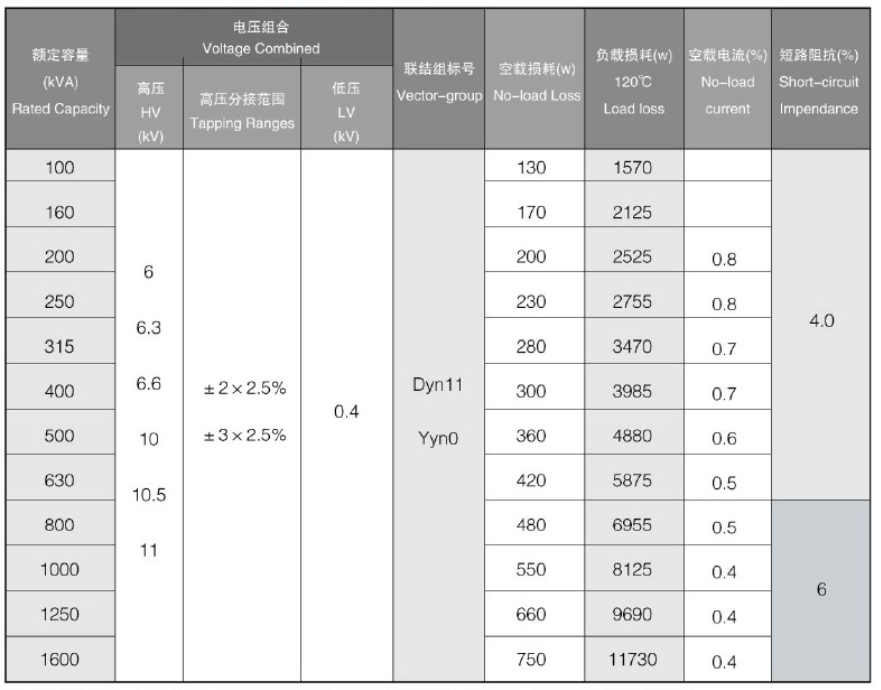
企业微信截图_172309516528.png


What is an amorphous alloy dry-type transformer?

Amorphous Alloy Dry - type Transformer is a kind of dry - type transformer that uses amorphous alloy material as the iron core. The amorphous alloy material has unique physical and chemical properties, which enable it to exhibit excellent performance in transformer applications. This kind of transformer is widely used in situations where high energy - efficiency and environmental - protection requirements are emphasized.

Basic Definitions:

  • Amorphous Alloy: An amorphous alloy is a metallic material with an amorphous structure, usually composed of elements such as iron, boron, and silicon. The atomic arrangement of this material does not have a fixed lattice structure, thus possessing unique physical and chemical properties.

  • Dry-type Transformer: A dry-type transformer is a type of transformer that does not use a liquid cooling medium (such as transformer oil). It usually adopts natural air cooling or forced air cooling.

Structural Characteristics:

  • Iron Core: The iron core made of amorphous alloy material has extremely low hysteresis loss and eddy current loss.

  • Coil: Usually wound with copper or aluminum wires, it has good electrical properties.

  • Insulation Materials: High-quality insulation materials such as epoxy resin are used to ensure the safety of the transformer operating under high voltage.

  • Cooling Methods: Generally, natural air cooling (AN) or forced air cooling (AF) is adopted. The appropriate cooling method is selected according to specific application requirements.
Know your supplier
Online store
On-time delivery rate
Response time
100.0%
≤4h
Company overview
Workplace: 10000m² Total staff: 300 Highest Annual Export(usD): 150000000
Workplace: 10000m²
Total staff: 300
Highest Annual Export(usD): 150000000
Services
Business Type: Design/Manufacture/Sales
Main Categories: High Voltage Electrical Apparatus/Electric transformer
Whole life care manager
Whole-life care management services for equipment procurement, use, maintenance, and after-sales, ensuring safe operation of electrical equipment, continuous control, and worry-free electricity consumption.
The equipment supplier has passed platform qualification certification and technical evaluation, ensuring compliance, professionalism, and reliability from the source.

Related Products

Related Knowledges

  • Main Transformer Accidents and Light Gas Operation Issues
    1. Accident Record (March 19, 2019)At 16:13 on March 19, 2019, the monitoring background reported a light gas action of No. 3 main transformer. In accordance with the Code for Operation of Power Transformers (DL/T572-2010), operation and maintenance (O&M) personnel inspected the on-site condition of No. 3 main transformer.On-site confirmation: The WBH non-electrical protection panel of No. 3 main transformer reported a Phase B light gas action of the transformer body, and the reset was ineff
    02/05/2026
  • Faults and Handling of Single-phase Grounding in 10kV Distribution Lines
    Characteristics and Detection Devices for Single-Phase Ground Faults1. Characteristics of Single-Phase Ground FaultsCentral Alarm Signals:The warning bell rings, and the indicator lamp labeled “Ground Fault on [X] kV Bus Section [Y]” illuminates. In systems with a Petersen coil (arc suppression coil) grounding the neutral point, the “Petersen Coil Operated” indicator also lights up.Insulation Monitoring Voltmeter Indications:The voltage of the faulted phase decreases (in
    01/30/2026
  • Neutral point grounding operation mode for 110kV~220kV power grid transformers
    The arrangement of neutral point grounding operation modes for 110kV~220kV power grid transformers shall meet the insulation withstand requirements of transformer neutral points, and shall also strive to keep the zero-sequence impedance of substations basically unchanged, while ensuring that the zero-sequence comprehensive impedance at any short-circuit point in the system does not exceed three times the positive-sequence comprehensive impedance.For 220kV and 110kV transformers in new constructi
    01/29/2026
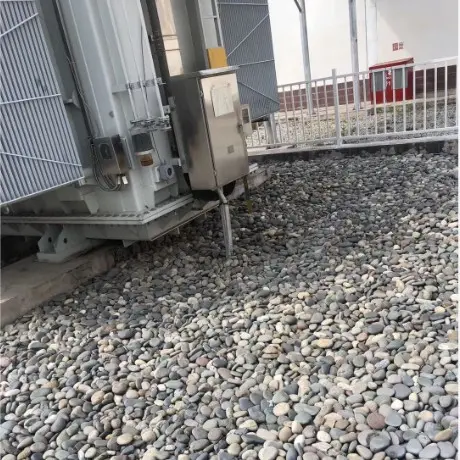
  • Why Do Substations Use Stones, Gravel, Pebbles, and Crushed Rock?
    Why Do Substations Use Stones, Gravel, Pebbles, and Crushed Rock?In substations, equipment such as power and distribution transformers, transmission lines, voltage transformers, current transformers, and disconnect switches all require grounding. Beyond grounding, we will now explore in depth why gravel and crushed stone are commonly used in substations. Though they appear ordinary, these stones play a critical safety and functional role.In substation grounding design—especially when multiple gr
    01/29/2026
  • Why Must a Transformer Core Be Grounded at Only One Point? Isn't Multi-Point Grounding More Reliable?
    Why Does the Transformer Core Need to Be Grounded?During operation, the transformer core, along with the metal structures, parts, and components that fix the core and windings, are all situated in a strong electric field. Under the influence of this electric field, they acquire a relatively high potential with respect to ground. If the core is not grounded, a potential difference will exist between the core and the grounded clamping structures and tank, which may lead to intermittent discharge.I
    01/29/2026
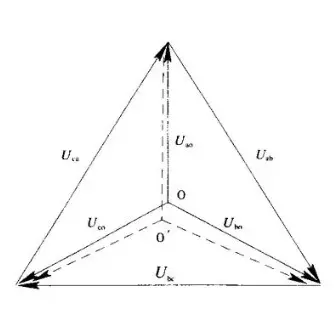
  • Understanding Transformer Neutral Grounding
    I. What is a Neutral Point?In transformers and generators, the neutral point is a specific point in the winding where the absolute voltage between this point and each external terminal is equal. In the diagram below, pointOrepresents the neutral point.II. Why Does the Neutral Point Need Grounding?The electrical connection method between the neutral point and earth in a three-phase AC power system is called theneutral grounding method. This grounding method directly affects:The safety, reliabilit
    01/29/2026

Related Solutions

  • Choosing Vizman Distribution Transformers: Innovative Customization to Meet Diverse Power Needs
    Distribution transformers are the heart of local electricity distribution systems. They step down voltage, enabling safe and efficient power supply to homes and businesses.At Vizman Electric Power Technology Co., Ltd., we understand the critical role of distribution transformers in the energy ecosystem. That's why we specialize in manufacturing high-quality distribution transformers, providing tailored solutions to meet diverse energy needs.1.Solutions Offered by Vizman Electric Power Technology
    04/16/2025
  • SF6 Circuit Breaker Solutions in High-Voltage Power Systems: A Case Study of VZIMAN Company
    1. Challenges in High-Voltage Power Systems1.1 High-voltage power systems, as the core of power transmission, face critical challenges: Equipment Performance Limits: With increasing voltage levels (e.g., 500kV and above), traditional circuit breakers struggle to meet high breaking capacities (over 40kA) and rapid insulation recovery requirements. Overvoltage Risks: Switching capacitive loads (e.g., capacitor banks) may cause reignition, leading to dangerous overvoltages. Poor Environmental Adapt
    05/13/2025
  • VZIMAN Company SF6 Circuit Breaker Solutions for Renewable Energy Grid Integration
    1. Current Challenges in Renewable Energy Grid Integration1.1 Grid Frequency Fluctuations and Stability IssuesThe intermittency and variability of renewable energy sources (e.g., wind and solar) lead to frequent grid frequency changes. Traditional circuit breakers struggle to respond rapidly to such dynamic loads, potentially causing equipment damage or regional blackouts. For instance, during sudden drops in wind power or abrupt solar output fluctuations, the grid must isolate faults within mil
    05/13/2025
Related Free tools
Haven't found the right supplier yet? Let matching verified suppliers find you. Get Quotation Now
Haven't found the right supplier yet? Let matching verified suppliers find you.
Get Quotation Now
Send inquiry
+86
Click to upload file
Download
Get the IEE Business Application
Use the IEE-Business app to find equipment, obtain solutions, connect with experts, and participate in industry collaboration anytime, anywhere—fully supporting the development of your power projects and business.