Transformer Vertical winding machine
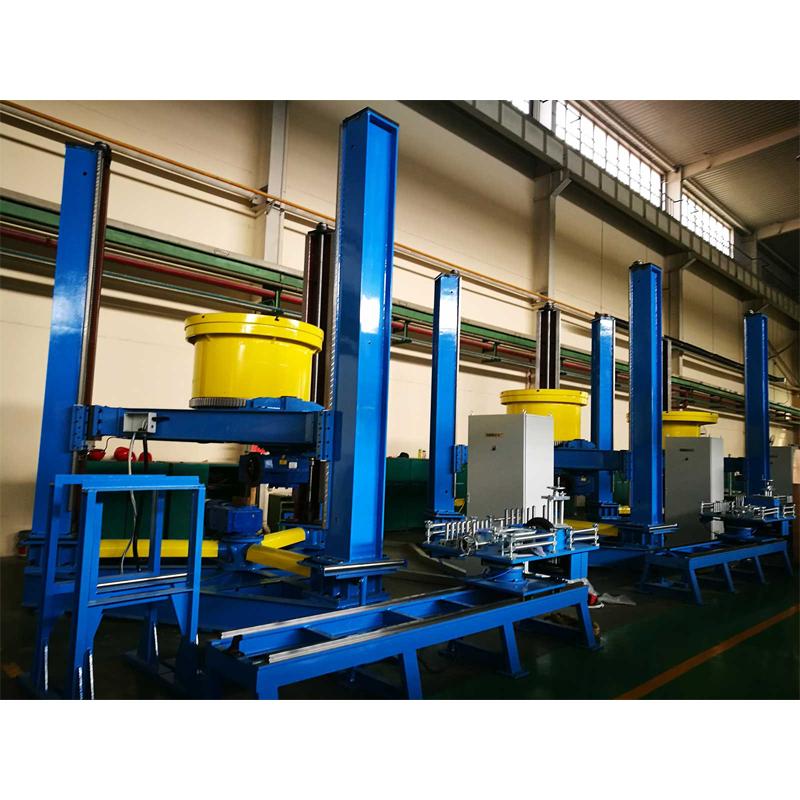
Key attributes
| Brand | Switchgear parts |
| Model NO. | Transformer Vertical winding machine |
| Max.torque(N.m) | 9000N.m |
| Load | 10 ton |
| Chuck diameter | 1500mm |
| Max windingdiameter | 2000mm |
| Chuck travel distance | 2000mm |
| Chuck height (from ground) | 500mm |
| Rotation speed | 0-10Rpm |
| Elevating speed | 0.5m/min |
| Tension | 7000N |
| Platform Expandablerange | 900-2200mm |
| Series | LRJ |
Product descriptions from the supplier
Application
The Vertical winding machine is the specialized equipmentfor power transformers coil manufacture.
Transformer Vertical Winding Machine: Efficient vertical coil winding solution with programmable settings. Ensures tight winding density and adjustable speed—perfect for dry-type, oil-immersed transformer production lines!
Operation description
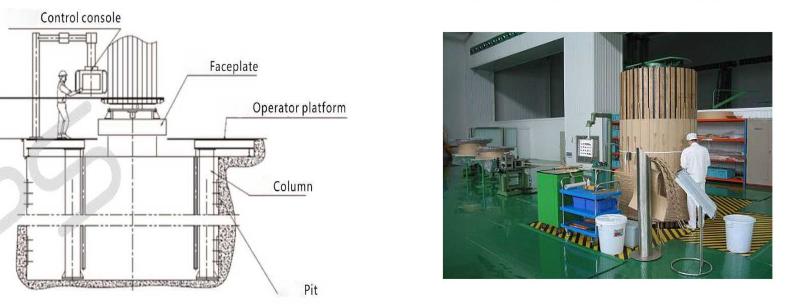
Technical specification
|
Specification Model |
LRJ-10/2000 |
LRJ-15/2600 |
LRJ-20/3000 |
LRJ-25/3000 |
LRJ-30/3200 |
LRJ-40/3600 |
|
Chuck diameter (mm) |
1500 |
1800 |
2000 |
2500 |
3000 |
3200 |
|
Max winding diameter(mm) |
2000 |
2600 |
3000 |
3000 |
3200 |
3600 |
|
Chuck travel distance(mm) |
2000 |
2000 |
3000 |
3500 |
3200 |
4000 |
|
Max load (ton) |
10 |
15 |
20 |
25 |
30 |
40 |
|
Max torque (N·m) |
9000 |
15000 |
20000 |
20000 |
30000 |
40000 |
|
Chuck height (from ground) (mm) |
500 |
500 |
500 |
500 |
500 |
500 |
|
Rotation speed (rpm) |
0-10 |
0-10 |
0-10 |
0-10 |
0-10 |
0-10 |
|
Elevating speed (m/min) |
0.5 |
0.5 |
0.5 |
0.5 |
0.5 |
0.5 |
|
Tension (N) |
7000 |
7000 |
10000 |
10000 |
10000 |
10000 |
|
Platform Expandable range (mm) |
900~2200 |
1000~2800 |
1000~3050 |
1000~3200 |
1200~3200 |
900-3700 |
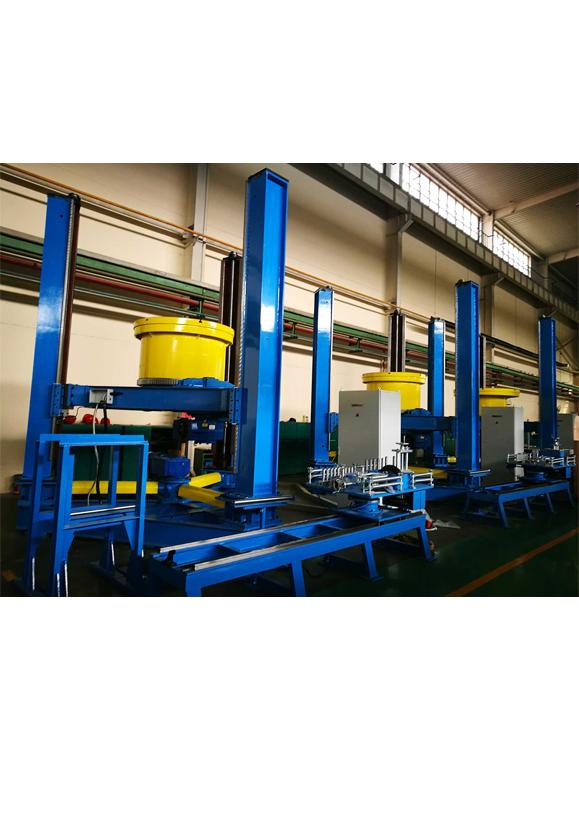
The design highlights and values are as follows: ① Platform expandable design: The platform has an expansion range of 900-3700mm, which can flexibly adjust the operating space according to different coil sizes, reducing the time for changeover adjustment; ② Stable operating parameters: fixed speed of 0-10rpm, lifting speed of 0.5m/min, to avoid uneven coil winding caused by parameter fluctuations and improve processing quality; ③ Graded tension configuration: 7000N and 10000N tension levels, suitable for coil windings of different materials and thicknesses, ensuring winding density; ④ Special component configuration: The operation screen simplifies the parameter setting process, and the structural design of the flower plate and column improves the equipment's load-bearing stability, reduces vibration during processing, indirectly ensures coil accuracy, and thereby improves overall production efficiency.
The gradient change and adaptation scenarios are as follows: ① Load: gradually increase from 10 tons (LRJ-10/2000) to 40 tons (LRJ-40/3600), covering the weight requirements of small to large coils; ② Maximum torque: increased from 9000N · m (LRJ-10/2000) to 40000N · m (LRJ-40/3600), torque is positively correlated with load, ensuring power output for coil winding under high loads; ③ Maximum winding diameter: expanded from 2000mm (LRJ-10/2000) to 3600mm (LRJ-40/3600). Adaptation logic: Small power transformers (light load, small diameter coils) can choose LRJ-10/2000~LRJ-15/2600; Medium sized transformers can be selected from LRJ-20/3000~LRJ-30/3200; Large and ultra large transformers (heavy loads, large diameter coils) require the use of LRJ-40/3600
The core application scenario is the manufacturing and processing of power transformer coils, which is a specialized equipment for the coil winding process in the production of this type of transformer. The key components that support the processing function include: operation screen (used for parameter setting and control), flower plate (the core load-bearing component for coil winding), platform (the operator's work platform), column (the main support structure of the equipment), and pit (adapted to the installation of equipment and the spatial requirements of large coil processing). All components work together to ensure the accuracy and ease of operation of coil winding.

Related Products
-
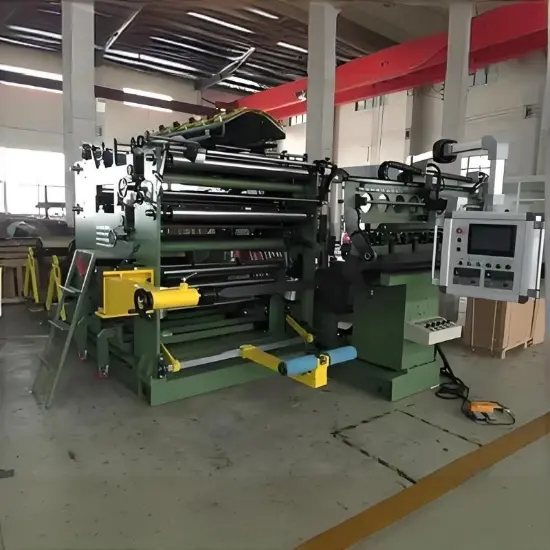
PRJ double winding Copper Strip Foil Winding Machine for machinery industry
-
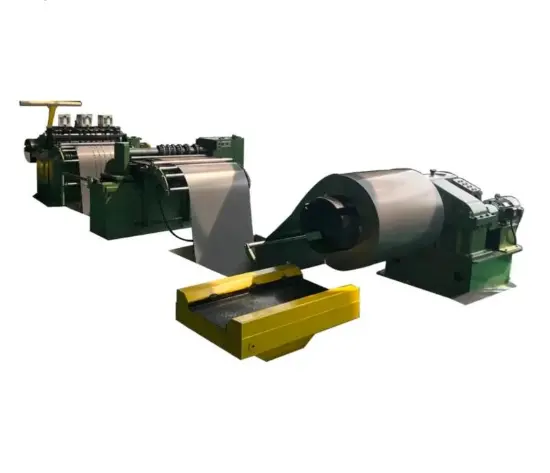
coil cutting line Silicon steel sheets slitting line machine for transformer machine
-
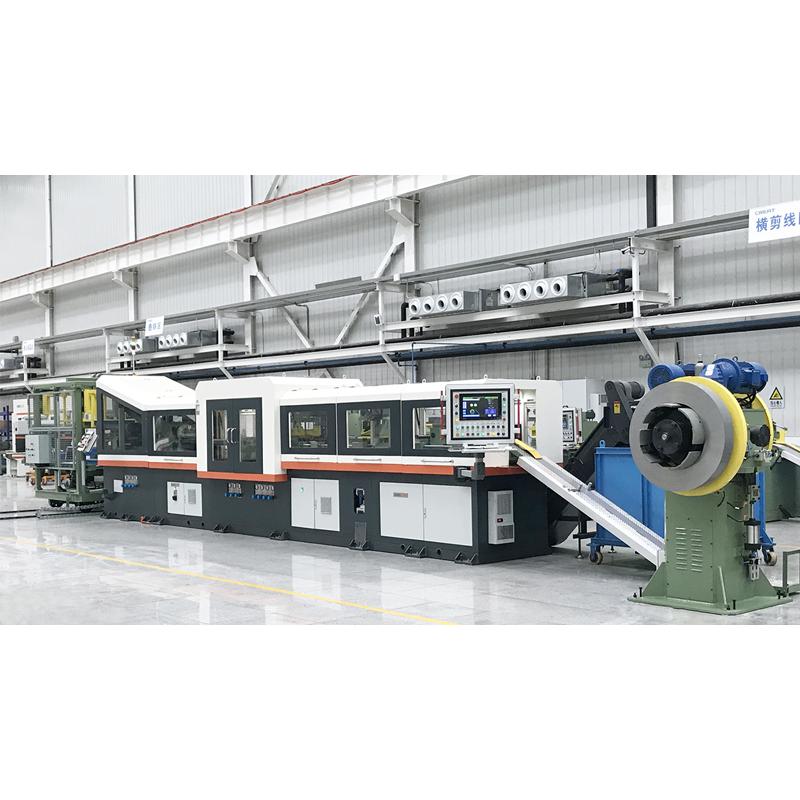
High-Speed Transformer Core Cutting Machine with Intelligent Control System
-
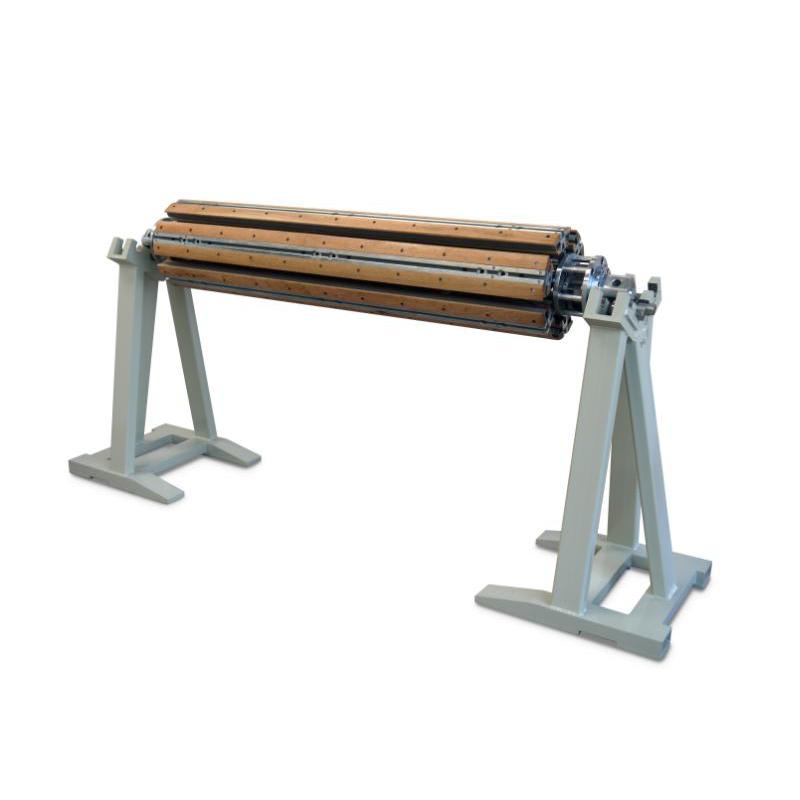
Transformer expandable mandrel
-
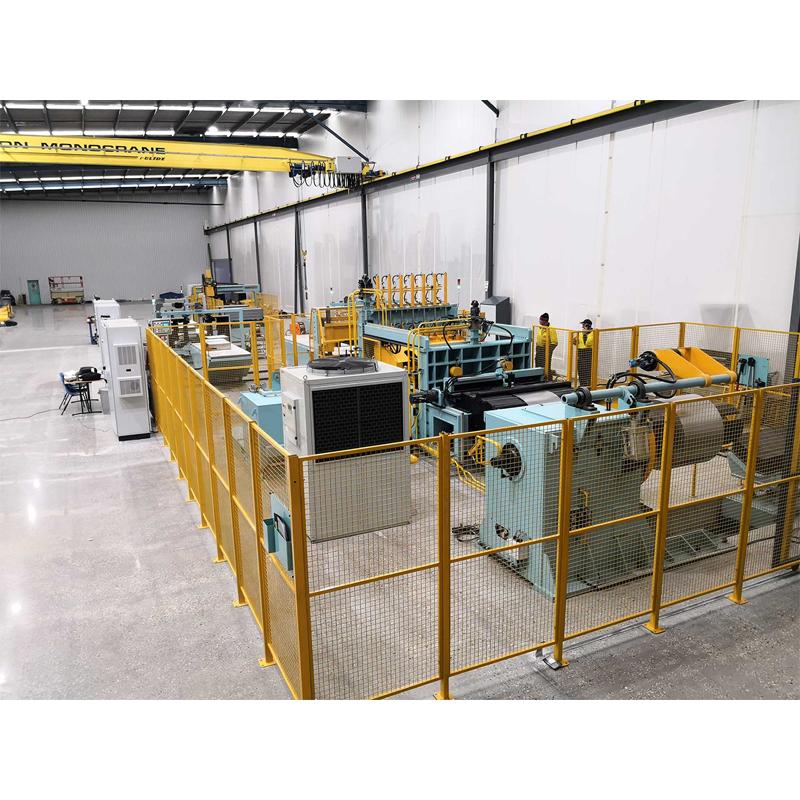
Transformer Corrugated tank forming and welding machine
-
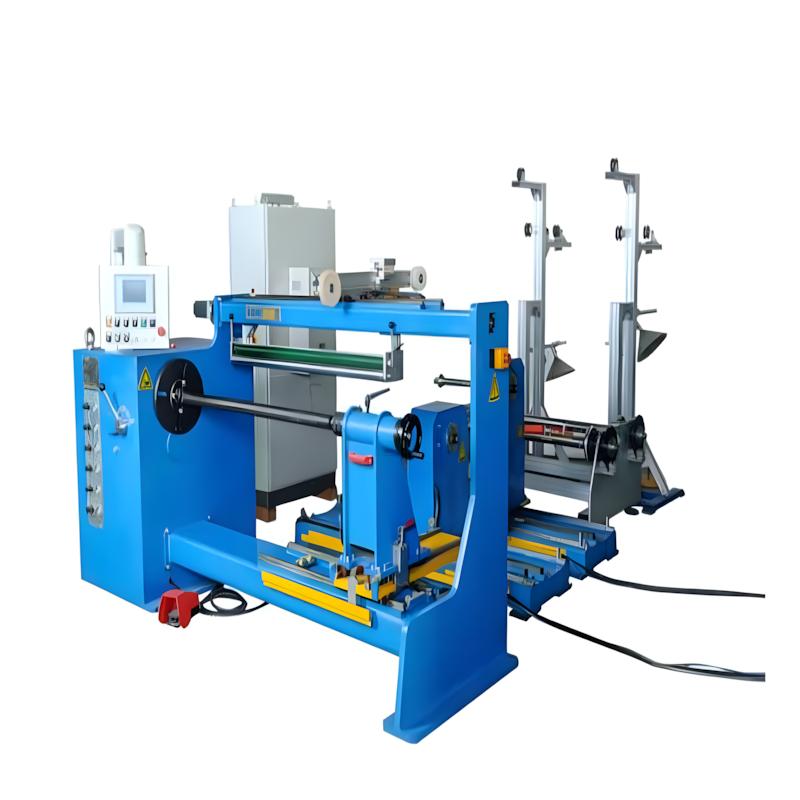
For use in automatic conductor winding machines for transformers
-
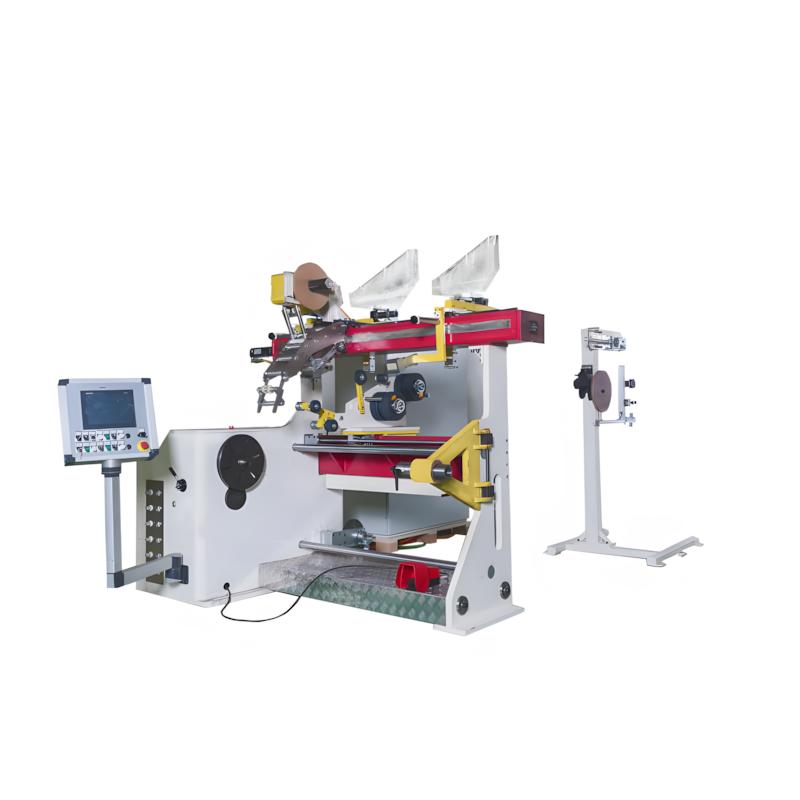
Suitable for fully automatic insulation winding machine for transformers
Related Knowledges
-
 Main Transformer Accidents and Light Gas Operation Issues1. Accident Record (March 19, 2019)At 16:13 on March 19, 2019, the monitoring background reported a light gas action of No. 3 main transformer. In accordance with the Code for Operation of Power Transformers (DL/T572-2010), operation and maintenance (O&M) personnel inspected the on-site condition of No. 3 main transformer.On-site confirmation: The WBH non-electrical protection panel of No. 3 main transformer reported a Phase B light gas action of the transformer body, and the reset was ineff02/05/2026
 -
 Faults and Handling of Single-phase Grounding in 10kV Distribution LinesCharacteristics and Detection Devices for Single-Phase Ground Faults1. Characteristics of Single-Phase Ground FaultsCentral Alarm Signals:The warning bell rings, and the indicator lamp labeled “Ground Fault on [X] kV Bus Section [Y]” illuminates. In systems with a Petersen coil (arc suppression coil) grounding the neutral point, the “Petersen Coil Operated” indicator also lights up.Insulation Monitoring Voltmeter Indications:The voltage of the faulted phase decreases (in01/30/2026
 -
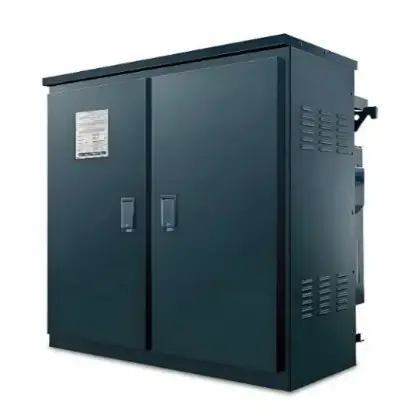 Neutral point grounding operation mode for 110kV~220kV power grid transformersThe arrangement of neutral point grounding operation modes for 110kV~220kV power grid transformers shall meet the insulation withstand requirements of transformer neutral points, and shall also strive to keep the zero-sequence impedance of substations basically unchanged, while ensuring that the zero-sequence comprehensive impedance at any short-circuit point in the system does not exceed three times the positive-sequence comprehensive impedance.For 220kV and 110kV transformers in new constructi01/29/2026
 -
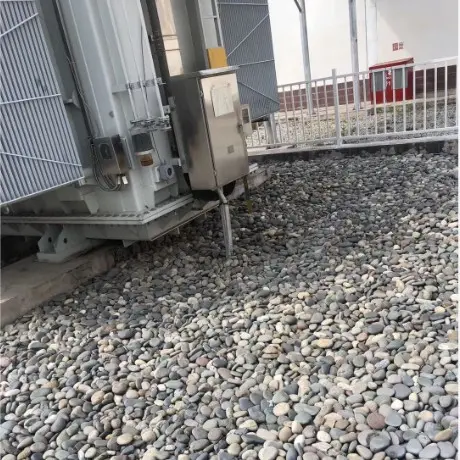 Why Do Substations Use Stones, Gravel, Pebbles, and Crushed Rock?Why Do Substations Use Stones, Gravel, Pebbles, and Crushed Rock?In substations, equipment such as power and distribution transformers, transmission lines, voltage transformers, current transformers, and disconnect switches all require grounding. Beyond grounding, we will now explore in depth why gravel and crushed stone are commonly used in substations. Though they appear ordinary, these stones play a critical safety and functional role.In substation grounding design—especially when multiple gr01/29/2026
 -
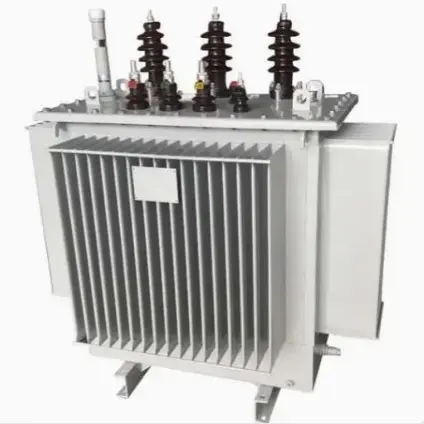 Why Must a Transformer Core Be Grounded at Only One Point? Isn't Multi-Point Grounding More Reliable?Why Does the Transformer Core Need to Be Grounded?During operation, the transformer core, along with the metal structures, parts, and components that fix the core and windings, are all situated in a strong electric field. Under the influence of this electric field, they acquire a relatively high potential with respect to ground. If the core is not grounded, a potential difference will exist between the core and the grounded clamping structures and tank, which may lead to intermittent discharge.I01/29/2026
 -
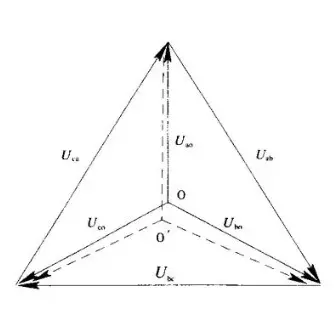 Understanding Transformer Neutral GroundingI. What is a Neutral Point?In transformers and generators, the neutral point is a specific point in the winding where the absolute voltage between this point and each external terminal is equal. In the diagram below, pointOrepresents the neutral point.II. Why Does the Neutral Point Need Grounding?The electrical connection method between the neutral point and earth in a three-phase AC power system is called theneutral grounding method. This grounding method directly affects:The safety, reliabilit01/29/2026






