• Product
  • Suppliers
  • Manufacturers
  • Solutions
  • Free tools
  • Knowledges
  • Experts
  • Communities
Search


Free Expert Guides on Power Systems, Circuit Design & Electrical Troubleshooting

Access free engineering resources from IEE Business—covering power design, circuit layout, equipment selection, and troubleshooting. Expert-developed guides help engineers, procurement, and project teams make better decisions. Stay ahead on smart grids, renewables, efficiency, and AI tools. Improve reliability, reduce downtime, and enhance outcomes with real-world solutions. Explore our knowledge hub today.
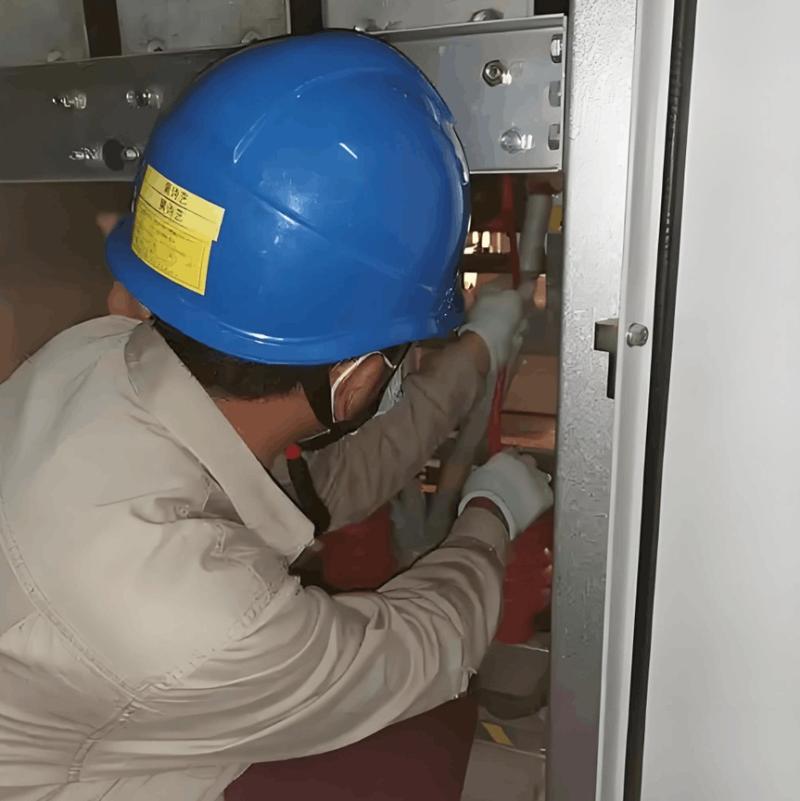
Distribution Equipment Transformer Testing, Inspection, and Maintenance
1.Transformer Maintenance and Inspection Open the low-voltage (LV) circuit breaker of the transformer under maintenance, remove the control power fuse, and hang a “Do Not Close” warning sign on the switch handle. Open the high-voltage (HV) circuit breaker of the transformer under maintenance, close the grounding switch, fully discharge the transformer, lock the HV switchgear, and hang a “Do Not Close” warning sign on the switch handle. For dry-type transformer maintenance: first clean the porcel
12/25/2025
Consult
Tip
Consult
Tip
Power transformers Insulation Resistance & Dielectric Loss Analysis
1 IntroductionPower transformers are among the most critical equipment in power systems, and it is essential to maximize prevention and minimize the occurrence of transformer failures and accidents. Insulation failures of various types account for more than 85% of all transformer accidents. Therefore, to ensure safe transformer operation, regular insulation testing of transformers is necessary to detect insulation defects in advance and promptly address potential accident hazards. Throughout my
12/22/2025
Consult
Tip
Consult
Tip
Adjustment Test Operation and Precautions of High-Voltage Power Distribution Cabinets in Power Systems
1. Key Points for Debugging High-Voltage Power Distribution Cabinets in Power Systems1.1 Voltage ControlDuring the debugging of high-voltage power distribution cabinets, voltage and dielectric loss show an inverse relationship. Insufficient detection accuracy and large voltage errors will lead to increased dielectric loss, higher resistance, and leakage. Therefore, it is necessary to strictly control the resistance under low-voltage conditions, analyze current and resistance values, and avoid ex
11/26/2025
Consult
Tip
Consult
Tip
Testing Methods for Newly Installed 35 kV GIS Gas-Insulated Switchgear
GIS (Gas-Insulated Switchgear) offers advantages such as compact structure, flexible operation, reliable interlocking, long service life, maintenance-free operation, and small footprint. It also possesses many irreplaceable advantages in insulation performance, environmental friendliness, and energy saving, and is increasingly applied in industrial and mining enterprises, airports, railways, subways, wind power stations, and other fields.A certain enterprise’s 35 kV indoor substation was origina
11/18/2025
Consult
Tip
Consult
Tip
Infrared, UV & Ultrasonic Busbar Discharge Testing
1. Methods for Detecting Busbar Discharge1.1 Insulation Resistance TestThe insulation resistance test is a simple and commonly used method in electrical insulation testing. It is highly sensitive to through-type insulation defects, overall moisture absorption, and surface contamination—conditions that typically result in significantly reduced resistance values. However, it is less effective in detecting localized aging or partial discharge faults.Depending on the equipment’s insulation class and
10/31/2025
Consult
Tip
Consult
Tip
750kV Transformer On-Site PD and Induced Withstand Test: Case Study and Recommendations
I. IntroductionThe Guanting–Lanzhou East 750kV transmission and substation demonstration project in China was officially put into operation on September 26, 2005. This project includes two substations—Lanzhou East and Guanting (each equipped with four 750kV transformers, three of which form a three-phase transformer bank in operation, with one on standby)—and one transmission line. The 750kV transformers used in the project were independently developed and manufactured in China. During the on-si
10/31/2025
Consult
Tip
Consult
Tip
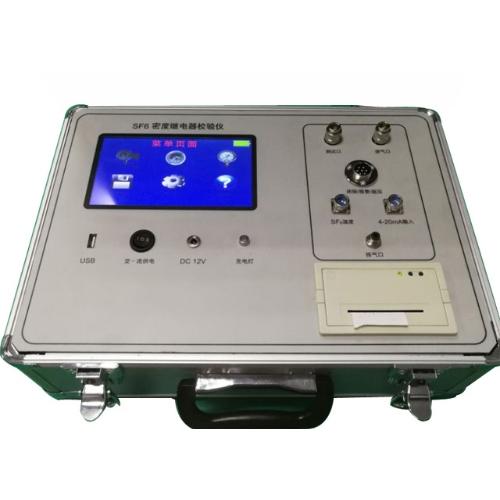
On-Site Testing of SF6 Gas Density Relays: Relevant Issues
IntroductionSF6 gas is widely used as an insulating and arc-quenching medium in high-voltage and extra-high-voltage electrical equipment due to its excellent insulation, arc-extinguishing properties, and chemical stability. The insulation strength and arc-quenching capability of electrical equipment depend on the density of SF6 gas. A decrease in SF6 gas density can lead to two main hazards: Reduced dielectric strength of the equipment; Decreased interrupting capacity of circuit breakers.Additio
10/27/2025
Consult
Tip
Consult
Tip
Can X-ray Technology Detect Hidden Switchgear Defects?
Advancing Power Equipment Diagnostics: The Role of X-ray Digital ImagingWith continuous advancements in power grid equipment research and manufacturing, an increasing number of new devices are being integrated into power systems. As a result, effective monitoring of in-service equipment has become critically important for ensuring grid reliability and safety.The introduction and successful application of X-ray digital imaging technologies—specifically Computed Radiography (CR) and Digital Radiog
10/24/2025
Consult
Tip
Consult
Tip
Comprehensive Guide to Transformer Fault Diagnosis & Testing
Optimized Guide to Transformer Fault Diagnosis and Advanced Testing TechniquesTransformers are core components in power systems, and their operational reliability directly impacts power supply safety. Common types include oil-immersed and dry-type transformers. Failures typically occur in the windings, core, connections, and insulation oil, with typical issues such as inter-turn short circuits, insulation aging, overheated joints, and multi-point core grounding.1. Common Fault IndicatorsImmediat
10/20/2025
Consult
Tip
Consult
Tip
4 Transformer Inspection Methods: Visual, Olfactory, Tactile & Auditory Checks
Common Transformer Inspection Methods for Safe & Reliable OperationTransformers are essential electrical devices that transfer energy between circuits by electromagnetic induction, stepping voltage up or down to minimize power losses during transmission. For instance, industrial plants often receive electricity at 10 kV, which is then stepped down via transformers to usable low-voltage levels.To ensure transformers operate safely and efficiently, regular inspection is critical. Below are fou
10/20/2025
Consult
Tip
Consult
Tip
Send inquiry
+86
Click to upload file
Download
Get the IEE Business Application
Use the IEE-Business app to find equipment, obtain solutions, connect with experts, and participate in industry collaboration anytime, anywhere—fully supporting the development of your power projects and business.