• Product
  • Suppliers
  • Manufacturers
  • Solutions
  • Free tools
  • Knowledges
  • Experts
  • Communities
Search


Free Expert Guides on Power Systems, Circuit Design & Electrical Troubleshooting

Access free engineering resources from IEE Business—covering power design, circuit layout, equipment selection, and troubleshooting. Expert-developed guides help engineers, procurement, and project teams make better decisions. Stay ahead on smart grids, renewables, efficiency, and AI tools. Improve reliability, reduce downtime, and enhance outcomes with real-world solutions. Explore our knowledge hub today.
Faraday’s Laws of Electromagnetic Induction: First & Second Law
What is Faraday’s LawFaraday’s law of electromagnetic induction (referred to as Faraday’s law) is a basic law of electromagnetism predicting how a magnetic field will interact with an electric circuit to produce an electromotive force (EMF). This phenomenon is known as electromagnetic induction.Faraday’s law states that a current will be induced in a conductor which is exposed to a changing magnetic field. Lenz’s law of electromagnetic induction states that the direction of this induced current
03/14/2024
Consult
Tip
Consult
Tip
Lenz’s Law of Electromagnetic Induction: Definition & Formula
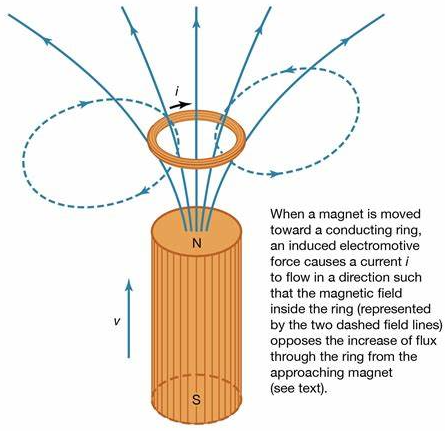
What is Lenz’s Law?Lenz’s law of electromagnetic induction states that the direction of the current induced in a conductor by a changing magnetic field (as per Faraday’s law of electromagnetic induction) is such that the magnetic field created by the induced current opposes the initial changing magnetic field which produced it. The direction of this current flow is given by Fleming’s right hand rule.This can be hard to understand at first—so let’s look at an example problem.Remember that when a
03/14/2024
Consult
Tip
Consult
Tip
How to Read a Multimeter?
It’s a common misconception that all electricians need to be able to read an electrical meter. Fortunately, this is not the case.If you’re starting as an electrician aspirant or if you’re interested in getting into the trade, then you might want to know how to read a multimeter before reading on.The first thing you’ll notice about a multimeter is that it has two probes sticking out of it, and either one can be used for testing voltage, amperage, or resistance.Both probes must be there because so
03/14/2024
Consult
Tip
Consult
Tip
Fleming’s Left And Right Hand Thumb Rules Explained
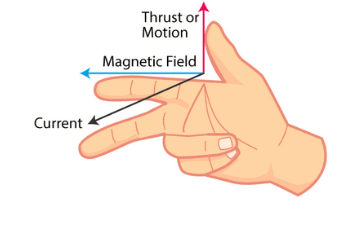
What are Fleming’s Left And Right Hand Rules?Whenever a current carrying conductor comes under a magnetic field, there will be a force acting on the conductor. The direction of this force can be found using Fleming’s Left Hand Rule (also known as ‘Flemings left-hand rule for motors’).Similarly if a conductor is forcefully brought under a magnetic field, there will be an induced current in that conductor. The direction of this force can be found using Fleming’s Right Hand Rule.In both Fleming’s l
03/13/2024
Consult
Tip
Consult
Tip
Gauss Theorem
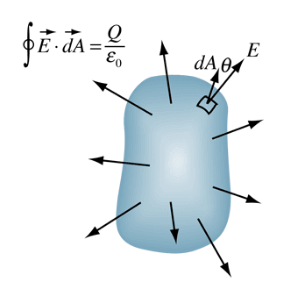
We know that there is always a static electric field around a positive or negative electrical charge and in that static electric field there is a flow of energy tube or flux. Actually this flux is radiated/emanated from the electric charge. Now amount of this flow of flux depends upon the quantity of charge it is emanating from. To find out this relation, the Gauss’s theorem was introduced. This theorem can be considered as one of the most powerful and most useful theorem in the field of electri
03/13/2024
Consult
Tip
Consult
Tip
Faradays Laws of Electrolysis – First and Second Laws (Equations & Definition)
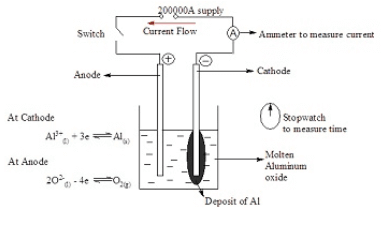
Faraday’s Laws of ElectrolysisBefore understanding Faraday’s laws of electrolysis, we must first understand the process of electrolysis of a metal sulfate.Whenever an electrolyte like metal sulfate is diluted in water, its molecules split into positive and negative ions. The positive ions (or metal ions) move to the electrodes connected with the negative terminal of the battery where these positive ions take electrons from it, becoming a pure metal atom and getting deposited on the electrode.The
03/13/2024
Consult
Tip
Consult
Tip
Ampere’s Circuital Law: What is it?
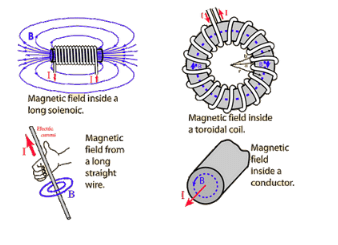
Ampere’s Circuital Law states the relationship between the current and the magnetic field created by it.This law states that the integral of magnetic field density (B) along an imaginary closed path is equal to the product of current enclosed by the path and permeability of the medium.James Clerk Maxwell had derived that.It alternatively says, the integral of magnetic field intensity (H) along an imaginary closed path is equal to the current enclosed by the path.Let us take an electrical conduct
03/13/2024
Consult
Tip
Consult
Tip
Biot Savart Law: Statement, Derivation An Applications
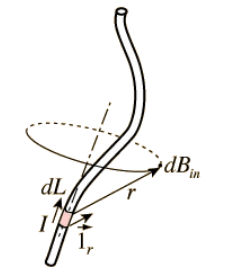
What is Biot Savart LawThe Biot Savart Law is an equation describing the magnetic field generated by a constant electric current. It relates the magnetic field to the magnitude, direction, length, and proximity of the electric current. Biot–Savart law is consistent with both Ampere’s circuital law and Gauss’s theorem. The Biot Savart law is fundamental to magnetostatics, playing a role similar to that of Coulomb’s law in electrostatics. Biot-Savart law was created by two French physicists, Jean
03/13/2024
Consult
Tip
Consult
Tip
Moore’s Law And The Exponential Growth Of Technology
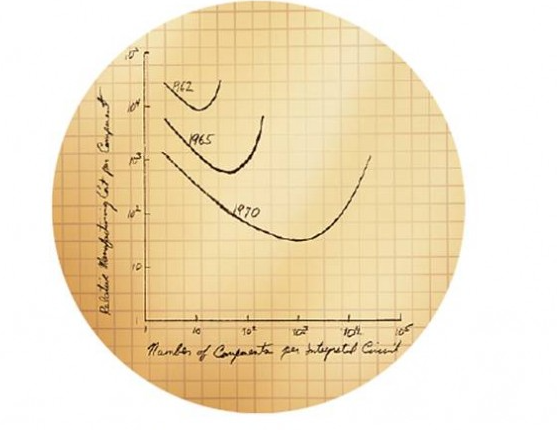
What is Moore’s Law?Moore’s Lawrefers to the observation that the number oftransistorsin anintegrated circuit(IC) doubles approximately every 2 years. It is often cited as an explanation for the exponential growth of technology, sometimes even being coined as the ‘law of exponential growth’.Moore’s law is named after Gordon Moore, the co-founder of Intel. Moore observed that since the invention of integrated circuits, the number of transistors has doubled every year. Moore produced an article in
03/13/2024
Consult
Tip
Consult
Tip
Watts Law: What is it? Formula, Examples & Watt’s Law Triangle
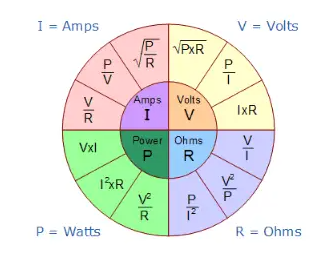
What is Watts Law?Watt’s law defines the relationship between power, amperage, and voltage drop in an electrical circuit. Watts Law also states that the power of an electrical circuit is the product of its voltage and current.Watts Law FormulaThe formula for Watts law can be given as follows. It gives the relationships between power (watts), current (amps) and voltage(volt)Watts Law Example 1Suppose you were trying to find out how many 500-watt lighting devices you could plug into a circuit with
03/13/2024
Consult
Tip
Consult
Tip
Send inquiry
+86
Click to upload file
Download
Get the IEE Business Application
Use the IEE-Business app to find equipment, obtain solutions, connect with experts, and participate in industry collaboration anytime, anywhere—fully supporting the development of your power projects and business.