• Product
  • Suppliers
  • Manufacturers
  • Solutions
  • Free tools
  • Knowledges
  • Experts
  • Communities
Search


Free Expert Guides on Power Systems, Circuit Design & Electrical Troubleshooting

Access free engineering resources from IEE Business—covering power design, circuit layout, equipment selection, and troubleshooting. Expert-developed guides help engineers, procurement, and project teams make better decisions. Stay ahead on smart grids, renewables, efficiency, and AI tools. Improve reliability, reduce downtime, and enhance outcomes with real-world solutions. Explore our knowledge hub today.
Why does the engine continue to run when the negative terminal is removed from the battery?
After removing the negative electrode of the battery, the vehicle's electrical system should theoretically stop working immediately, because the battery is one of the main power sources of the vehicle's electrical system, and the negative electrode is the part that connects the body (usually as a ground wire). However, in some cases, the engine may continue to operate even if the negative battery connection is removed, often because the electrical system and engine management system design insid
09/27/2024
Consult
Tip
Consult
Tip
The reason for using wind turbines and hydropower instead of solar panels to generate electricity
The reasons for choosing wind turbines and hydroelectric power (hydropower plants) over solar panels for large-scale power generation are multiple, often involving geographic location, resource availability, cost-effectiveness, and technological maturity.Energy stabilityWind turbines and hydropower are relatively stable Wind turbines: Although the wind speed will fluctuate, but in a specific wind farm area, through the cluster management of multiple fans and weather forecasting means, you can en
09/25/2024
Consult
Tip
Consult
Tip
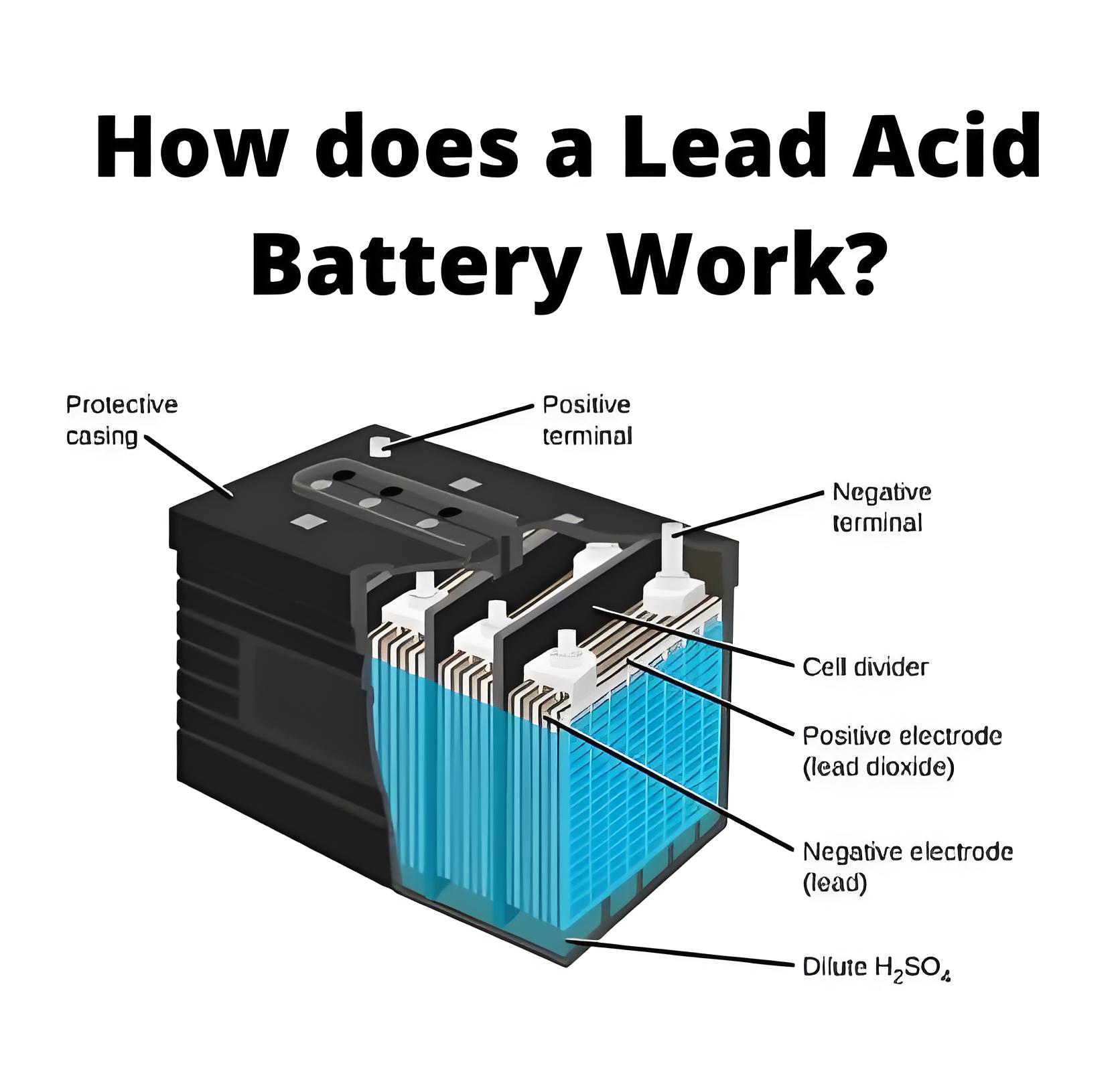
How Dose a Lead  Acid Battery Work?
How Dose a Lead Acid Battery Work?Lead Acid Battery DefinedA lead acid battery is defined as a rechargeable storage device where electrical energy is transformed into chemical energy during charging, and vice versa during discharging.Materials and CompositionEssential materials include lead peroxide and sponge lead, used in the positive and negative plates respectively, submerged in dilute sulfuric acid.Working of Lead Acid BatteryThe battery operates by converting stored chemical energy into el
07/27/2024
Consult
Tip
Consult
Tip
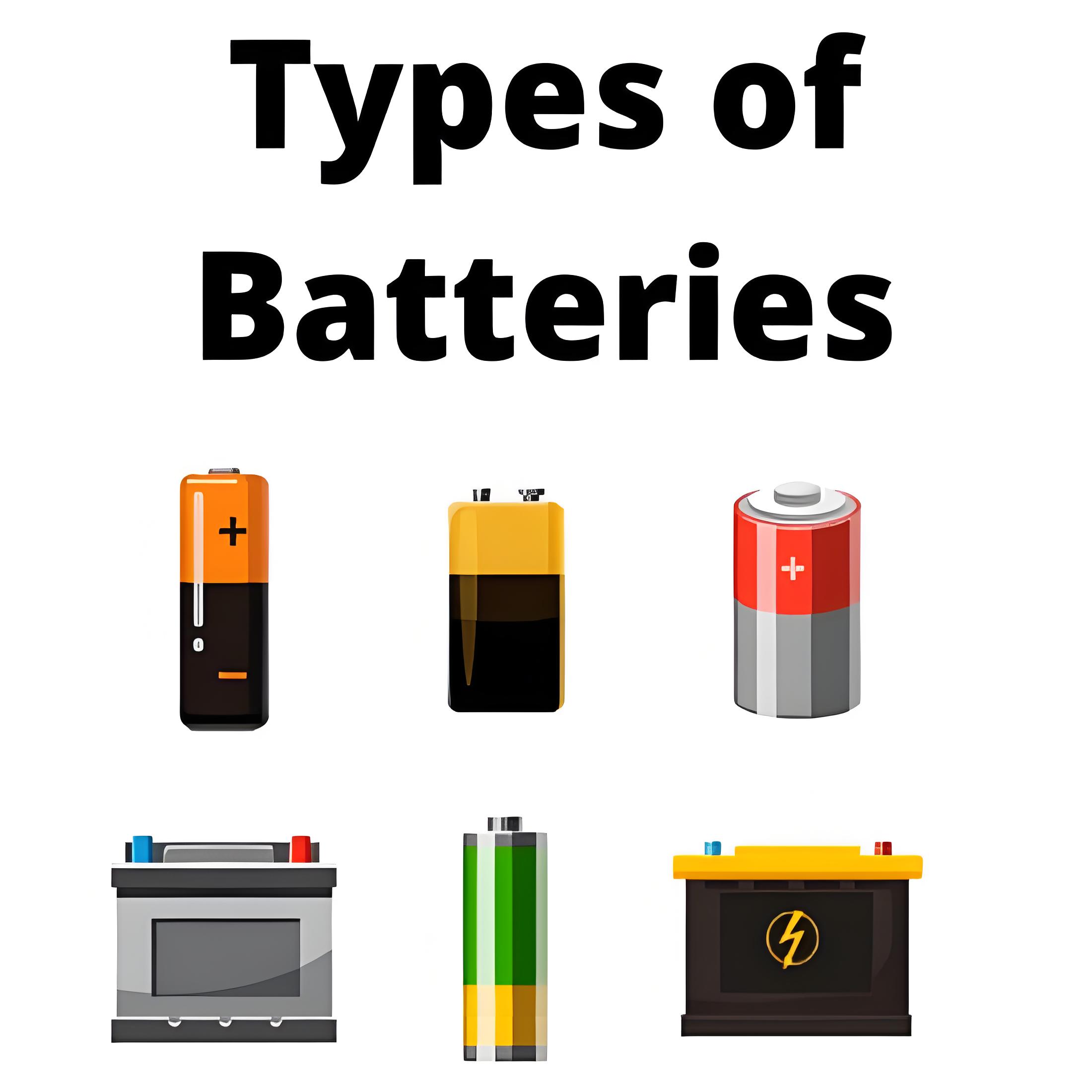
Types of Batteries
Battery DefinitionA battery is defined as a device that stores and provides electrical energy through chemical reactions, classified into primary and secondary types.Types of Battery Primary Batteries Secondary BatteriesPrimary BatteriesPrimary batteries, such as zinc-carbon and alkaline, are non-rechargeable and used in devices like clocks and remote controls.Secondary BatteriesSecondary batteries, like lithium-ion and lead-acid, are rechargeable and used in devices like mobile phones and elect
07/27/2024
Consult
Tip
Consult
Tip
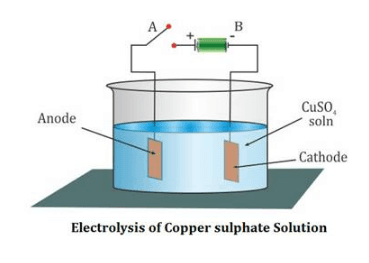
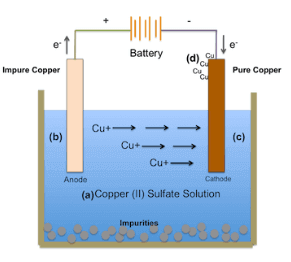
Principle of Electrolysis of Copper Sulfate Electrolyte
ElectrolysisElectrolysis is an electrochemical process by which current passes from one electrode to another in an ionized solution that is an electrolyte. In this process, positive ions or cations come to the negative electrode or cathode and negative ions or anions come to the positive electrode or anode.Before understanding the principle of electrolysis, we should know what is electrolyte or definition of electrolyteDefinition of ElectrolyteAn electrolyte is such a chemical whose atoms are ti
03/15/2024
Consult
Tip
Consult
Tip
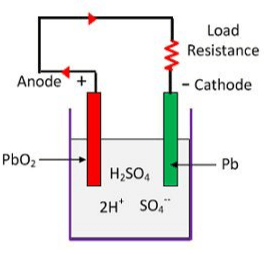
Working of Lead Acid Battery | Lead Acid Secondary Storage Battery
Working of Lead Acid BatteryThe storage battery or secondary battery is such a battery where electrical energy can be stored as chemical energy and this chemical energy is then converted to electrical energy as and when required. The conversion of electrical energy into chemical energy by applying external electrical source is known as charging of battery. Whereas conversion of chemical energy into electrical energy for supplying the external load is known as discharging of secondary battery.Dur
03/15/2024
Consult
Tip
Consult
Tip
Applications of Electrolysis Electroplating Electroforming Electrorefining
Applications of ElectrolysisElectrolytic Refining of MetalsThe process of electrolytic refining of metals is used to extract impurities from crude metals. Here in this process, a block of crude metal is used as anode, a diluted salt of that metal is used as electrolyte and plates of that pure metal is used as cathode.Electrolytic Refining of CopperFor understanding the process of electrolytic refining of metals, we will discuss about an example of electrolytic refining of copper. Copper extracte
03/15/2024
Consult
Tip
Consult
Tip
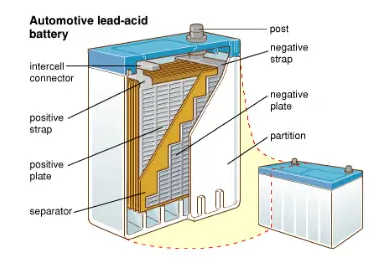
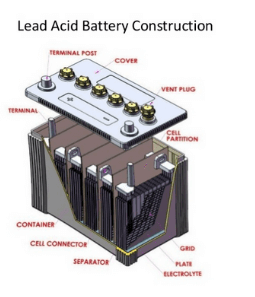
Construction of Lead Acid Battery
There are mainly two parts in a lead acid battery. The container and plates.Lead Acid Battery ContainerAs this battery container mainly contains sulfuric acid hence the materials used for making a lead acid battery container must be resistant to sulfuric acid. The material container should also be free from those impurities which are deterious to the sulfuric acid. Especially iron and manganese are intolerable.The glass, lead lined wood, ebonite, hard rubber of bituminous compound, ceramic mater
03/15/2024
Consult
Tip
Consult
Tip
Care & Maintenance of Lead Acid Batteries
Electrolyte of Lead Acid BatteryThe electrolyte of a lead acid battery cell is a solution of sulfuric acid and distilled water. The specific gravity of pure sulfuric acid is about 1.84 and this pure acid is diluted by distilled water until the specific gravity of the solution becomes 1.2 to 1.23. However, in some cases, the specific gravity of diluted sulfuric acid is recommended by the manufacturer of the battery depending upon the type of battery, season, and climatic conditions.Chemical Actio
03/15/2024
Consult
Tip
Consult
Tip
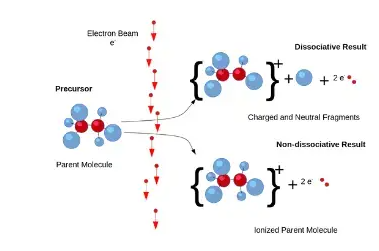
Ionization: Definition, Process, and Examples
Ionization is a fundamental concept in chemistry and physics that describes the transformation of electrically neutral atoms or molecules into electrically charged ones. Ionization occurs when an atom or molecule gains or loses one or more electrons, resulting in a positive or negative charge. The charged atom or molecule is called an ion.Ionization can happen in various ways, such as through collisions, chemical reactions, or exposure to electromagnetic radiation. Ionization plays an important
03/15/2024
Consult
Tip
Consult
Tip
Send inquiry
+86
Click to upload file
Download
Get the IEE Business Application
Use the IEE-Business app to find equipment, obtain solutions, connect with experts, and participate in industry collaboration anytime, anywhere—fully supporting the development of your power projects and business.