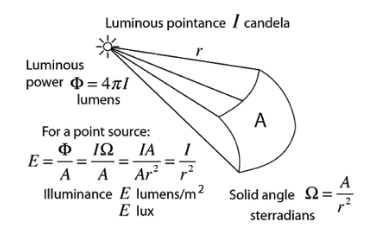
Radiant flux is a term that describes the amount of radiant energy that is emitted, reflected, transmitted, or received by an object per unit of time. Radiant energy is the energy carried by electromagnetic waves, such as light, radio waves, microwaves, infrared, ultraviolet, and X-rays. Radiant flux is also known as radiant power or optical power (in the case of light).Radiant flux is an important concept in radiometry, which is the science of measuring and analyzing electromagnetic radiation.
03/15/2024
Consult
Tip
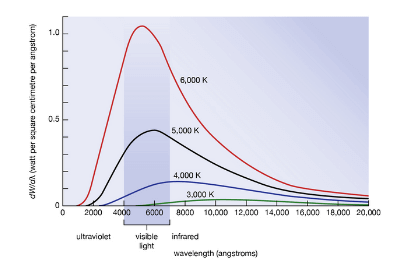
A black body is defined as an idealized object that absorbs all electromagnetic radiation that falls on it and emits radiation with a continuous spectrum that depends only on its temperature. Black body radiation is the thermal radiation emitted by a black body in thermodynamic equilibrium with its surroundings. Black body radiation has many applications in physics, astronomy, engineering, and other fields.What is a Black Body?A black body is a theoretical concept that represents an ideal absorb
03/15/2024
Consult
Tip
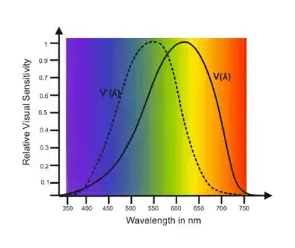
Photometry is the science of measuring light in terms of its perceived brightness to the human eye. It is different from radiometry, which measures radiant energy (including light) in terms of absolute power. Photometry only considers the visible range of wavelengths (light) that can stimulate the human eye.The human eye can detect radiation that has a wavelength between 370 nm and 780 nm. This range is called the visible spectrum or simply light. Radiation with a wavelength shorter than light i
03/15/2024
Consult
Tip






