• Product
  • Suppliers
  • Manufacturers
  • Solutions
  • Free tools
  • Knowledges
  • Experts
  • Communities
Search


Free Expert Guides on Power Systems, Circuit Design & Electrical Troubleshooting

Access free engineering resources from IEE Business—covering power design, circuit layout, equipment selection, and troubleshooting. Expert-developed guides help engineers, procurement, and project teams make better decisions. Stay ahead on smart grids, renewables, efficiency, and AI tools. Improve reliability, reduce downtime, and enhance outcomes with real-world solutions. Explore our knowledge hub today.
Faraday’s Laws of Electromagnetic Induction
Faraday’s law, also known as Faraday’s law of electromagnetic induction, is a fundamental law of electromagnetism that predicts how a magnetic field interacts with an electric circuit to produce an electromotive force (EMF). This is referred to as “electromagnetic induction.”Faraday laws of electromagnetic induction:Faraday’s Laws of Electromagnetic Induction consist of two laws:1. The first law describes the induction of emf in a conductor and2. The second law calculates the conductor’s generat
03/10/2024
Consult
Tip
Consult
Tip
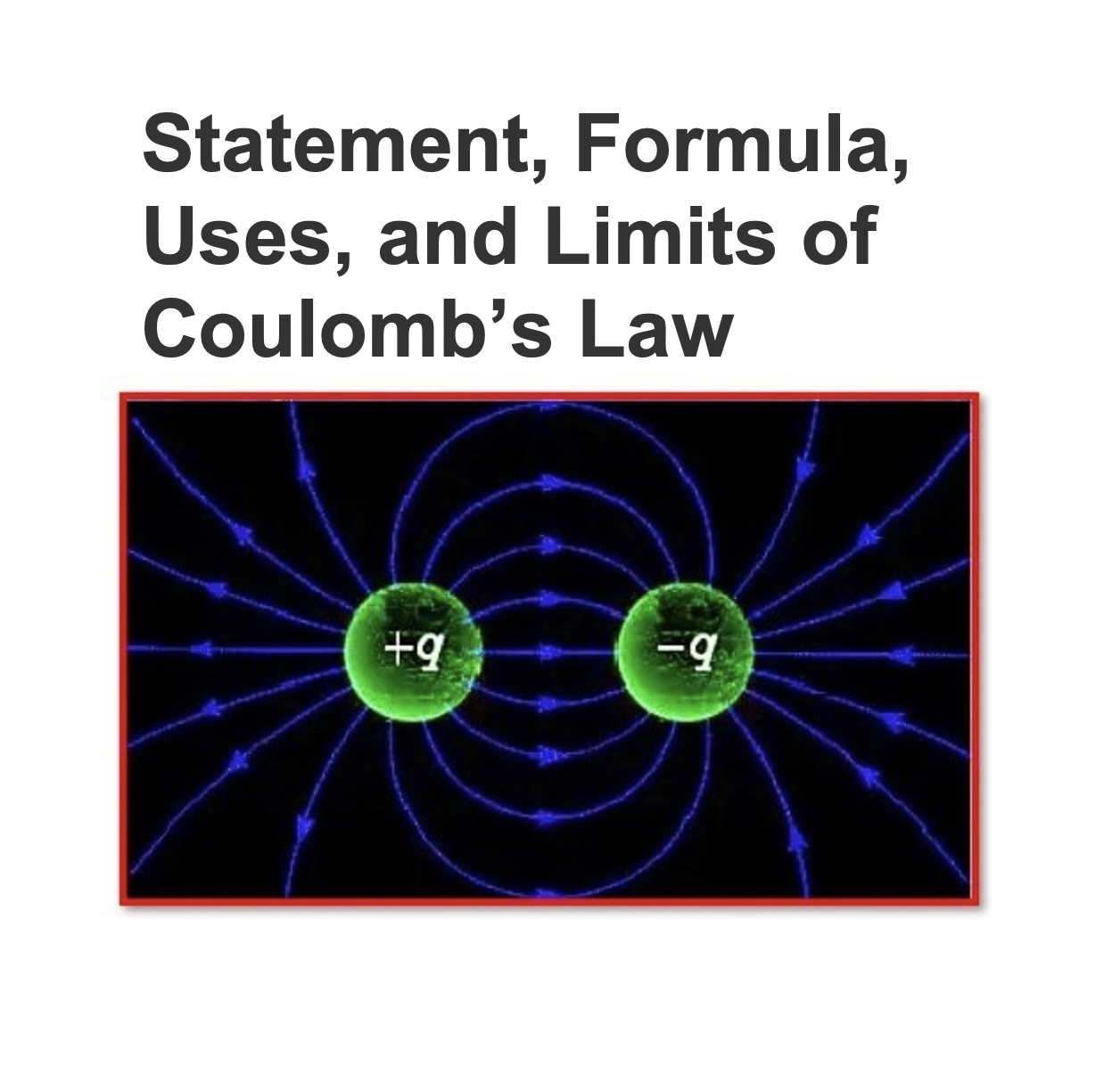
Statement, Formula, Uses, and Limits of Coulomb’s Law
Coulomb’s Law:Coulomb’s law states that the force of attraction or repulsion between two chargesis directly proportional to the product of their charges and inversely proportional to the square of their distance from one another. It functions on the section that connects the two charges that are regarded of as point charges.Coulomb’s Law Formula:Where,F= Electric Force,K= Coulomb’s Constant,q1, q2= chargesr= between distanceWhat Is one Coulomb of Charge?It is known as a coulomb when two charges
03/10/2024
Consult
Tip
Consult
Tip
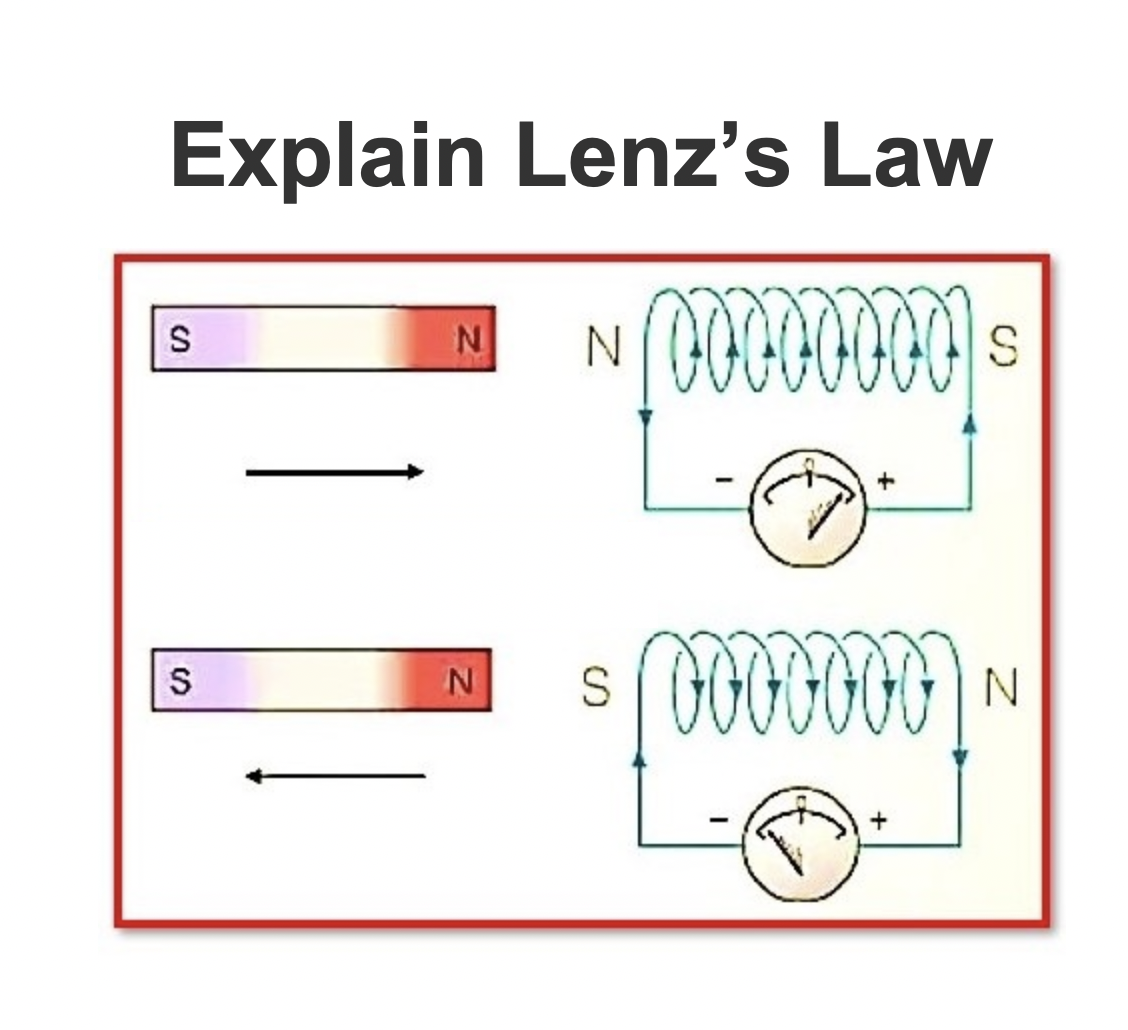
Explain Lenz’s Law
What is Lenz’s Law?Lenz’s law of electromagnetic induction explains that the direction of the current induced in a conductor by a changing magnetic field (as per Faraday’s law of electromagnetic induction) is such that the magnetic field created by the induced current opposes the changing magnetic field that caused it. The direction of thecurrent flow is shown byFleming’s right-hand rule.Lenz’s law is based on Faraday’s law of induction, which says that a changing magnetic field will cause a cur
03/10/2024
Consult
Tip
Consult
Tip
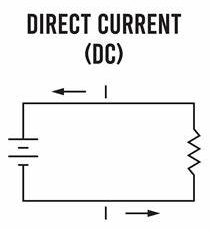
DC Voltage: What is it?
What is DC Voltage?DC voltage stands for “Direct Current Voltage”. While this sounds confusing, the term “DC” has become used more broadly to refer to a system that has constant polarity. Hence DC voltage is a voltage that produces or would produce a DC current. Conversely, an AC voltage is a voltage that produces or would produce AC current.DC in this context refers more broadly to quantities that don’t regularly change polarity or that have zero (or effectively zero) frequency. AC refers to qu
03/09/2024
Consult
Tip
Consult
Tip
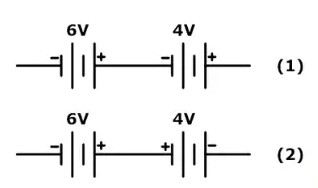
Electrical Polarity: What is it?
Now consider an AC circuit with two voltage sources. Here, magnitude, polarity, and phase angle are used to find the equivalent voltage. Electrical Polarity in AC Voltages In the first figure, both sources have the same polarity. Hence, the equivalent voltage is the addition of both. But these are the polar form—First, we need to convert this polar form into a rectangular form. And it will be—Now, the equivalent voltage is the addition of each of the X-components and Y-components (i.e. )—Ag
03/09/2024
Consult
Tip
Consult
Tip
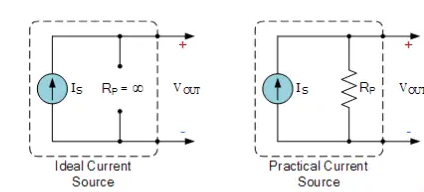
Independent Voltage and Current Sources
A voltage source is a device that provides a constant or varying electric potential difference between its terminals. A current source is a device that provides a constant or varying electric current through its terminals. Both voltage and current sources are essential for powering various electrical circuits and devices.However, not all sources are the same. Depending on how they behave and interact with other circuit elements, sources can be classified into two main categories: independent and
03/09/2024
Consult
Tip
Consult
Tip
Temperature Coefficient of Resistance (Formula And Examples)
What is the Temperature Coefficient of Resistance?The temperature coefficient of resistancemeasures changes in the electrical resistance of any substance per degree of temperature change.Let us take a conductor having a resistance of R0 at 0oC and Rt at toC, respectively.From the equation of resistance variation with temperature, we getThis αo is called the temperature coefficient of resistance of that substance at 0oC.From the above equation, it is clear that the change in electrical resistance
03/09/2024
Consult
Tip
Consult
Tip
State Joule’s Law
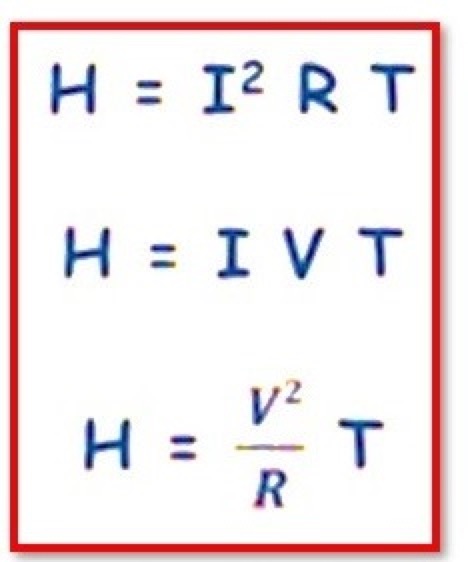
Joule’s Law:According to Joule’s Law, when a current flows in a conductor, the amount of heat generated is proportional to the current, resistance, and time in the current flowing.Joule’s law of Heating:The unit of Joules is used to measure the amount of heat generated by the movement of current in an electric wire. Following is a description of how Joule’s law is represented mathematically and explained.When the electrical resistance of the wire and the time the current is flowing are constant,
03/09/2024
Consult
Tip
Consult
Tip
Resistances in Series and Resistances in Parallel
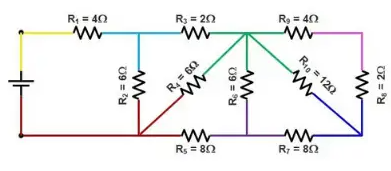
More than one electrical resistance can be connected either in series or in parallel in addition to that, more than two resistances can also be connected in combination of series and parallel both. Here we will discuss mainly about series and parallel combination.Resistances in SeriesSuppose you have three different types of resistors – R1, R2 and R3– and you connect them end to end as shown in the figure below, then it would be referred as resistances in series. In case of series connection, th
03/09/2024
Consult
Tip
Consult
Tip
Resistivity Laws of Resistance and Unit of Resistivity
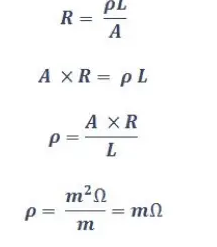
Resistivity or Coefficient of ResistanceResistivity or Coefficient of Resistance is a property of substance, due to which the substance offers opposition to the flow of current through it. Resistivity or Coefficient of Resistance of any substance can easily be calculated from the formula derived fromLaws of Resistance.Laws of ResistanceThe resistance of any substance depends on the following factors, Lengthof the substance. Cross sectional areaof the substance. Thenature of materialof the substa
03/09/2024
Consult
Tip
Consult
Tip
Send inquiry
+86
Click to upload file
Download
Get the IEE Business Application
Use the IEE-Business app to find equipment, obtain solutions, connect with experts, and participate in industry collaboration anytime, anywhere—fully supporting the development of your power projects and business.