• Product
  • Suppliers
  • Manufacturers
  • Solutions
  • Free tools
  • Knowledges
  • Experts
  • Communities
Search


Free Expert Guides on Power Systems, Circuit Design & Electrical Troubleshooting

Access free engineering resources from IEE Business—covering power design, circuit layout, equipment selection, and troubleshooting. Expert-developed guides help engineers, procurement, and project teams make better decisions. Stay ahead on smart grids, renewables, efficiency, and AI tools. Improve reliability, reduce downtime, and enhance outcomes with real-world solutions. Explore our knowledge hub today.
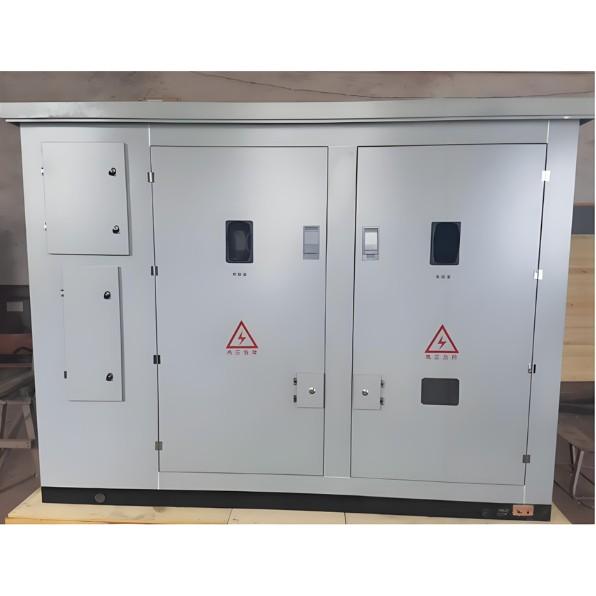
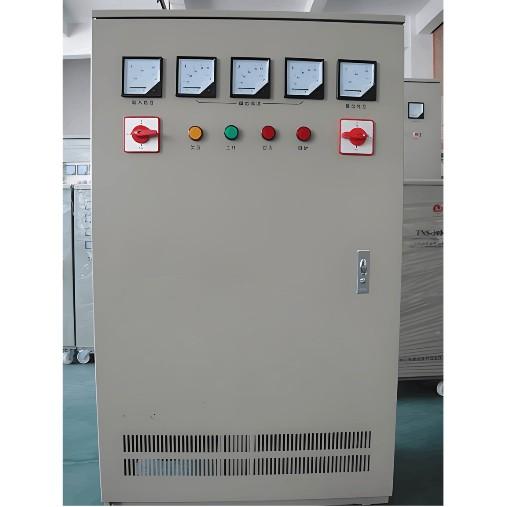
How Grounding Resistor Cabinets Protect Transformers?
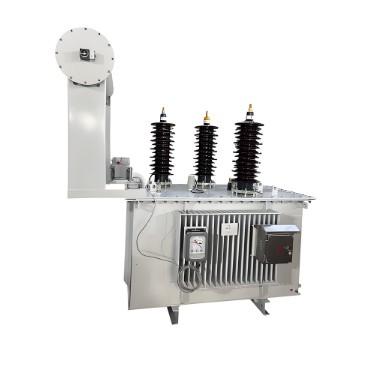
In power systems, transformers, as core equipment, are critical to the safe operation of the entire grid. However, due to various reasons, transformers are often exposed to multiple threats. In such cases, the importance of grounding resistor cabinets becomes evident, as they provide indispensable protection for transformers.Firstly, grounding resistor cabinets can effectively protect transformers from lightning strikes. The instantaneous high voltage caused by lightning can severely damage tran
12/03/2025
Consult
Tip
Consult
Tip
110kV Transformer Zero-Sequence Protection: Issues & Improvement Measures
Problems with Zero-Sequence Protection of 110 kV TransformersIn an effectively grounded system, the neutral-to-ground displacement voltage of a transformer is limited to a certain level, and the neutral-point gap protection does not operate. The purpose of installing gap protection is to prevent damage to transformer insulation caused by elevated zero-sequence voltage in non-effectively grounded systems. The discharge gap only operates when a single-phase ground fault occurs, all directly ground
12/03/2025
Consult
Tip
Consult
Tip
Grounding Transformer Protection: Misoperation Causes & Countermeasures in 110kV Substations
In China's power system, the 6 kV, 10 kV, and 35 kV grids generally adopt a neutral-point ungrounded operation mode. The distribution voltage side of the main transformer in the grid is usually connected in delta configuration, which provides no neutral point for connecting a grounding resistor.When a single-phase ground fault occurs in a neutral-point ungrounded system, the line-to-line voltage triangle remains symmetrical, causing minimal impact on user operations. Moreover, when the capacitiv
12/03/2025
Consult
Tip
Consult
Tip
Application of Grounding Transformers in Generator Neutral Grounding Resistor Cabinets
When the capacitive current of a generator is slightly large, a resistor must be added at the generator neutral point to avoid power-frequency overvoltage that could damage the motor insulation during a ground fault. The damping effect of this resistor reduces the overvoltage and limits the ground fault current. During a single-phase ground fault of the generator, the neutral-to-ground voltage equals the phase voltage, typically several kilovolts or even above 10 kV. Therefore, this resistor mus
12/03/2025
Consult
Tip
Consult
Tip
What is the difference between a grounding transformer and an arc suppression coil?
Overview of Grounding TransformersA grounding transformer, commonly referred to as a "grounding transformer" or simply "grounding unit," can be classified into oil-immersed and dry-type based on the insulating medium, and into three-phase and single-phase based on the number of phases. The primary function of a grounding transformer is to provide an artificial neutral point for power systems whose transformers or generators lack a natural neutral (e.g., delta-connected systems). This artificial
12/03/2025
Consult
Tip
Consult
Tip
Grounding Transformer Types & Winding Connections
Grounding transformer is a special type of transformer primarily used for grounding protection in power systems. The design and winding connection methods of this transformer are crucial to ensuring the safe operation of power systems.1.Function of Grounding TransformerThe main function of a grounding transformer is to provide grounding protection in power systems. When a ground fault occurs in the system, the grounding transformer helps limit the fault current, thereby protecting equipment and
12/03/2025
Consult
Tip
Consult
Tip
Causes of Transformer Damage from Lightning Strikes and Whether It Can Still Be Used Afterward
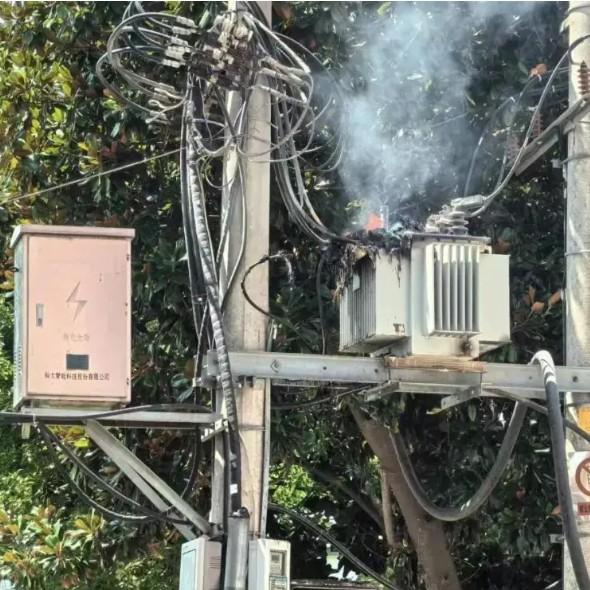
1. What Causes Transformer Damage from Lightning Strikes? Direct Lightning Strike: When lightning directly hits a transformer or its nearby transmission lines, it generates an enormous transient current that instantly flows through the transformer windings and core. This causes the insulation material to heat up rapidly—even melt—leading to winding short circuits or burnout. Damage from direct strikes is often catastrophic. Lightning-Induced Voltage (Electromagnetic Induction): Even if lightning
12/02/2025
Consult
Tip
Consult
Tip
Chinese Protection Relay Earns IEC 61850 Ed2.1 Level-A Certification
Recently, the NSR-3611 low-voltage protection and control device and the NSD500M high-voltage measurement and control device—both developed by a Chinese protection and control equipment manufacturer—successfully passed the IEC 61850 Ed2.1 Server Level-A certification test conducted by DNV (Det Norske Veritas). The devices have been awarded the international Level-A certification by the Utilities Communication Architecture International Users Group (UCAIug). This milestone marks the manufacturer
12/02/2025
Consult
Tip
Consult
Tip
Three-Phase SPD: Types, Wiring & Maintenance Guide
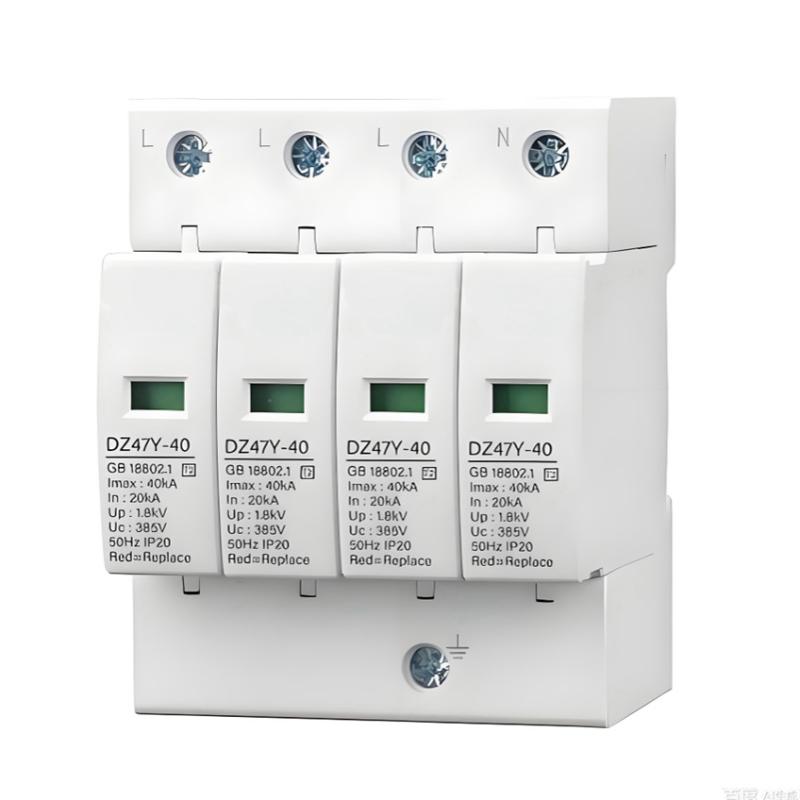
1. What Is a Three-Phase Power Surge Protective Device (SPD)?A three-phase power surge protective device (SPD), also known as a three-phase lightning arrester, is specifically designed for three-phase AC power systems. Its primary function is to limit transient overvoltages caused by lightning strikes or switching operations in the power grid, thereby protecting downstream electrical equipment from damage. The SPD operates based on energy absorption and dissipation: when an overvoltage event occ
12/02/2025
Consult
Tip
Consult
Tip
Differences Between Linear Regulators, Switching Regulators, and Series Regulators
1.Linear Regulators vs. Switching RegulatorsA linear regulator requires an input voltage higher than its output voltage. It handles the difference between input and output voltages—known as the dropout voltage—by varying the impedance of its internal regulating element (such as a transistor).Think of a linear regulator as a precise “voltage control expert.” When faced with excessive input voltage, it decisively “acts” by “cutting off” the portion exceeding the desired output level, ensuring the
12/02/2025
Consult
Tip
Consult
Tip
Send inquiry
+86
Click to upload file
Download
Get the IEE Business Application
Use the IEE-Business app to find equipment, obtain solutions, connect with experts, and participate in industry collaboration anytime, anywhere—fully supporting the development of your power projects and business.