• Product
  • Suppliers
  • Manufacturers
  • Solutions
  • Free tools
  • Knowledges
  • Experts
  • Communities
Search


Free Expert Guides on Power Systems, Circuit Design & Electrical Troubleshooting

Access free engineering resources from IEE Business—covering power design, circuit layout, equipment selection, and troubleshooting. Expert-developed guides help engineers, procurement, and project teams make better decisions. Stay ahead on smart grids, renewables, efficiency, and AI tools. Improve reliability, reduce downtime, and enhance outcomes with real-world solutions. Explore our knowledge hub today.
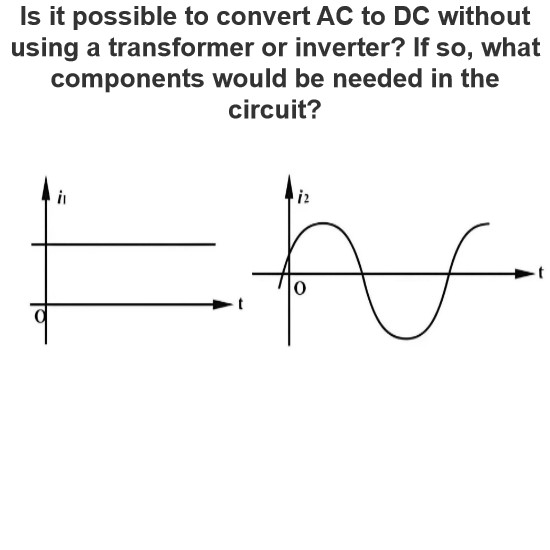
Is it possible to convert AC to DC without using a transformer or inverter? If so, what components would be needed in the circuit?
Converting alternating current (AC) to direct current (DC) is typically achieved using a rectifier (Rectifier). While transformers and inverters play crucial roles in power systems, they are not essential for converting AC to DC. In fact, this conversion can be accomplished with a basic rectifier circuit. Here is how AC can be converted to DC without using transformers or inverters and the main components required in the circuit:1. RectifierA rectifier is a circuit that converts AC to DC. Common
10/12/2024
Consult
Tip
Consult
Tip
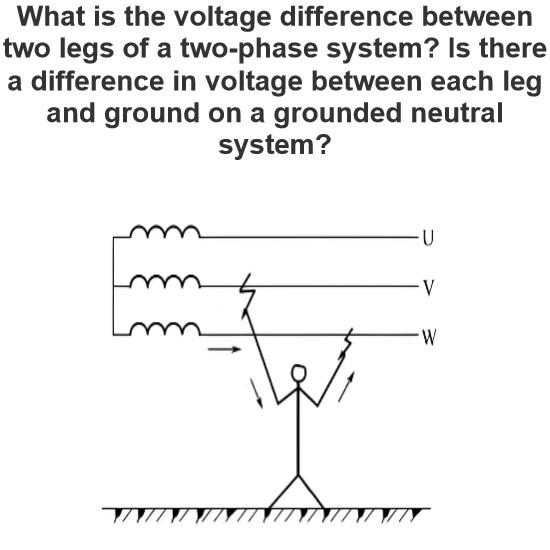
What is the voltage difference between two legs of a two-phase system?
When discussing voltage differences in two-phase systems and between each pole and the ground in a grounded neutral system, we need to clarify some basic concepts.Two-phase systemTwo-phase systems are not common in modern power systems, but have been used at certain times in history. Two-phase systems usually come in two forms: four-wire and two-wire.Four-wire two-phase systemIn this system, the two sets of coils are 90 degrees out of phase and there are two neutral lines connected together. The
10/05/2024
Consult
Tip
Consult
Tip
Is it possible to harden an electrical grid from EMP?
Hardening an electrical grid against electromagnetic pulses (EMPs) involves protecting the infrastructure from the potentially catastrophic effects of EMPs caused by high-altitude nuclear explosions or solar storms. Here’s how EMPs affect electrical grids and some strategies to mitigate their impact:How EMPs Affect Electrical GridsAn EMP can cause significant disruptions by inducing very strong currents and voltages in power lines over a wide area. This can lead to: Damage to Transformers and Ge
10/04/2024
Consult
Tip
Consult
Tip
Send inquiry
+86
Click to upload file
Download
Get the IEE Business Application
Use the IEE-Business app to find equipment, obtain solutions, connect with experts, and participate in industry collaboration anytime, anywhere—fully supporting the development of your power projects and business.