• Product
  • Suppliers
  • Manufacturers
  • Solutions
  • Free tools
  • Knowledges
  • Experts
  • Communities
Search


Free Expert Guides on Power Systems, Circuit Design & Electrical Troubleshooting

Access free engineering resources from IEE Business—covering power design, circuit layout, equipment selection, and troubleshooting. Expert-developed guides help engineers, procurement, and project teams make better decisions. Stay ahead on smart grids, renewables, efficiency, and AI tools. Improve reliability, reduce downtime, and enhance outcomes with real-world solutions. Explore our knowledge hub today.
Superposition Theorem
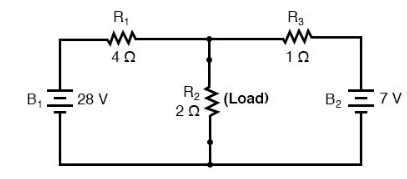
If there are several sources acting simultaneously in an electrical circuit, then the current through any branch of the circuit is summation of currents which would flow through the branch for each source keeping all other sources dead.Let us understand the statement.Here, two 1.5 Volt batteries present in the circuit. At this condition, the current through 1 ohm resistance is 1.2 ampere.The ammeter indicates this value in the above picture.Now, we replace the left side battery by a short circui
03/12/2024
Consult
Tip
Consult
Tip
Kirchhoff Current Law and Kirchhoff Voltage Law
There are some simple relationships between currents and voltages of different branches of an electrical circuit. These relationships are determined by some basic laws that are known as Kirchhoff laws or more specifically Kirchhoff Current and Voltage laws. These laws are very helpful in determining the equivalent electrical resistance or impedance (in case of AC) of a complex network and the currents flowing in the various branches of the network. These laws are first derived by Guatov Robert K
03/12/2024
Consult
Tip
Consult
Tip
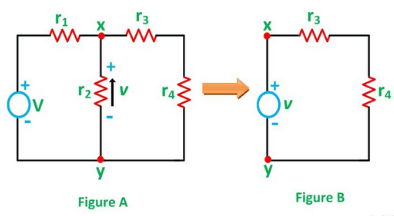
Substitution Theorem
As name implies, the main concept of this theorem which is based upon substitution of one element by another equivalent element. Substitution theorem gives us some special insights in circuit behavior. This theorem is also used to prove several other theorems.Statement of Substitution TheoremSubstitution theorem states that if an element in a network is replaced by a voltage source whose voltage at any instant of time is equals to the voltage across the element in the previous network then the i
03/12/2024
Consult
Tip
Consult
Tip
Millman Theorem
Millman’s theorem was named after famous electrical engineering professor JACOB MILLMAN who proposed the idea of this theorem. Millman’s theorem acts as a very strong tool in case of simplifying the special type of complex electrical circuit. This theorem is nothing but a combination of Thevenin’s Theorem and Norton’s Theorem. It is very useful theorem to find out voltage across the load and current through the load.This theorem is also called as PARALLEL GENERATOR THEOREM.Millman’s theorem is a
03/12/2024
Consult
Tip
Consult
Tip
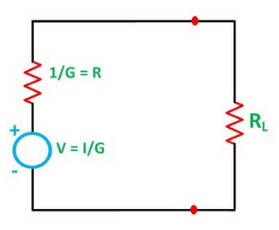
Thevenin Equivalent Voltage And Resistance: What is it?
What is Thevenin’s Theorem (Thevenin Equivalent)?Thevenin theorem (also known as the Helmholtz–Thévenin theorem) states that any linear circuit containing only voltage sources, current sources, and resistances can be replaced by an equivalent combination of a voltage source (VTh) in series with a single resistance (RTh) connected across the load. This simplified circuit is known as the Thevenin Equivalent Circuit.Thevenin’s theorem was invented by a French engineer Léon Charles Thévenin (hence t
03/12/2024
Consult
Tip
Consult
Tip
What is Norton’s Theorem And How to Find The Norton Equivalent Circuit
What is Norton Theorem? (Norton’s Equivalent Circuit)Norton’s Theorem (also known as the Mayer–Norton theorem) states that it is possible to simplify any linear circuit to an equivalent circuit with a single current source and equivalent parallel resistance connected to a load. The simplified circuit is known as the Norton Equivalent Circuit.More formally, Norton’s theorem can be stated as: “A circuit having any linear bilateral elements and active sources can be replaced by a simple two-termina
03/12/2024
Consult
Tip
Consult
Tip
Construction of AC Circuits and Working of AC Circuits
Bridge circuit is nothing but the electrical circuit configuration which is used to measure unknown values of the resistance, impedance, induction, and capacitance. Many bridges like Wheatstone bridge, Maxwell Bridge, Kelvin Bridge, and many more are very useful to measure quantities with accuracy and working on the same principle. Here is a brief description of functioning of some of the bridges given below:Wheatstone BridgeA Wheatstone bridge is an electrical circuit developed by Charles Wheat
03/12/2024
Consult
Tip
Consult
Tip
Series And Parallel DC Circuits Explained (Examples Included)
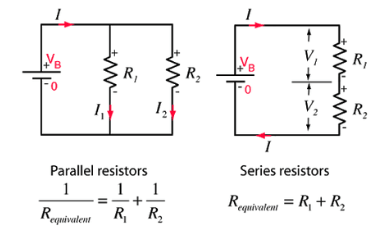
What is an Electrical Circuit?An electrical circuit is a combination of two or more electrical components that are interconnected by conducting paths. The electrical components may be active components, or inactive components, or some combination of the two.What is a DC Circuit?There are two types of electricity – direct current (DC) and alternating current (AC). The circuit that deals with direct current or DC, is referred to as the DC circuit, and the circuit that deals with alternating curren
03/12/2024
Consult
Tip
Consult
Tip
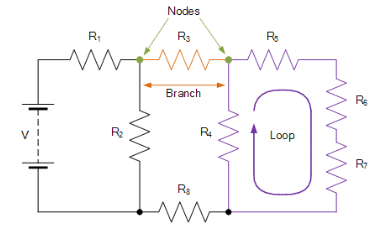
Nodes, Branches and Loops of a Circuit
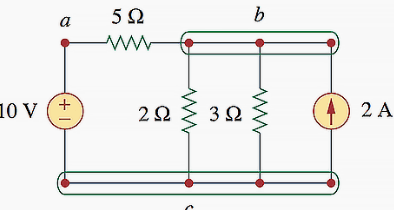
An electric circuit based on three concepts, namely, node, branch and loop. As per definition, an electric network is a combination of interconnected circuit elements. A network may or may not provide closed path to the electric current to flow. But, an electrical circuit may be a combination of one or more networks which gives closed path to the electric current. That means, when one or more networks are interconnected together to complete one or more paths to the current, an electric circuit i
03/12/2024
Consult
Tip
Consult
Tip
Dual Network Circuit Analysis
What is a Dual Network?Two electrical networks are said to bedual networksif themesh equationsof one network is equal to thenode equationof the other.The dual network is based on Kirchhoff Current Law and Kirchhoff Voltage Law. Applying Kirchhoff Voltage Law in the network A, above we get, Applying Kirchhoff Current Law in the network B, above we get, Here we have found that equations (i) and (ii) are similar in their mathematical form. Equation (i) is in mesh form and equation (ii) is in nodal
03/12/2024
Consult
Tip
Consult
Tip
Send inquiry
+86
Click to upload file
Download
Get the IEE Business Application
Use the IEE-Business app to find equipment, obtain solutions, connect with experts, and participate in industry collaboration anytime, anywhere—fully supporting the development of your power projects and business.