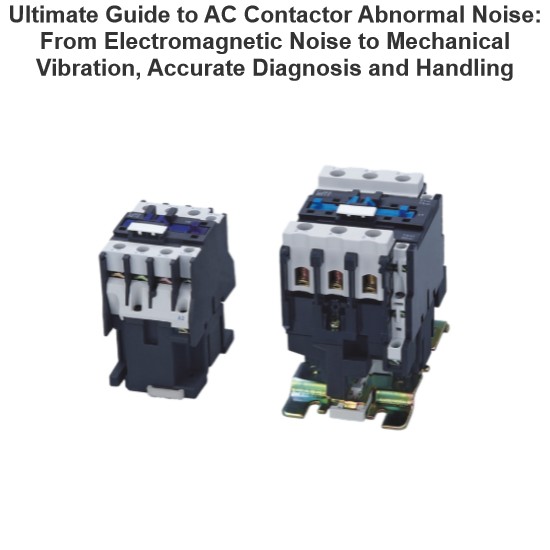
In electrical control systems, AC contactors are among the commonly used electrical components, and they are also a common source of various electrical faults. After long-term use—especially in harsh environments with high levels of dust—AC contactors may sometimes emit squeaking or rattling noises after being pulled in and held. The causes of this phenomenon are analyzed as follows.Squeaking Noise After Pull-In and HoldingA fully functional AC contactor makes no noise when energized and pulled
09/11/2025
Consult
Tip
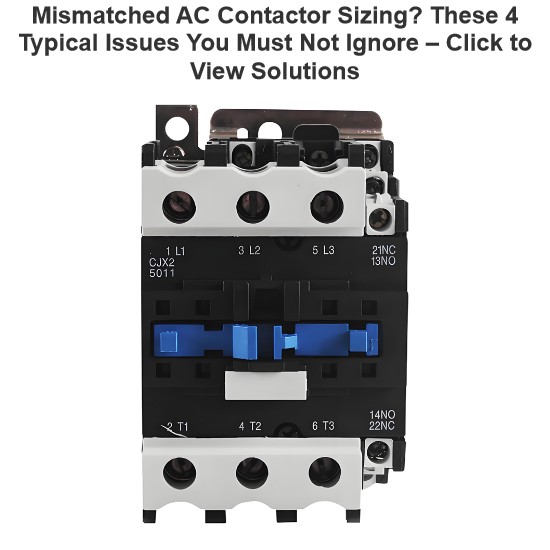
Mismatched AC Contactor Sizing? These 4 Typical Issues You Must Not Ignore – Click to View Solutions
AC contactors (with the electrical schematic code KM) are core electrical devices used to control the connection/disconnection between power supplies and loads in circuits, and they are also common equipment that electricians need to work with regularly. In practice, it is not uncommon to find that some peers make mistakes in selecting AC contactors, leading to improper sizing and subsequent persistent issues. Here, four of the most typical common mistakes are highlighted for reference.I. Over-R
09/11/2025
Consult
Tip
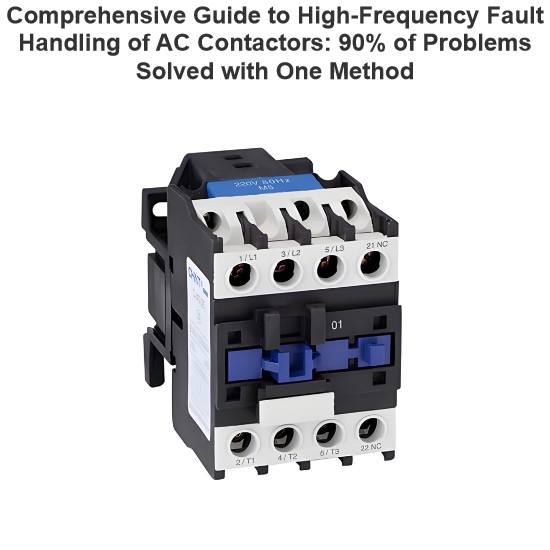
1. Fault Phenomena, Cause Analysis and Handling MethodsContactor does not operate or operates abnormally after coil energization Open circuit in coil control circuit; Check if there is wire breakage or loosening at the terminal blocks. If there is a wire breakage, replace the corresponding wire; if there is loosening, fasten the corresponding terminal block. Coil damage; Measure the coil resistance with a multimeter. If the resistance is ∞, replace the coil. Thermal relay not reset after operati
09/11/2025
Consult
Tip
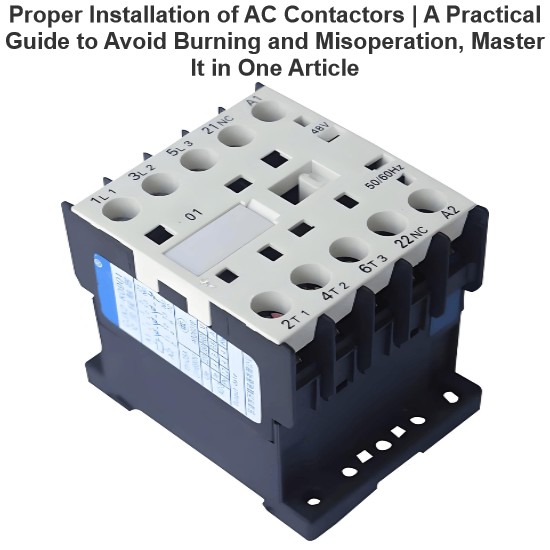
AC contactors are widely used for switching and controlling power circuits. They use main contacts to open and close circuits, and auxiliary contacts to execute control commands. Main contacts typically only have normally open contacts, while auxiliary contacts often have two pairs of contacts with normally open and normally closed functions. Small-sized contactors are also frequently used as intermediate relays to work with main circuits, thereby achieving the function of remote control or cont
09/11/2025
Consult
Tip
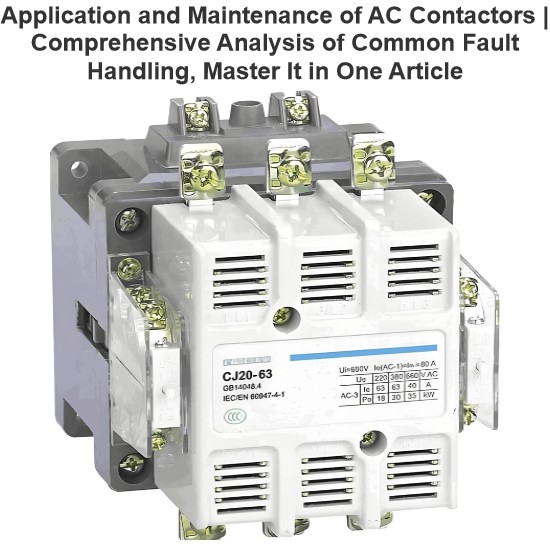
1 Analysis of Key Components of AC ContactorsAn AC contactor is an automated electromagnetic switch used for long-term, high-frequency switching of AC main circuits and control circuits. It features advantages such as automatic operation, under-voltage and no-voltage protection, high-capacity operation, strong stability, and low maintenance requirements. In the electrical control circuits of machine tools, AC contactors are mainly used to control electric motors and other loads.The key component
09/11/2025
Consult
Tip
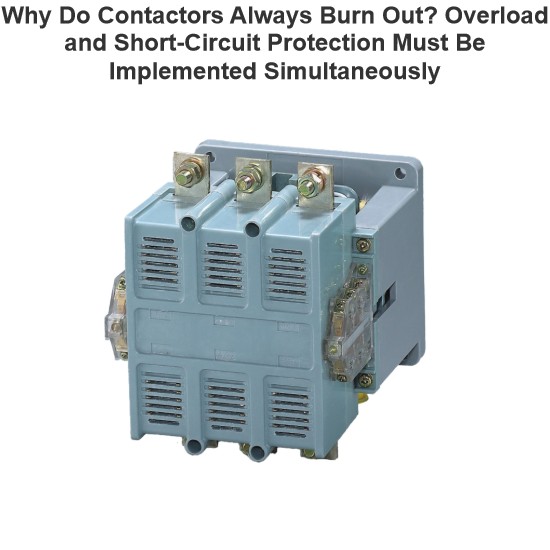
Contactors are used to close and open loads that require such operations during normal use, particularly for specific activities like medium-voltage public lighting and industrial electric motors.The medium-voltage contactor + fuse combination controller (F-C) can control motors up to 12 kV. However, medium-voltage controllers are also suitable as feeders for other types of loads, especially transformers. For such loads, contactors are usually modified to include mechanical latching, so that the
09/11/2025
Consult
Tip
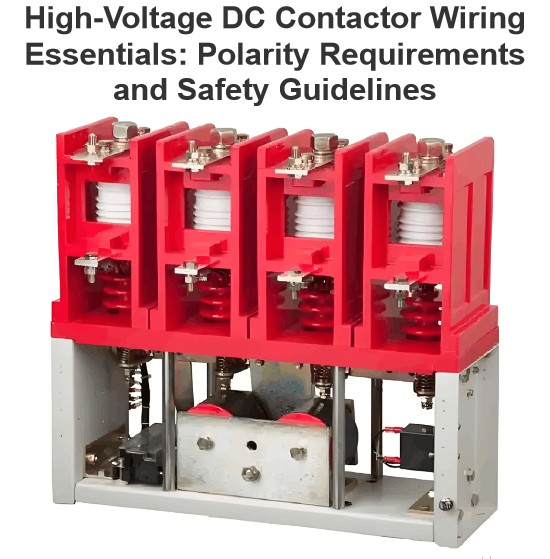
High-Voltage DC Contactors Usually Have Polarity DistinctionsThis is especially true in application scenarios with high current and high voltage.Why Polarity Distinctions ExistArc CharacteristicsDC current has no zero-crossing point, making arc extinction more difficult than that of AC. Polarity (current direction) may affect the stretching and extinguishing effect of the arc.Internal Structural DesignSome contactors optimize arc-extinguishing devices (such as magnetic blowout coils and permanen
09/09/2025
Consult
Tip
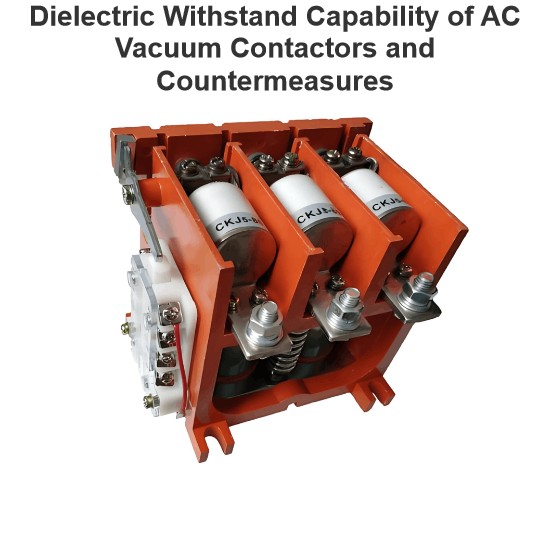
During operation, AC vacuum contactors are often subjected to various overvoltages such as lightning overvoltage and switching overvoltage. Therefore, AC vacuum contactors must have a certain voltage withstand capacity.An AC vacuum contactor is composed of a vacuum interrupter (its structure is shown in Figure 1), a housing, an electromagnetic system, a secondary circuit, and other components. Among these, the vacuum interrupter is the "heart" of the AC vacuum contactor, and its performance dire
09/09/2025
Consult
Tip
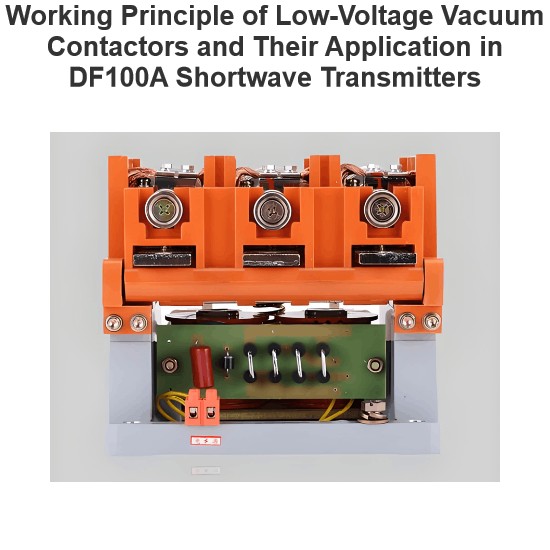
In power systems, low-voltage vacuum contactors are used for remotely connecting and disconnecting circuits, as well as frequently starting and controlling AC motors. They can also form electromagnetic starters together with various protection devices.Due to their longer service life, higher reliability, and auxiliary switches compatible with electronic equipment, low-voltage vacuum contactors can fully replace traditional air AC contactors. They are applied in important scenarios across sectors
09/09/2025
Consult
Tip
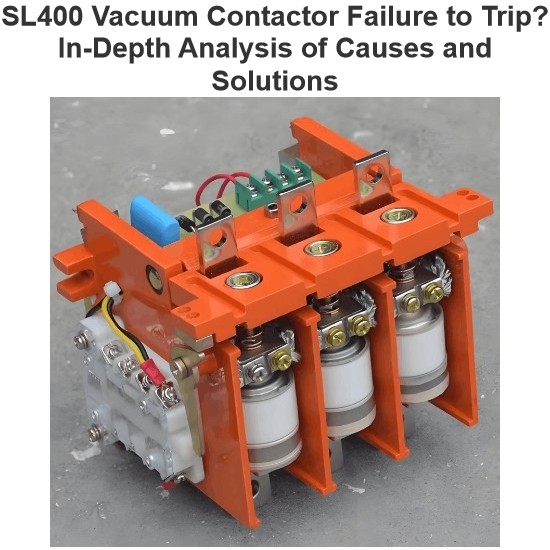
In the high-voltage auxiliary power system of power generation enterprises, high-voltage vacuum contactors are used as control electrical appliances for high-voltage motors, transformers, frequency converters, and other electrical equipment. They enable remote control and frequent operation, thus gaining widespread application. If faults of vacuum contactors are not handled promptly, it will directly affect the safe and economical operation of the generating units in power generation enterprises
09/09/2025
Consult
Tip






