
Vacuum Condition Monitoring in Vacuum InterruptersVacuum interrupters (VIs) serve as the primary circuit interruption medium for medium voltage power systems and are increasingly utilized in low, medium, and high-voltage systems. The performance of VIs hinges on maintaining an internal pressure below 10 hPa (where 1 hPa equals 100 Pa or 0.75 torr). Prior to leaving the factory, VIs are tested to ensure their internal pressure is ≤10^-3 hPa.The performance of a VI correlates with its vacuu
02/24/2025
Consult
Tip
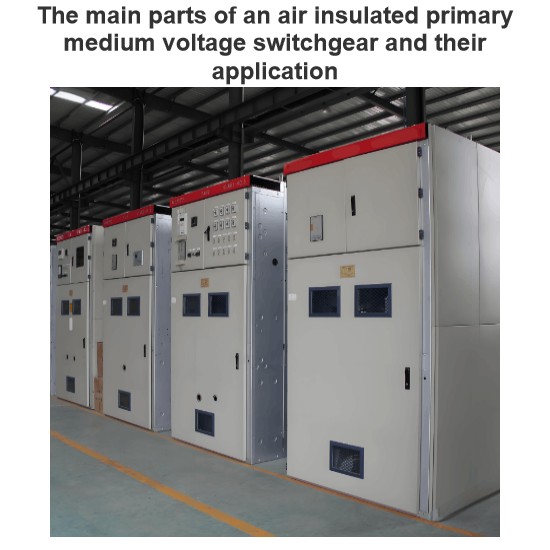
Medium voltage switchgear plays a crucial role in the energy distribution process within alternating current (AC) systems, facilitating the flow of power from generation through transmission to end-users. This essential equipment is governed by specific standards that define its specifications, terminology, ratings, design criteria, construction practices, and testing protocols. For the European region, these guidelines are detailed in the following International Electrotechnical Commission (IEC
02/17/2025
Consult
Tip

Vacuum Interrupter Based on Elastic ContactsA vacuum interrupter that utilizes elastic damping elements made of refractory metals and impregnated with a fusible eutectic alloy can be employed in vacuum switching apparatus, especially in systems requiring the switching of large currents (e.g., electrolyzers for hydrogen and metal production) or high-speed switching (e.g., medium voltage direct current). These are also suitable for instantly increasing the switching capacity of existing systems, s
02/15/2025
Consult
Tip

Global Warming and the Necessity of SF6 Alternatives in SwitchgearWith the exacerbation of global warming, it becomes increasingly important to use alternatives to sulfur hexafluoride (SF6) in switchgear such as circuit breakers and Gas Insulated Switchgear (GIS) in the future. Fluoroketones and fluoronitriles are potential replacements due to their higher dielectric strength compared to SF6. However, these gases need to be mixed with a buffer gas for use at low temperatures; otherwise, they con
02/14/2025
Consult
Tip
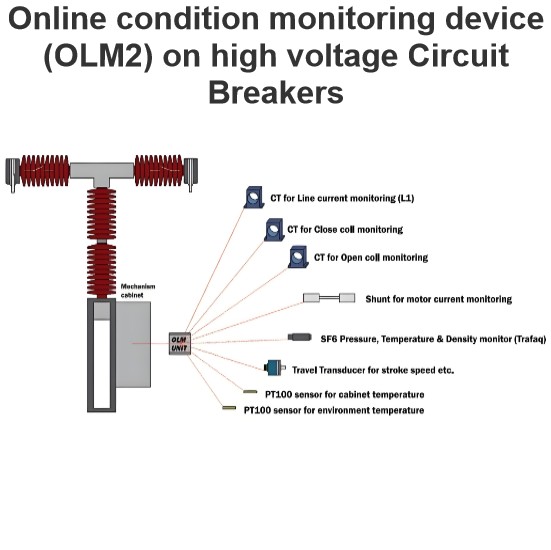
This device is capable of monitoring and detecting various parameters according to the specifications outlined:SF6 Gas Monitoring: Utilizes a specialized sensor for measuring SF6 gas density. Capabilities include measuring gas temperature, monitoring SF6 leak rates, and calculating the optimal date for refilling.Mechanical Operation Analysis: Measures operational times for closing and opening cycles. Evaluates primary contacts separation speed, damping, and contact overtravel. Identifies signs o
02/13/2025
Consult
Tip
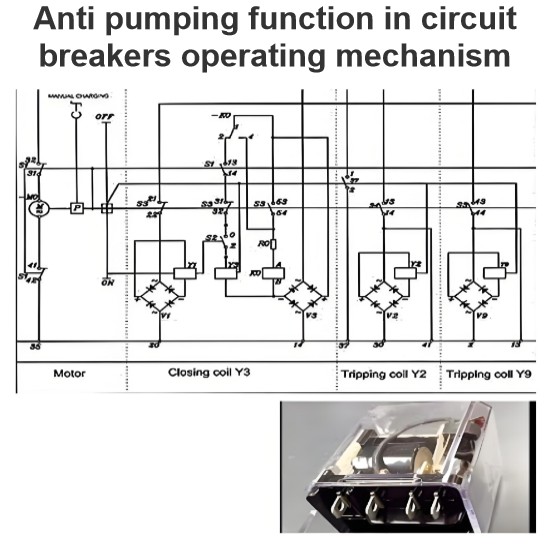
The anti - pumping function stands as a crucial characteristic of control circuits. In the absence of this anti - pumping function, assume that a user connects a maintained contact within the closing circuit. When the circuit breaker is closed onto a fault current, the protective relays will promptly trigger a tripping action. However, the maintained contact in the closing circuit will attempt to close the breaker (once again) onto the fault. This repetitive and dangerous process is referred to
02/12/2025
Consult
Tip
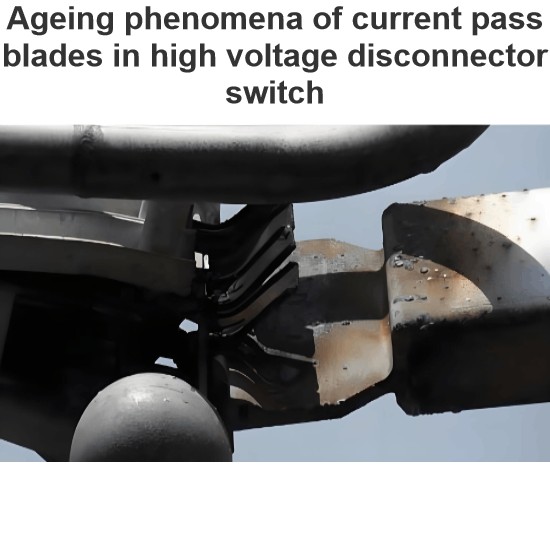
This failure mode has three primary origins: Electrical Causes: The switching of currents, such as loop currents, can lead to localized wear. At higher currents, an electric arc may burn at a specific spot, increasing the local resistance. As more switching operations occur, the contact surface wears down further, causing an increase in resistance. Mechanical Causes: Vibrations, often due to wind, are the main contributors to mechanical aging. These vibrations cause abrasion over time, leading t
02/11/2025
Consult
Tip
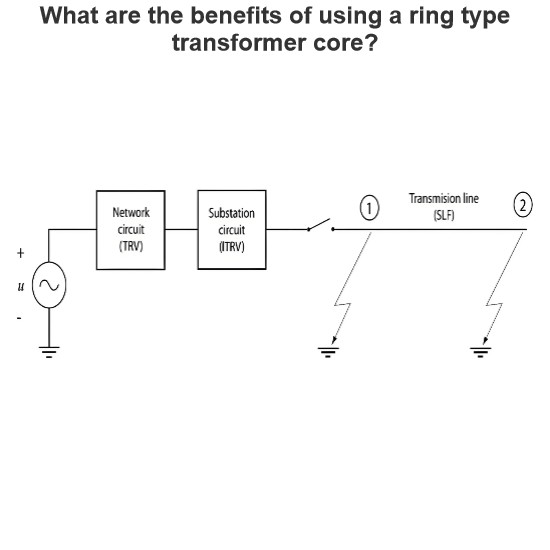
Transient Recovery Voltage (TRV) stress similar to that encountered during a short-line fault can also occur due to the busbar connections on the supply side of a circuit breaker. This specific TRV stress is known as Initial Transient Recovery Voltage (ITRV). Given the relatively short distances involved, the time to reach the first peak of ITRV is typically less than 1 microsecond. The surge impedance of the busbars within a substation is generally lower compared to that of overhead lines.The f
02/08/2025
Consult
Tip
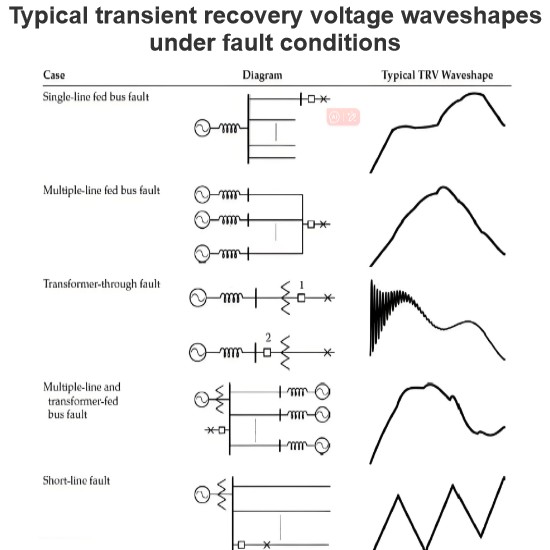
Transient Recovery Voltages (TRVs) caused by fault current interruptions are typically categorized into three types of waveshapes: exponential, oscillatory, and sawtoothed. Additionally, significant TRV conditions can be classified under two main scenarios: Short Circuit Current Interruption: This is the simplest scenario involving the interruption of a symmetrical, rated-frequency short-circuit current. Since this current naturally reduces to zero at least once every half cycle, it represents t
02/07/2025
Consult
Tip

Leakage Causes and Gasket Design ConsiderationsLeaks in equipment often occur due to the deterioration of gasket materials over time and with use. Three critical factors influence gasket design and performance: Hardening of Gaskets:High ambient temperatures and the heat generated by electrical currents passing through circuit breakers during normal operation can reduce the elasticity of gaskets, causing them to harden over time. Chemical Attack:In substations, SF6 gas undergoes chemical changes
02/06/2025
Consult
Tip






