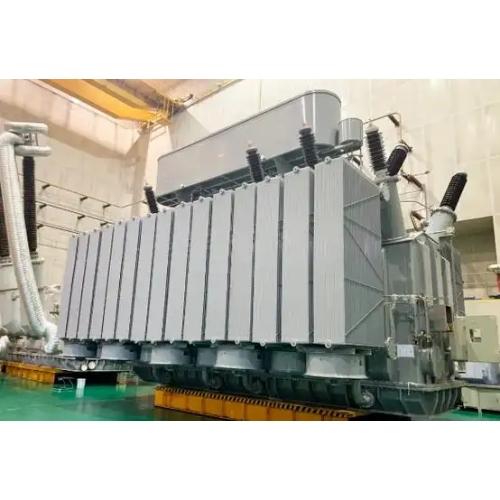
0 Introduction Dissolved gas analysis (DGA) in insulating oil is a crucial test for large oil-immersed power transformers. By employing gas chromatography, it is possible to timely detect the aging or changes in internal insulation oil of oil-filled electrical equipment, identify potential faults such as overheating or electrical discharges at an early stage, and accurately assess the severity, type, and development trend of the fault. Gas chromatography has become an essential method for monito
10/31/2025
Consult
Tip
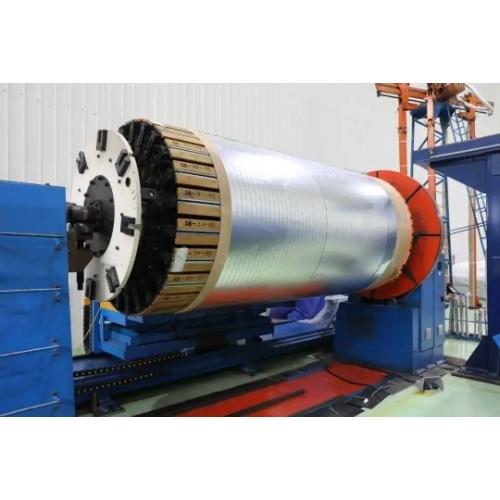
I. IntroductionThe Guanting–Lanzhou East 750kV transmission and substation demonstration project in China was officially put into operation on September 26, 2005. This project includes two substations—Lanzhou East and Guanting (each equipped with four 750kV transformers, three of which form a three-phase transformer bank in operation, with one on standby)—and one transmission line. The 750kV transformers used in the project were independently developed and manufactured in China. During the on-si
10/31/2025
Consult
Tip
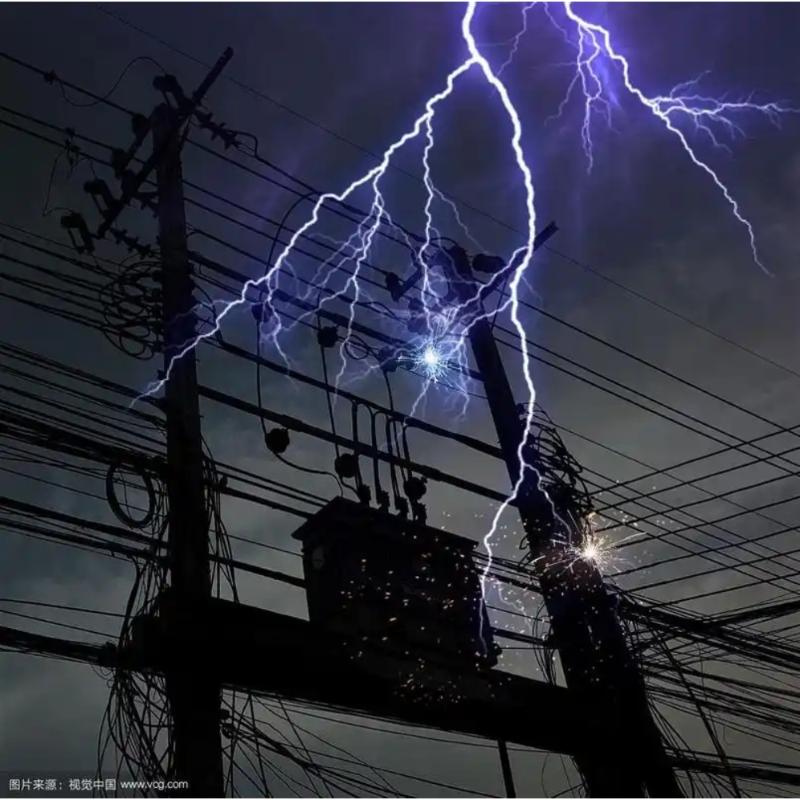
There is extensive literature on the analysis of overvoltage at transformer neutral points under lightning surge conditions. However, due to the complexity and randomness of lightning waves, an accurate theoretical description remains elusive. In engineering practice, protective measures are typically determined based on power system codes by selecting appropriate lightning protection devices, with abundant supporting documentation available.Transmission lines or substations are susceptible to l
10/30/2025
Consult
Tip
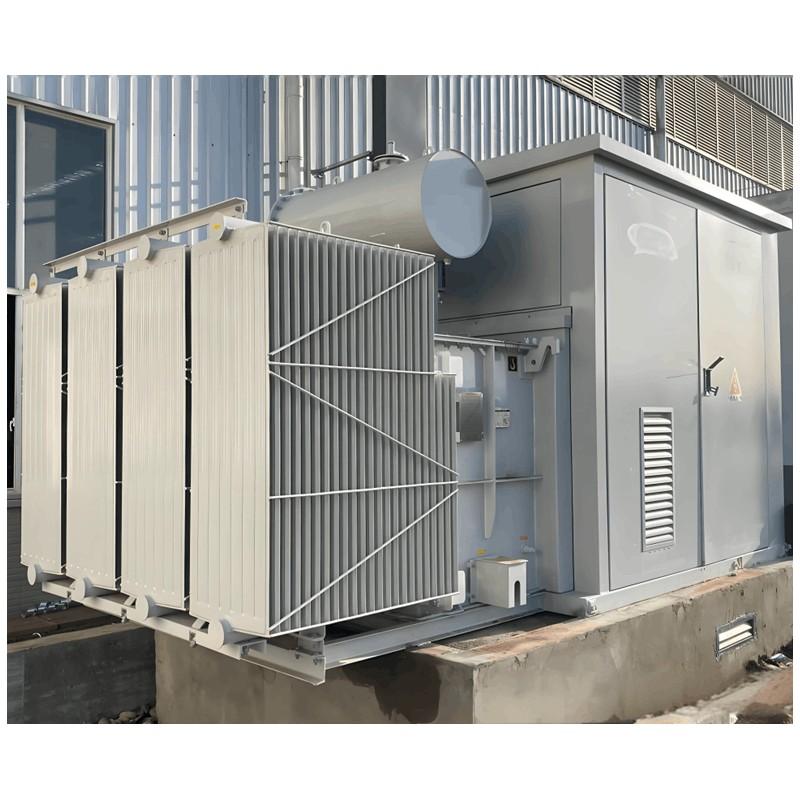
Load Banks in Power System Testing: Applications and AdvantagesThe power system is a core infrastructure of modern society, and its stability and reliability directly affect the normal operation of industry, commerce, and daily life. To ensure efficient operation under various operating conditions, load banks—critical testing equipment—are widely used in power system testing and validation. This article explores the application scenarios and unique advantages of load banks in power system testin
10/30/2025
Consult
Tip
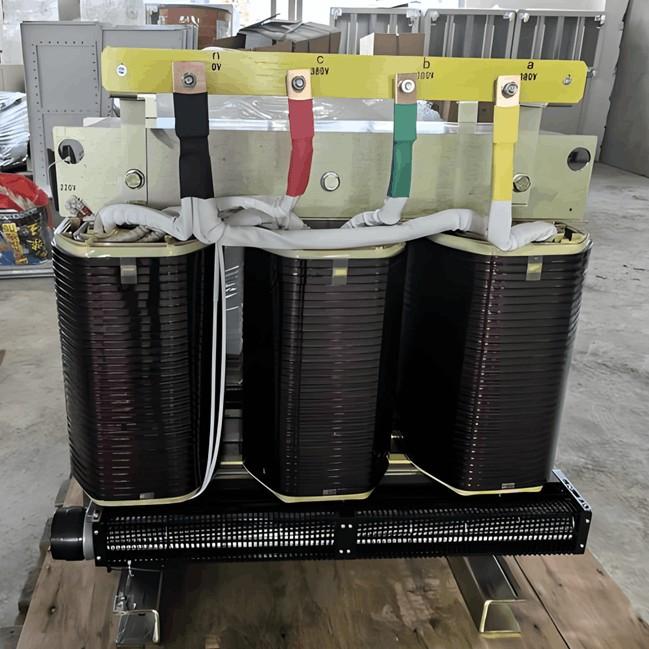
The table below covers key decision criteria from requirements to implementation in the core dimensions of solid-state transformer selection, which you can compare item by item. Evaluation Dimension Key Considerations & Selection Criteria Explanation & Recommendations Core Requirements and Scenario Matching Primary Application Objective: Is the goal to achieve extreme efficiency (e.g., AIDC), require high power density (e.g., microgrid), or improve power quality (e.g., s
10/30/2025
Consult
Tip
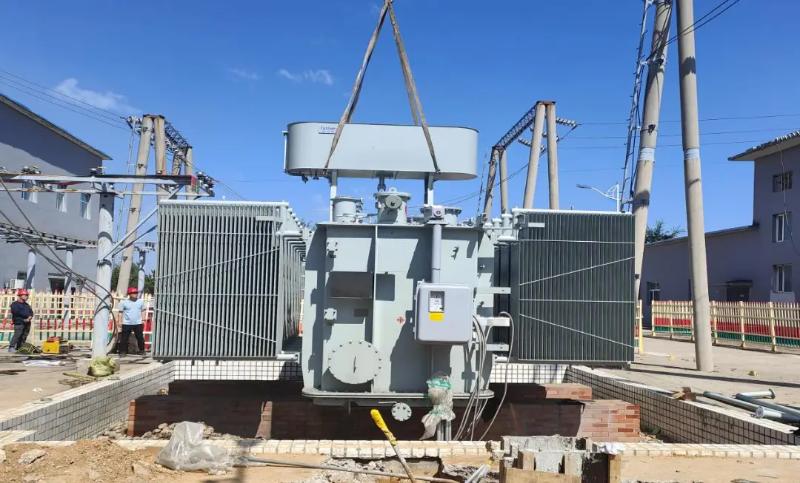
1. Maintaining and Restoring the Factory Insulation ConditionWhen a transformer undergoes factory acceptance tests, its insulation condition is at its optimal state. Thereafter, the insulation condition tends to deteriorate, and the installation phase may be a critical period for sudden degradation. In extreme cases, the dielectric strength may drop to the point of failure, leading to coil burnout immediately upon energization. Under normal circumstances, poor installation quality leaves behind
10/29/2025
Consult
Tip
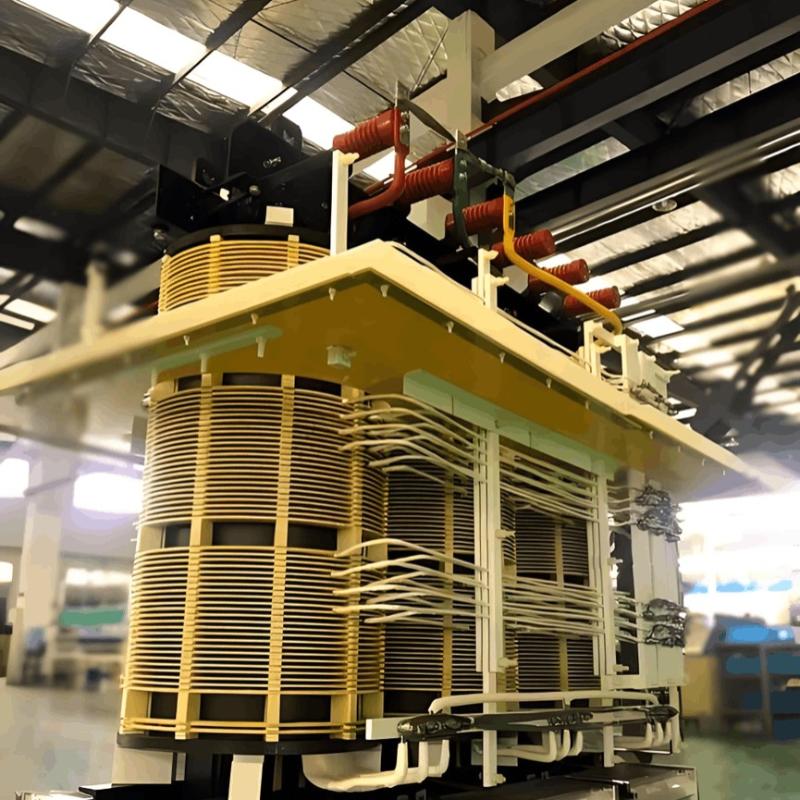
Differences Between Rectifier Transformers and Power TransformersRectifier transformers and power transformers both belong to the transformer family, but they differ fundamentally in application and functional characteristics. The transformers commonly seen on utility poles are typically power transformers, while those supplying electrolytic cells or electroplating equipment in factories are usually rectifier transformers. Understanding their differences requires examining three aspects: working
10/27/2025
Consult
Tip
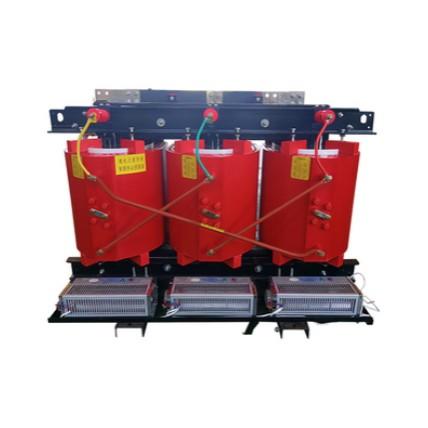
I. Core Innovation: A Dual Revolution in Materials and StructureTwo key innovations:Material Innovation: Amorphous AlloyWhat it is: A metallic material formed by ultra-rapid solidification, featuring a disordered, non-crystalline atomic structure.Key Advantage: Extremely low core loss (no-load loss), which is 60%–80% lower than that of traditional silicon steel transformers.Why it matters: No-load loss occurs continuously, 24/7, throughout a transformer’s lifecycle. For transformers with low loa
10/27/2025
Consult
Tip
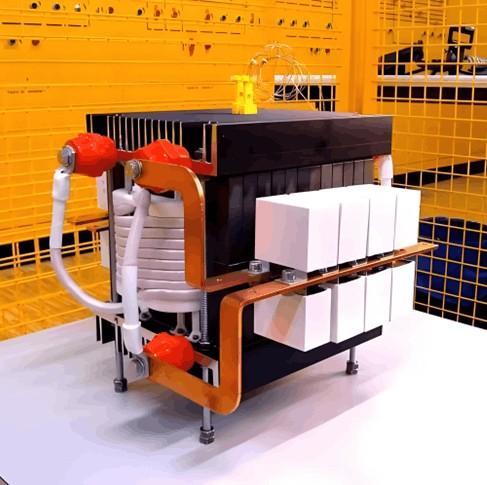
Solid-State Transformers (SST): The Future of Smart Power ConversionSolid-state transformers (SSTs), also known as smart transformers, Power Electronic Transformers (PETs), or Electronic Power Transformers (EPTs), represent a transformative advancement in electrical power systems. Unlike conventional transformers, SSTs leverage power electronic converters, high-frequency magnetic components, and intelligent control systems to deliver not only voltage transformation but also advanced grid managem
10/27/2025
Consult
Tip
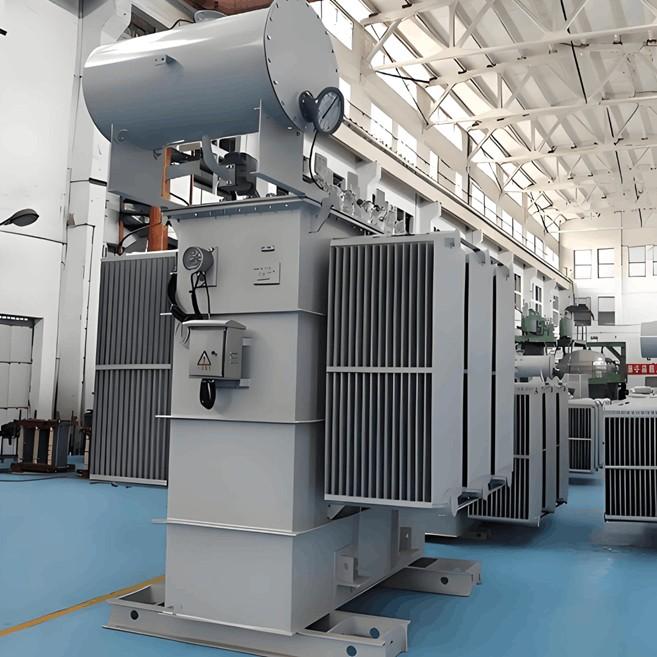
1.Rectifier Transformer: Principle and OverviewA rectifier transformer is a specialized transformer designed to supply rectifier systems. Its working principle is the same as that of a conventional transformer — it operates based on electromagnetic induction and is used to transform alternating voltage. A typical transformer has two electrically isolated windings — primary and secondary — wound around a common iron core.When the primary winding is connected to an AC power source, alternating cur
10/25/2025
Consult
Tip






