• Product
  • Suppliers
  • Manufacturers
  • Solutions
  • Free tools
  • Knowledges
  • Experts
  • Communities
Search


Free Expert Guides on Power Systems, Circuit Design & Electrical Troubleshooting

Access free engineering resources from IEE Business—covering power design, circuit layout, equipment selection, and troubleshooting. Expert-developed guides help engineers, procurement, and project teams make better decisions. Stay ahead on smart grids, renewables, efficiency, and AI tools. Improve reliability, reduce downtime, and enhance outcomes with real-world solutions. Explore our knowledge hub today.
What are the reasons for high earthing systems only?
High ground systems (usually referred to as high resistance ground systems) are used mainly for the following reasons:Limit ground fault currentReduce the risk of equipment damageIn high-resistance grounding systems, the ground fault current is limited to a relatively low level. When a ground fault occurs, a smaller fault current flows through the ground path. This low level of fault current has less impact on the thermal stress and electrodynamics of electrical equipment (such as transformers,
09/28/2024
Consult
Tip
Consult
Tip
What are the disadvantages of using AC motors instead of DC motors in electric vehicles (EVs)?
The use of Alternating Current Motor (AC Motor) instead of Direct Current Motor (DC Motor) in Electric vehicles (EVs) has some potential disadvantages. Although AC motors have many advantages, in some cases, using AC motors can present some challenges. Here are some of the main drawbacks:Higher cost Inverter cost: AC motors require an inverter (Inverter) to convert the direct current provided by the battery to alternating current. Inverters are expensive to design and manufacture, which increase
09/28/2024
Consult
Tip
Consult
Tip
How does adding resistance to a circuit affect voltage and current?
Adding resistance to a circuit will have different effects on voltage and current, depending on how the resistors are connected (series or parallel). The effects of series and parallel resistances on voltage and current are explained below:Effect of series resistanceEffect of currentIn a series circuit, all components share the same current. Therefore, no matter how many resistors are in series in the circuit, the current through each resistor is the same. Increasing resistance does not change t
09/28/2024
Consult
Tip
Consult
Tip
What are the add-ons that use AC?
FuseFeatureThe fuse is a simple and effective circuit protection element. When the current flow in the circuit is large, the melt in the fuse (such as the fuse) will be blown due to overheating, thus cutting off the circuit and preventing the equipment in the circuit from being damaged due to overcurrent. In the use of AC power, it can protect various electrical equipment, lines, etc. connected to the AC power supply. For example, in the home circuit, if a short circuit fault occurs in an electr
09/28/2024
Consult
Tip
Consult
Tip
Which appliances can run on single-phase electricity instead of three-phase electricity?
Single Phase Electricity is a form of alternating current system that usually consists of a phase line (live line) and a neutral line (neutral line) with a voltage of 220V or 230V (depending on the region). Single-phase electricity is mainly used in homes, small business establishments, or occasions that do not require a large amount of electricity. Here are a few common appliances that can run on single-phase electricity:Household appliance Lighting fixtures: such as LED lamps, fluorescent lamp
09/27/2024
Consult
Tip
Consult
Tip
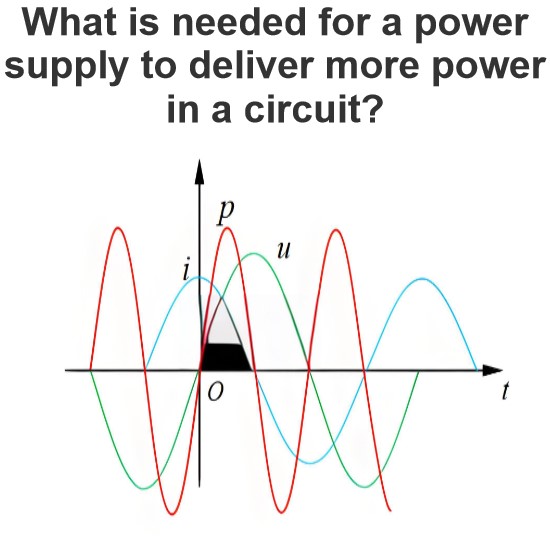
What is needed for a power supply to deliver more power in a circuit?
To increase the power delivered by a power supply in a circuit, you need to consider several factors and make appropriate adjustments. Power is defined as the rate at which work is done or energy is transferred, and it is given by the equation:P=VI P is power (measured in watts, W). V is voltage (measured in volts, V). I is current (measured in amperes, A).Thus, to deliver more power, you can either increase the voltage V or the current I, or both.Here are the steps and considerations involved:I
09/27/2024
Consult
Tip
Consult
Tip
Can you explain the concept of voltage difference and its units?
Voltage difference, also known as electric potential difference, is a measure of the work done per unit charge to move a test charge between two points in an electric field. It represents the energy required to move a unit positive charge from one point to another within an electric circuit or field. Voltage difference is what drives the flow of electric current in a circuit.When we talk about voltage difference, we are essentially talking about the difference in electric potential between two p
09/27/2024
Consult
Tip
Consult
Tip
Is there a correlation between the wattage of the resistor and the heat output?
There is a correlation between the wattage of the resistor and the heat output.Meaning of wattage of resistorThe wattage (power) of the resistor refers to the maximum power that the resistor can withstand. It reflects the amount of energy that the resistor can consume or emit under normal working conditions. For example, a 5 watt resistor means that it can safely consume or emit no more than 5 watts of power while operating.The production of heat outputWhen a current passes through a resistor, i
09/26/2024
Consult
Tip
Consult
Tip
What is the method for determining the induced electromotive force in a circuit with varying magnetic flux?
The method for determining the induced electromotive force caused by a change in magnetic flux in a circuit usually follows Faraday's law of electromagnetic induction. Faraday's law of electromagnetic induction describes the induced electromotive force (EMF) due to changes in magnetic flux, as follows:The meanings of the symbols are as follows: E stands for induced electromotive force (volts, V). N is the number of turns of the coil. ΔΦB is the change in magnetic flux through the coil (unit: Web
09/26/2024
Consult
Tip
Consult
Tip
What is the purpose of converting AC voltage to DC voltage?
What is the purpose of converting AC voltage to DC voltage?The purpose of converting AC voltage to DC voltage is mainly to adapt to those electronic devices and circuits that require a stable DC power supply. AC voltage (AC) is a voltage that changes periodically, while DC voltage (DC) is a constant voltage. Many electronic devices, such as computers, mobile phone chargers, LED lighting, etc., require DC power to work. Here are a few common purposes and examples of converting AC voltage to DC vo
09/26/2024
Consult
Tip
Consult
Tip
Send inquiry
+86
Click to upload file
Download
Get the IEE Business Application
Use the IEE-Business app to find equipment, obtain solutions, connect with experts, and participate in industry collaboration anytime, anywhere—fully supporting the development of your power projects and business.