• Product
  • Suppliers
  • Manufacturers
  • Solutions
  • Free tools
  • Knowledges
  • Experts
  • Communities
Search


Free Expert Guides on Power Systems, Circuit Design & Electrical Troubleshooting

Access free engineering resources from IEE Business—covering power design, circuit layout, equipment selection, and troubleshooting. Expert-developed guides help engineers, procurement, and project teams make better decisions. Stay ahead on smart grids, renewables, efficiency, and AI tools. Improve reliability, reduce downtime, and enhance outcomes with real-world solutions. Explore our knowledge hub today.
Hard Magnetic Materials
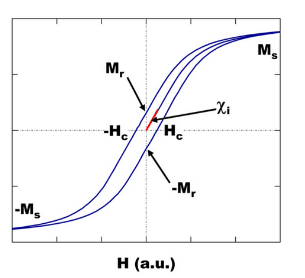
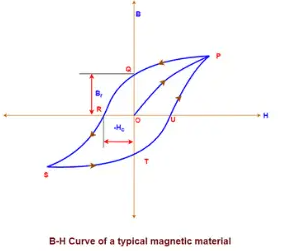
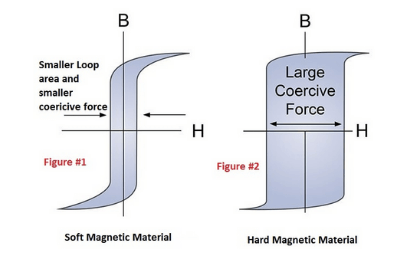
For understanding the hard magnetic materials, we have to know certain terms. They are as follows: Coercivity:The capability of aferromagnetic materialto hold up (resist) a peripheralmagnetic fieldwithout getting demagnetized. Retentivity (Br):It is the amount of magnetism that a ferromagnetic material can maintain even after themagnetic fieldis decreased to zero. Permeability:It is used to determine how a material reacts to the applied magnetic field. Magnetic materials are mainly classified (b
03/14/2024
Consult
Tip
Consult
Tip
Ferroelectric Materials: What Are They?
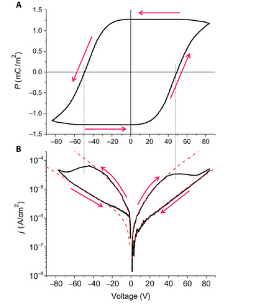
What are Ferroelectric Materials?Ferroelectric materials are materials that exhibit Ferroelectricity. Ferroelectricity is the ability of the material to have a spontaneous electric polarization. This polarization can be reversed by the application of an external electric field in the opposite direction (figure 1 below). Ferroelectricity (and hence Ferroelectric materials) was discovered by Rochelle salt by Valasek in 1921.The reversal of polarity of a ferroelectric material via the application o
03/14/2024
Consult
Tip
Consult
Tip
Soft Magnetic Materials
First of all we need to keep certain points in mind before defining the soft magnetic materials. Remanent Induction:It is actually the value of induction which residue, once the material is magnetized and then the magnetizing field is decreased to zero. It is denoted by Br. Coercive Force:It is the amount of negativemagnetic fieldwhich is essential to decrease the remanent induction to zero. It is denoted by Hc. The total area of thehysteresis loop= the energy which is dissipated when a material
03/14/2024
Consult
Tip
Consult
Tip
Cold Rolled Grain Oriented (CRGO) Silicon Steel | Properties Applications
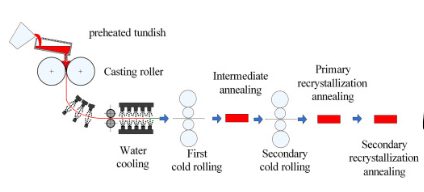
The addition of silicon(Si) in iron(Fe) in right proportions with the help of certain manufacturing process significantly improves the magnetic and electrical properties of iron. By the end of 19th century, it was discovered that the addition of silicon to iron significantly improves the resistivity of iron and so silicon steel or what we know today as electrical steel was developed. It not only brought down the eddy current losses in steel, but significant improvement in magnetic permeability a
03/14/2024
Consult
Tip
Consult
Tip
Properties of Superconductors
The superconducting material shows some extraordinary properties which make them very important for modern technology. The research is still going on to understand and utilise these extraordinary properties of superconductors in various fields of technology. Such properties of superconductors are listed below- ZeroElectric Resistance(Infinite Conductivity) Meissner Effect: Expulsion ofmagnetic field Critical Temperature/Transition Temperature Critical Magnetic Field Persistent Currents Josephson
03/14/2024
Consult
Tip
Consult
Tip
What is Superconductivity?
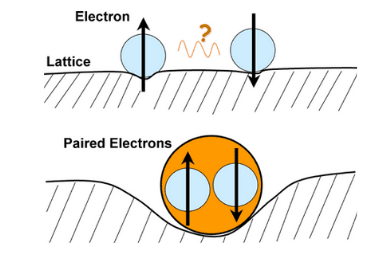
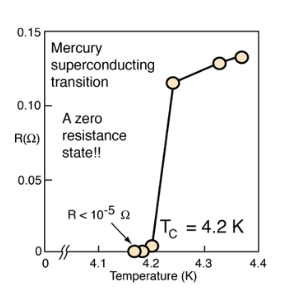
Superconductivity was discovered by Dutch Physicist Heike Kamerlingh Onnes in 1911 in Leiden. He was awarded the Nobel Prize in Physics in 1913 for his low-temperature research. Some materials when they are cooled, below certain temperature their resistivity get abolished means they exhibit the infinite conductivity.The property / phenomenon of infinite conductivity in materials is calledsuperconductivity.The temperature at which the metals change from normal conducting state to superconducting
03/14/2024
Consult
Tip
Consult
Tip
Comparison of Type – I and Type – II Superconductors
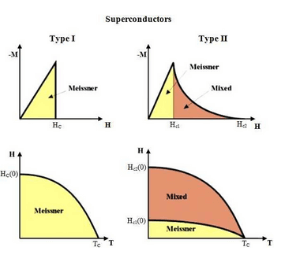
Based on the behavior and properties of Superconductors, these are classified into two categories-(1) Type – I Superconductors: Low Temperature Superconductors.(2) Type – II Superconductors: High Temperature Superconductors.td{width:49%}Type – I and Type – II superconductors slightly different in their behavior and properties. The comparison of type-I and type – II superconductors is shown in the table below Type – I Superconductors Type – II Superconductors Low critical temperature
03/14/2024
Consult
Tip
Consult
Tip
Meissner Effect and Application of Meissner Effect
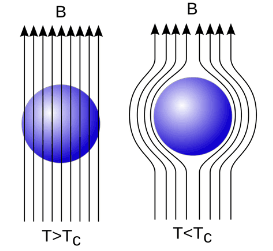
When Superconductors, are cooled below the critical temperature, they expel magnetic field and do not allow the magnetic field to penetrate inside them. This phenomenon in superconductors is called Meissner effect. This phenomenon was discovered by German physicists “Walther Meissner” and “Robert Ochsenfeld” in 1933. During an experiment, they measured the magnetic field outside the superconducting Tin and Lead samples. They observed that when the sample got cooled below the transition (critical
03/14/2024
Consult
Tip
Consult
Tip
Magnetic Properties of Engineering Materials
To finalize the material for an engineering product / application, we should have the knowledge of magnetic properties of materials. The magnetic properties of a material are those which determine the ability of material to be suitable for a particular magnetic Application. Some of the typical magnetic properties of engineering materials are listed below- Permeability Retentivity or Magnetic Hysteresis Coercive force ReluctancePermeabilityIt is the property of magnetic material which indicates t
03/14/2024
Consult
Tip
Consult
Tip
Electrical Properties of Engineering Materials
To finalize the material for an engineering product / application, we should have the knowledge of Electrical properties of materials. The Electrical properties of a material are those which determine ability of material to be suitable for a particular Electrical Engineering Application. Some of the typical Electrical properties of engineering materials are listed below- Resistivity Conductivity Temperature coefficient of Resistance Permittivity ThermoelectricityResistivityIt the property of mat
03/14/2024
Consult
Tip
Consult
Tip
Send inquiry
+86
Click to upload file
Download
Get the IEE Business Application
Use the IEE-Business app to find equipment, obtain solutions, connect with experts, and participate in industry collaboration anytime, anywhere—fully supporting the development of your power projects and business.