• Product
  • Suppliers
  • Manufacturers
  • Solutions
  • Free tools
  • Knowledges
  • Experts
  • Communities
Search


Free Expert Guides on Power Systems, Circuit Design & Electrical Troubleshooting

Access free engineering resources from IEE Business—covering power design, circuit layout, equipment selection, and troubleshooting. Expert-developed guides help engineers, procurement, and project teams make better decisions. Stay ahead on smart grids, renewables, efficiency, and AI tools. Improve reliability, reduce downtime, and enhance outcomes with real-world solutions. Explore our knowledge hub today.
Mechanical Properties of Engineering Materials
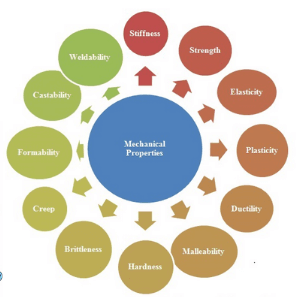
To finalize the material for an engineering product or application, is it important to understand the mechanical properties of the material. The mechanical properties of a material are those which affect the mechanical strength and ability of a material to be molded in suitable shape. Some of the typical mechanical properties of a material include: Strength Toughness Hardness Hardenability Brittleness Malleability Ductility Creep and Slip Resilience FatigueStrengthIt is the property of a materia
03/14/2024
Consult
Tip
Consult
Tip
Chemical Properties of Engineering Materials
Being an Engineer it is important to have the knowledge of chemical properties of engineering materials. Because most the engineering materials come into contact with other materials and react chemically to each other. Due to this chemical reaction they may suffer from chemical deterioration. Some of the chemical properties of engineering materials are listed below – Chemical composition Atomic bonding Corrosion resistance Acidity or AlkalinityChemical CompositionThe chemical composition of engi
03/14/2024
Consult
Tip
Consult
Tip
Physical Properties of Engineering Materials
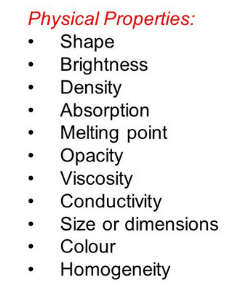
To finalize the material for an engineering product or application, we should have the knowledge of physical properties of materials. The physical properties of a material are those which can be observed without any change of the identity of material. Some of these typical properties of a material are listed below- Density Specific gravity State Change temperatures Coefficients of thermal expansion Specific Heat Latent heat Fluidity Weld ability Elasticity Plasticity Porosity Thermal conductivit
03/14/2024
Consult
Tip
Consult
Tip
Free Electron Theory of Metals
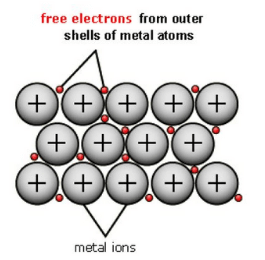
The metals form a unique type of bonding known as metallic bonding and form the lattice structure. The uniqueness in such a type of bonding fashion lies in the fact that unlike ionic bonding and covalent bonding where the sharing of electrons is between two atoms and the electrons remain localized, in metallic bonding the bond is formed among all the atoms in the lattice and the free electrons from each atom is shared by the whole lattice. These free electrons move freely throughout the lattice
03/14/2024
Consult
Tip
Consult
Tip
Antiferroelectricity
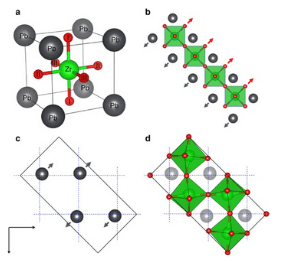
This is a physical property associated with antiferroelectric materials. Actually, these are materials having ions which can polarize without external field (spontaneous polarization). As a result, dipoles are ordered or arranged with alternating orientation. That is, adjacent lines will be in anti parallel direction. Electric field causes phase transition in these materials. This phase transition cause large pattern strain and energy change. Antiferroelectricity is highly linked to ferroelectri
03/14/2024
Consult
Tip
Consult
Tip
Classification of Engineering Materials
Basic Classification of Engineering MaterialsBasically Engineering Materials Can be classified into two categories- Metals Non-MetalsMetalsMetals are polycrystalline bodies which are having number of differentially oriented fine crystals. Normally major metals are in solid states at normal temperature. However, some metals such as mercury are also in liquid state at normal temperature. All metals are having high thermal and electrical conductivity. All metals are having positive temperature coef
03/14/2024
Consult
Tip
Consult
Tip
pH Measurement
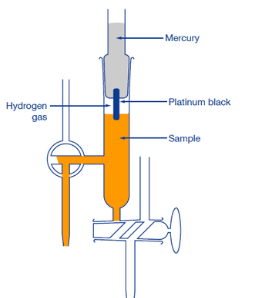
Partial pressures of hydrogen, carbon dioxide and oxygen are measured with blood gas analyzers. They determine the acid base balance in the body. When pH value goes below 7.35 it indicates respiratory acidosis and respiratory failure. It can be corrected using ventilator. At the same time when pH increases above 7.60 respiratory alkalosis occur. Here also ventilators are used to treat the alkalosis.pH MeterAs stated by Goldman equation, the electrolyte potential of the membrane is proportional t
03/14/2024
Consult
Tip
Consult
Tip
Power Line Carrier Communication | PLCC
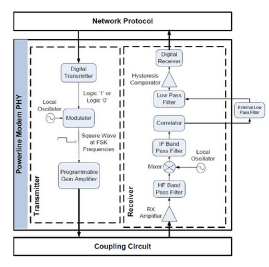
Also called wired wireless, the Power Line carrier Communication (PLCC) has evolved a long way from its earliest use in metering at remote locations to its present day applications in home automation, high speed internet access, smart grid etc. In the early 20th century the power companies used telephones as the medium of communication for exchange of voice messages for operational support, maintenance, control etc and as a method of connectivity at remote locations. The telephone lines ran para
03/14/2024
Consult
Tip
Consult
Tip
Spirometer Working Principle of Spirometer
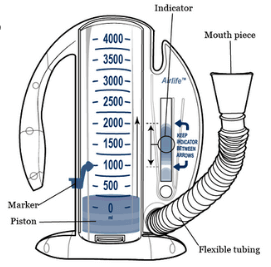
Spirometer is a biomedical device which measures the lung capacity and lung volume. The constructional feature of a spirometer is very simple. It mainly consists of a container which collects gas. To understand the basic working principle of a spirometer, we need to look into the basic construction of a spirometer. The water-sealed model is one of the popular types of spirometers. Let us discuss the construction and working of a water seal spirometer for the purpose of understanding.Water Seal S
03/14/2024
Consult
Tip
Consult
Tip
Electrical Impedance: What is it?
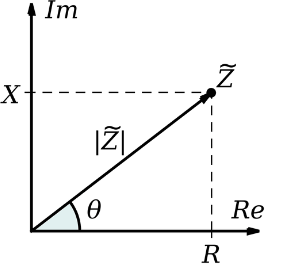
What is Electrical Impedance?In electrical engineering, electrical impedance is the measure of the opposition that a circuit presents to a current when a voltage is applied. Impedance extends the concept of resistance to alternating current (AC) circuits. Impedance possesses both magnitude and phase, unlike resistance, which has only magnitude.Unlike electrical resistance, electrical impedance’s opposition to current depends on the frequency of the circuit. Resistance can be thought of as impeda
03/14/2024
Consult
Tip
Consult
Tip
Send inquiry
+86
Click to upload file
Download
Get the IEE Business Application
Use the IEE-Business app to find equipment, obtain solutions, connect with experts, and participate in industry collaboration anytime, anywhere—fully supporting the development of your power projects and business.