• Product
  • Suppliers
  • Manufacturers
  • Solutions
  • Free tools
  • Knowledges
  • Experts
  • Communities
Search


Free Expert Guides on Power Systems, Circuit Design & Electrical Troubleshooting

Access free engineering resources from IEE Business—covering power design, circuit layout, equipment selection, and troubleshooting. Expert-developed guides help engineers, procurement, and project teams make better decisions. Stay ahead on smart grids, renewables, efficiency, and AI tools. Improve reliability, reduce downtime, and enhance outcomes with real-world solutions. Explore our knowledge hub today.
Bohrs Atomic Model
It is introduced by Danish Physicist Niels Bohr in the year of 1913. According to this model the atom consists of small nucleus at the center and electrons which rotates in circular orbits surrounding the nucleus – similar to solar system. But here, the force of attraction is provided by electrostatic forces rather than gravitational forces. The nucleus is positively charged and electrons are negatively charged. Further Niels Bohr illustrated that the positively charged nucleus consists of proto
03/14/2024
Consult
Tip
Consult
Tip
Rutherford Atomic Model
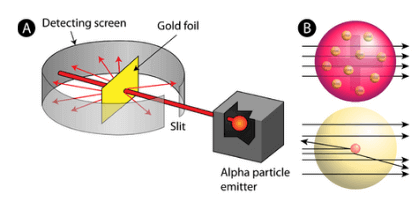
We all have seen plums in padding. Previously it was thought that electrons in an atom are distributed on positive charge just like plums in a pudding. In other words, it was thought that positive charge exists throughout the atom and negative electrons are unevenly distributed on it just like plums in the pudding. This concept of the atomic model is so known as plums in pudding model of atoms. This concept was introduced by J.J.Thomson who was also the inventor of electrons. As according to plu
03/14/2024
Consult
Tip
Consult
Tip
How to Understand the Electronic Configuration of Atoms
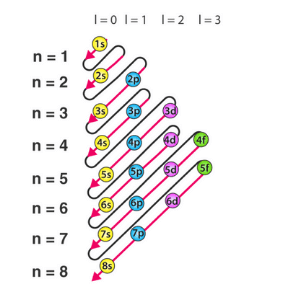
he electronic configuration of an atom is a way of describing how its electrons are arranged in different energy levels and sublevels around the nucleus. The electronic configuration of an atom determines many of its physical and chemical properties, such as how it reacts with other atoms, how it conducts electricity, and how it behaves in a magnetic field.What is an Electron?An electron is a negatively charged subatomic particle that orbits the nucleus of an atom. The nucleus consists of positi
03/14/2024
Consult
Tip
Consult
Tip
The Plum Pudding Model: An Early Attempt to Explain the Atom
What is the Plum Pudding Model?Aplum pudding modelis a historical scientific model of the atom that was proposed by J.J. Thomson in 1904, shortly after he discovered the electron. The model tried to explain two properties of atoms that were known at that time: electrons are negatively charged particles, and atoms have no net electric charge.The plum pudding model suggested that an atom consists of a sphere of positive charge, called the pudding, with electrons embedded in it, like plums in a des
03/14/2024
Consult
Tip
Consult
Tip
Send inquiry
+86
Click to upload file
Download
Get the IEE Business Application
Use the IEE-Business app to find equipment, obtain solutions, connect with experts, and participate in industry collaboration anytime, anywhere—fully supporting the development of your power projects and business.