• Product
  • Suppliers
  • Manufacturers
  • Solutions
  • Free tools
  • Knowledges
  • Experts
  • Communities
Search


Free Expert Guides on Power Systems, Circuit Design & Electrical Troubleshooting

Access free engineering resources from IEE Business—covering power design, circuit layout, equipment selection, and troubleshooting. Expert-developed guides help engineers, procurement, and project teams make better decisions. Stay ahead on smart grids, renewables, efficiency, and AI tools. Improve reliability, reduce downtime, and enhance outcomes with real-world solutions. Explore our knowledge hub today.
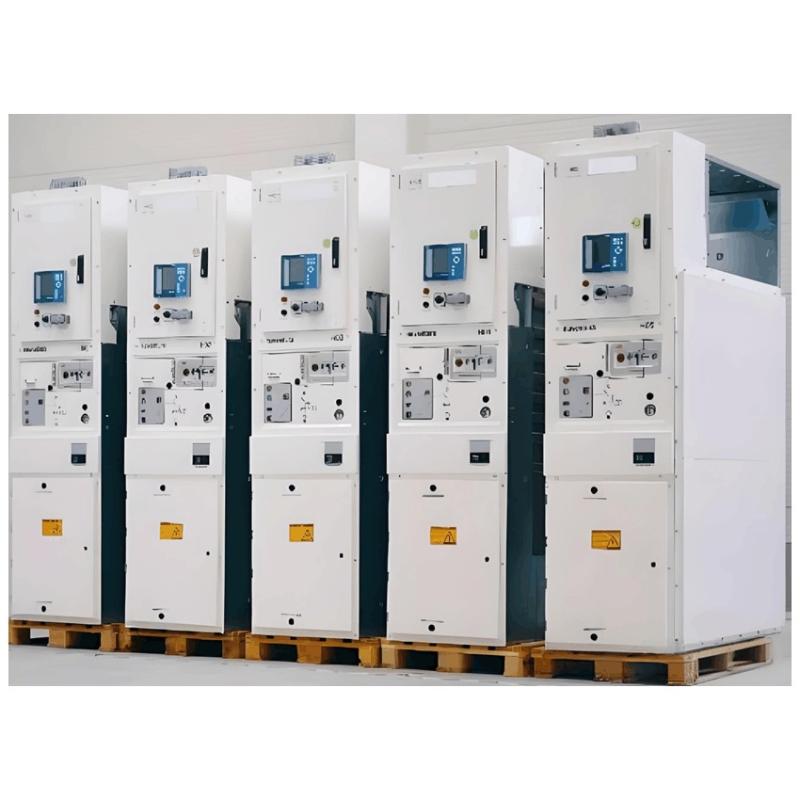
Climate-Neutral 24kV Switchgear for Sustainable Grids | Nu1
Expected service life of 30–40 years, front access, compact design equivalent to SF6-GIS, no SF6 gas handling – climate-friendly, 100% dry air insulation. The Nu1 switchgear is metal-enclosed, gas-insulated, featuring a withdrawable circuit breaker design, and has been type-tested according to relevant standards, approved by the internationally recognized STL laboratory.Compliance Standards Switchgear: IEC 62271-1 High-voltage switchgear and controlgear – Part 1: Common specifications for altern
11/03/2025
Consult
Tip
Consult
Tip
Busbar-Side Grounding for 24kV Eco-Friendly RMUs: Why & How
Solid insulation assistance combined with dry air insulation is a development direction for 24 kV ring main units. By balancing insulation performance and compactness, the use of solid auxiliary insulation allows passing insulation tests without significantly increasing phase-to-phase or phase-to-ground dimensions. Encapsulation of the pole can address the insulation of the vacuum interrupter and its connected conductors.For the 24 kV outgoing busbar, with the phase spacing maintained at 110 mm,
11/03/2025
Consult
Tip
Consult
Tip
How Vacuum Tech Replaces SF6 in Modern Ring Main Units
Ring main units (RMUs) are used in secondary power distribution, directly connecting to end-users such as residential communities, construction sites, commercial buildings, highways, etc.In a residential substation, the RMU introduces 12 kV medium voltage, which is then stepped down to 380 V low voltage through transformers. The low-voltage switchgear distributes electrical energy to various user units. For a 1250 kVA distribution transformer in a residential community, the medium-voltage ring m
11/03/2025
Consult
Tip
Consult
Tip
Why RMUs Fail? Condensation & Gas Leak Explaine
1. IntroductionRing main units (RMUs) are primary power distribution equipment that house load switches and circuit breakers within a metal or non-metal enclosure. Due to their compact size, simple structure, excellent insulation performance, low cost, easy installation, and fully sealed design [1], RMUs are widely used in medium- and low-voltage power systems across China’s grid network [2], especially in 10 kV distribution systems. With economic growth and increasing electricity demand, requir
10/31/2025
Consult
Tip
Consult
Tip
Preventing RMU Insulation Failures: Key Causes
1. Insufficient Creepage Distance or Air ClearanceInadequate creepage distance and air gaps are the main causes of insulation failure and accidents in solid-insulated ring main units (RMUs). Especially in drawer-type cabinets, manufacturers reduce cabinet size by minimizing space for circuit breakers, significantly decreasing isolation distances between plug contacts and ground. Without adequate reinforcement of insulation structure, such designs increase the risk of flashover under overvoltage
10/31/2025
Consult
Tip
Consult
Tip
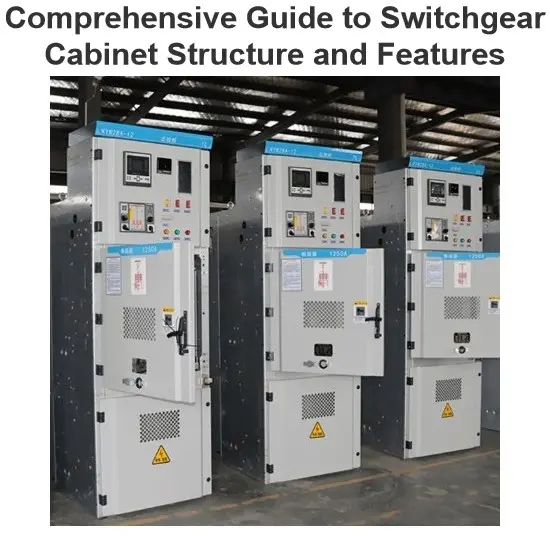
Comprehensive Guide to Switchgear Cabinet Structure and Features
The switchgear comprises a fixed cabinet and removable components (i.e., the draw-out unit or "handcart"). The cabinet enclosure and partition plates of each functional unit are constructed from aluminum-zinc-coated steel sheets, precision-formed using CNC machinery and assembled with bolts. This ensures dimensional consistency, high mechanical strength, and excellent resistance to corrosion and oxidation. The overall protection level of the switchgear enclosure is IP4X; when the circuit breaker
08/13/2025
Consult
Tip
Consult
Tip
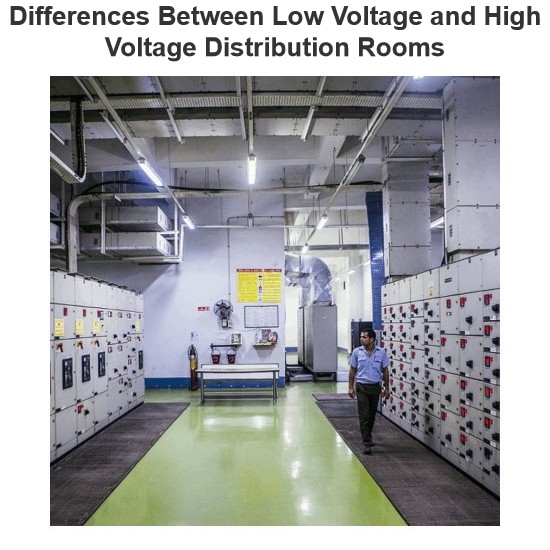
Differences Between Low Voltage and High Voltage Distribution Rooms
1 Power and Voltage Levels Low-Voltage Distribution Room: Typically refers to distribution equipment operating at 1000V or lower, with a focus on 400V rooms fed by 10kV or 35kV station transformers. It has relatively small power capacity and is primarily responsible for distributing electricity to end users, households, and directly connected equipment. High-Voltage Distribution Room: Encompasses distribution equipment with higher voltage levels, usually 6kV to 10kV. It features larger power cap
08/02/2025
Consult
Tip
Consult
Tip
Send inquiry
+86
Click to upload file
Download
Get the IEE Business Application
Use the IEE-Business app to find equipment, obtain solutions, connect with experts, and participate in industry collaboration anytime, anywhere—fully supporting the development of your power projects and business.