• Product
  • Suppliers
  • Manufacturers
  • Solutions
  • Free tools
  • Knowledges
  • Experts
  • Communities
Search


Free Expert Guides on Power Systems, Circuit Design & Electrical Troubleshooting

Access free engineering resources from IEE Business—covering power design, circuit layout, equipment selection, and troubleshooting. Expert-developed guides help engineers, procurement, and project teams make better decisions. Stay ahead on smart grids, renewables, efficiency, and AI tools. Improve reliability, reduce downtime, and enhance outcomes with real-world solutions. Explore our knowledge hub today.
Selection of Materials Used for Electrical Contacts
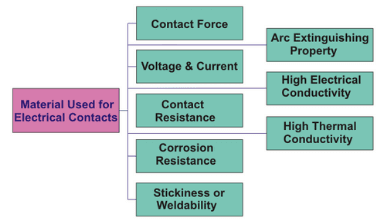
Materials used for Electrical Contacts, play an important role in the performance of electrical machines and equipment. Hence, it becomes quite important to select a suitable material for electrical contacts. The successful operation of electrical contacts for a specific application, is a function of various factors. While selecting a suitable material for electrical contact, we have to consider the many factors. Some of the most important factors are showing below –Contact ForceThe contact resi
03/15/2024
Consult
Tip
Consult
Tip
Applications of Carbon Materials in Electrical Engineering
Carbon, in various forms and in combination of other materials, is widely used in electrical engineering. Electrical carbon materials are manufactured from graphite and other forms of carbon.Carbon is having following applications in Electrical Engineering– For making filament ofincandescent lamp For making electrical contacts For makingresistors For making brushes for electrical machines such as DC machines,alternators. For making battery cell elements For making carbon electrodes for electric
03/15/2024
Consult
Tip
Consult
Tip
Electrical Stranded Conductors
Stranded conductors are very much popular in electrical power system for transmission and distribution line. A stranded conductor is consists of several thin wires of small cross sectional area called strands as shown in figure below-As shown in figure above, at the center of stranded conductor, we are using steel conductor which provided the high tensile strength to conductor. In the outer layers of stranded conductor, we use aluminum conductors, which provide the conductivity to stranded condu
03/15/2024
Consult
Tip
Consult
Tip
Materials Used for Transmission Line Conductor
Transmission line is an important part of power system. The cost and life of transmission line primarily depend on the material used for making conductor for transmission line. The most important and much suitable material for conductor of transmission line is copper as it having high conductivity and high tensile strength. More ever it is having good ductility. The only limitation is its cost. The most extensively used material in transmission line is Aluminum.Aluminum is having sufficient cond
03/15/2024
Consult
Tip
Consult
Tip
High Resistivity or Low Conductivity Conducting Material
Materials having high resistivity or low conductivity are very useful for some electrical engineering products and applications. These material are used to manufacture the filaments for incandescent lamp, heating elements for electric heaters and furnaces, space heaters and electric irons etc.Required Properties in High Resistivity or Low Conductivity Conducting MaterialThe following properties are required in high resistivity or low conductivity conducting material– High resistivity. High melti
03/15/2024
Consult
Tip
Consult
Tip
Classification of Electrical Conducting Materials
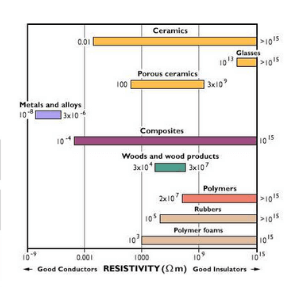
Electrical conducting material are the basic requirement for electrical engineering products. The electrical conducting material can be classified as below-Based on Resistivity or Conductivity Lowresistivityor high conductivity conducting material High resistivity or Low conductivity conducting materialA classification chart of conducting materials based on resistivity or conductivity is shown in figure below-Low Resistivity or High Conductivity Conducting MaterialMaterial having low resistivity
03/15/2024
Consult
Tip
Consult
Tip
Factors Effecting the Resistivity of Electrical Materials
Factors effecting the resistivity of electrical materials are listed below – Temperature. Alloying. Mechanical stressing. Age Hardening. Cold Working.TemperatureThe resistivity of materials changes with temperature. Resistivity of most of the metals increase with temperature. The change in the resistivity of material with change in temperature is given by formula given below-Where,ρt1 is the resistivity of material at temperature of t1o Candρt2 is the resistivity of material at temperature of t2
03/15/2024
Consult
Tip
Consult
Tip
Classification of Electrical Engineering Materials
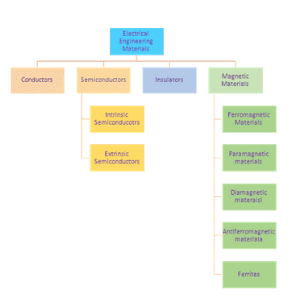
Materials used in the field of Electrical Engineering are called the Electrical Engineering materials. Based on properties and area of applications, Electrical Engineering materials can be classified as below- Conductors Semiconductors Insulators Magnetic materialA classification chart of electrical engineering materials is shown in figure belowConductorsConductors are the materials which have very high conductivity. The number of free electrons are very high in a conductor at room temperature,
03/15/2024
Consult
Tip
Consult
Tip
Electrical And Electronics Engineering Materials
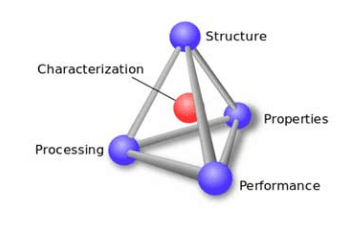
Materials are the part of our life and daily works since ancient time. Materials are the primary part of all things surrounding us. In fact some materials have given the name to various ages in human history i.e. Stone Age, Bronze Age, Iron Age, Synthetic Materials Age, Smart Materials Age. The study of these materials is called the Material Science.Material science is associated with the study of composition, structure, characterization, processing, properties, application and performance of va
03/15/2024
Consult
Tip
Consult
Tip
Electrical Conductors: Definition, Types and Properties
An electrical conductor is a material that allows electric charge to flow through it with little resistance. Electrical conductors are usually metals, such as copper, silver, gold, aluminum, and iron. They have many free electrons that can move easily when an electric field is applied. Electrical conductors are used for making wires, cables, circuits, and other devices that carry electric current.What is an Electrical Conductor?An electrical conductor is defined as an object or type of material
03/14/2024
Consult
Tip
Consult
Tip
Send inquiry
+86
Click to upload file
Download
Get the IEE Business Application
Use the IEE-Business app to find equipment, obtain solutions, connect with experts, and participate in industry collaboration anytime, anywhere—fully supporting the development of your power projects and business.