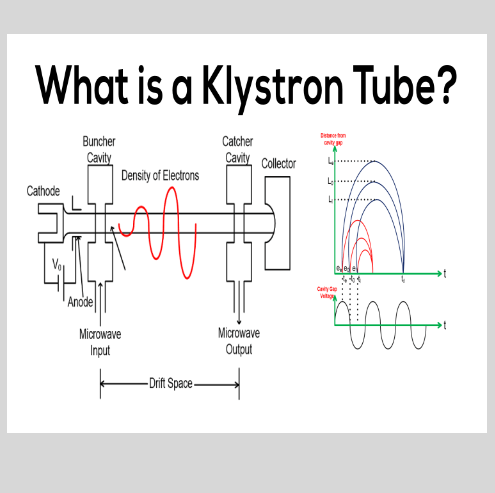
What is a Klystron Tube?A Klystron (also known as a Klystron Tube or Klystron Amplifier) is a vacuum tube that is used to oscillate and amplify microwave frequency signals. It was invented by American electrical engineers Russell and Sigurd Varian.A klystron uses the kinetic energy of an electron beam. Generally, Low-power klystrons are used as oscillators and high-power klystrons are used as output tubes in UHF.There are two configurations for a low-powered klystron. One is a low-power microwa
03/27/2024
Consult
Tip
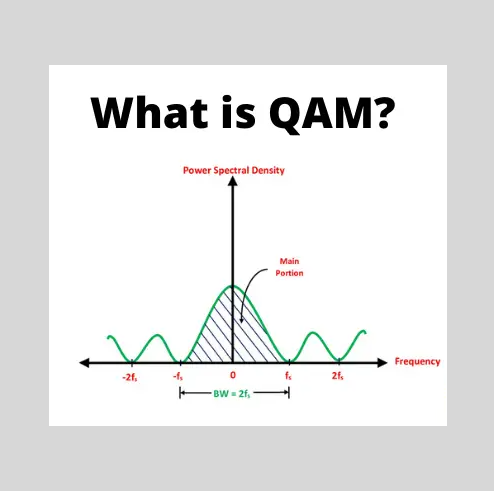
What is QAM (Quadrature Amplitude Modulation)?QAM (Quadrature Amplitude Modulation) is defined as the modulation technique which is the combination of phase and amplitude modulation of a carrier wave into a single channel. In other words, QAM transmits information by changing both the amplitude and phase of a carrier wave, thereby doubling the effective bandwidth. QAM is also known as “quadrature carrier multiplexing”.In a QAM signal, the direct modulation of a carrier wave in quadrature is inv
03/27/2024
Consult
Tip
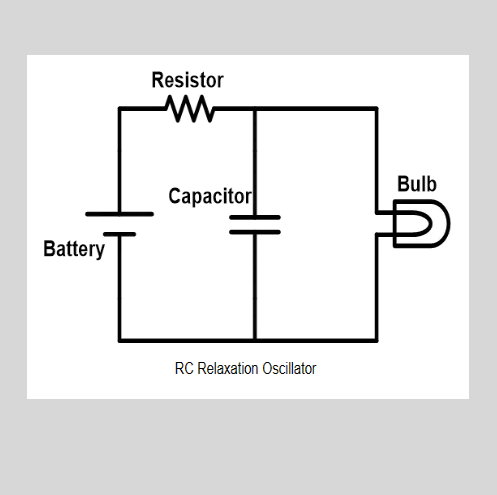
What is a Relaxation Oscillator?A relaxation oscillator is defined as a non-linear electronic oscillator circuit that can generate a non-sinusoidal repetitive output signal. A relaxation oscillator was invented by Henri Abraham and Eugene Bloch using a vacuum tube during World War 1.Oscillators are classified into two different categories; linear oscillators (for sinusoidal waveforms) and relaxation oscillators (for non-sinusoidal waveforms).It must provide a repetitive and periodic signal for n
03/27/2024
Consult
Tip
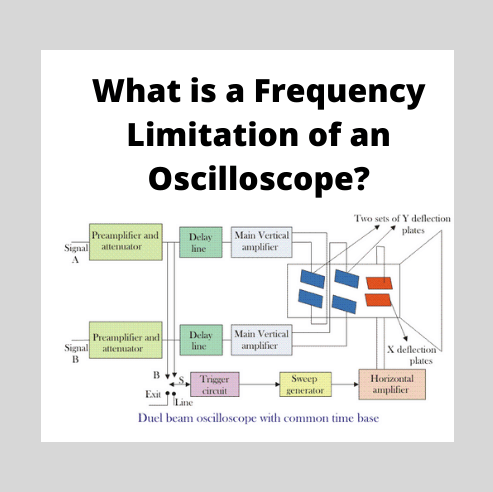
Oscilloscopes are an incredibly useful tool of the electronics world after a multimeter. Without a scope, it’s quite difficult to know what is happening in a circuit. But this type of test equipment has its own limitation. To overcome this limitation, one must understand the weakest links in the system fully and compensate for that in the best way possible.The important feature of the oscilloscope is the bandwidth. How fast the number of analog sample per second that it can read is the key facto
03/27/2024
Consult
Tip
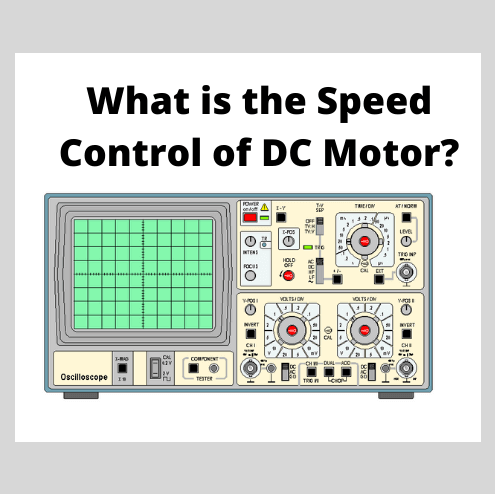
Normally, an oscilloscope is an important tool in an electrical field which is used to display the graph of an electrical signal as it varies with respect to time. But some of the scopes have additional features apart from their fundamental use. Many oscilloscopes have the measurement tool that help us to measure waveform characteristics like frequency, voltage, amplitude, and many more features with accuracy. Generally, a scope can measure time-based as well as voltage-based characteristics.Vol
03/27/2024
Consult
Tip
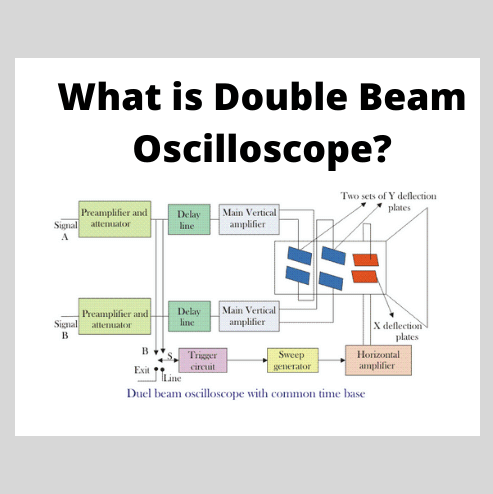
The dual beam oscilloscope emits two electron beams that are displayed simultaneously on a single scope, which could be individually or jointly controlled. The construction and working of the dual beam oscilloscope are completely different from dual trace oscilloscope. The tubes are more complicated to build, and the whole thing is more expensive.A special type of double beam oscilloscope can display two electrons beam by generating or deflecting beams. Now a days, double beam oscilloscope is ou
03/27/2024
Consult
Tip
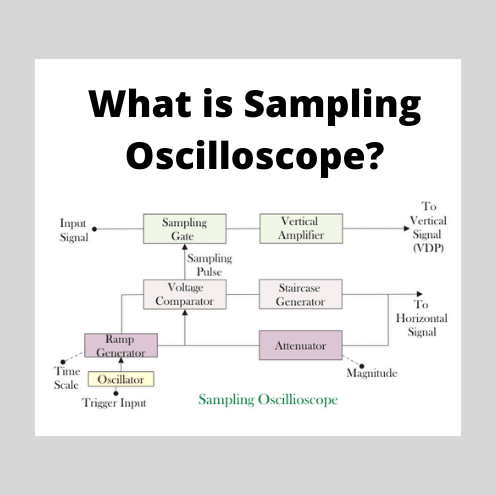
Before discussing sampling oscilloscope, we must know the basic principle and functioning of an ordinary oscilloscope. It is an instrument which receives one or more electrical signals and then produces the waveform on the screen simultaneously. The sampling oscilloscope is an advanced version of the digital oscilloscope with some added features and uses for the special purpose.It is designed to provide a very high-frequency function by sampling several wave forms successively. Such oscilloscope
03/27/2024
Consult
Tip
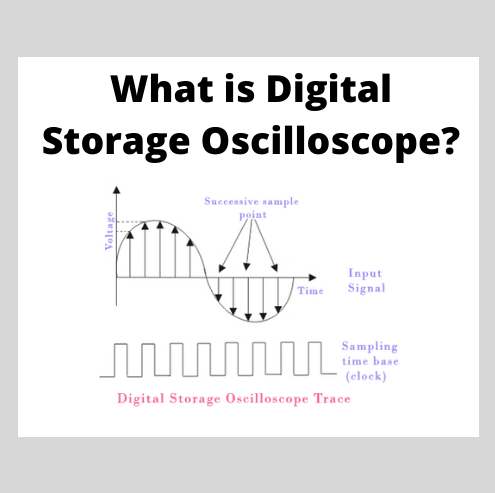
A digital oscilloscope is an instrument which stores a digital copy of the waveform in the digital memory which it analyses further using digital signal processing techniques rather than using analogue techniques. It captures the non-repetitive signals and displays it consciously until the device gets reset. In digital storage oscilloscope, signals are received, stored and then displayed. The maximum frequency measured by digital oscilloscope depends upon two things: one is sampling rate of the
03/27/2024
Consult
Tip
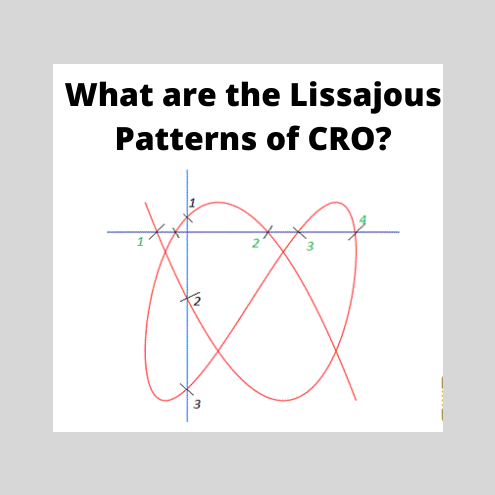
Cathode Ray Oscilloscope (CRO) is very important electronic device. CRO is very useful to analyze the voltage wave form of different signals. The main part of CRO is CRT (Cathode Ray Tube). A simple CRT is shown in figure below-When both pairs of the deflection plates (horizontal deflection plates and vertical deflection plates) of CRO (Cathode Ray Oscilloscope) are connected to two sinusoidal voltages, the patterns appear at CRO screen are called the Lissajous pattern.Shape of these Lissajous p
03/27/2024
Consult
Tip
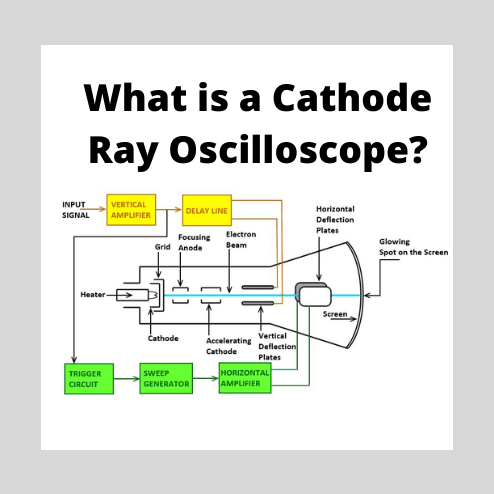
What is a Cathode Ray Oscilloscope?A Cathode Ray Oscilloscope (CRO) is an instrument generally used in a laboratory to display, measure and analyze various waveforms of electrical circuits. A cathode ray oscilloscope is a very fast X-Y plotter that can display an input signal versus time or another signal.Cathode ray oscilloscopes use luminous spots which are produced by striking the beam of electrons and this luminous spot moves in response variation in the input quantity. At this moment one qu
03/27/2024
Consult
Tip






