• Product
  • Suppliers
  • Manufacturers
  • Solutions
  • Free tools
  • Knowledges
  • Experts
  • Communities
Search


Free Expert Guides on Power Systems, Circuit Design & Electrical Troubleshooting

Access free engineering resources from IEE Business—covering power design, circuit layout, equipment selection, and troubleshooting. Expert-developed guides help engineers, procurement, and project teams make better decisions. Stay ahead on smart grids, renewables, efficiency, and AI tools. Improve reliability, reduce downtime, and enhance outcomes with real-world solutions. Explore our knowledge hub today.
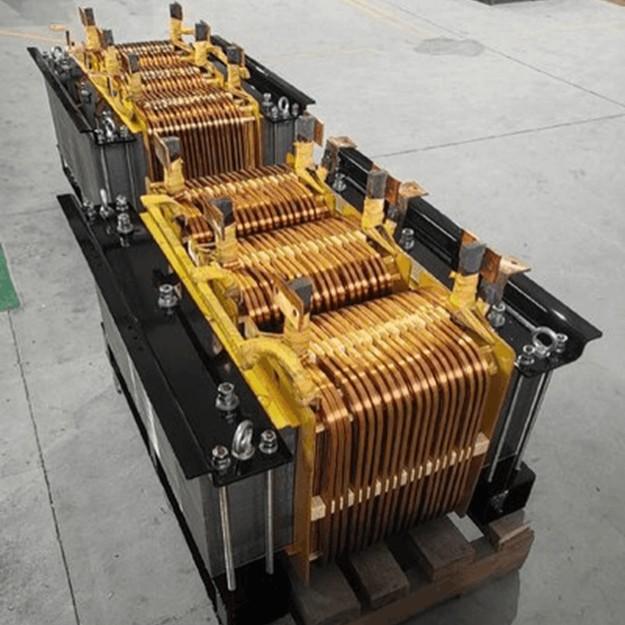
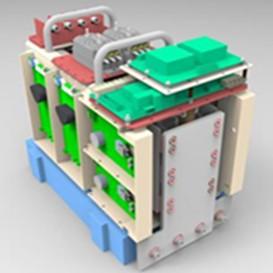
Innovative & Common Winding Structures for 10kV High-Voltage High-Frequency Transformers
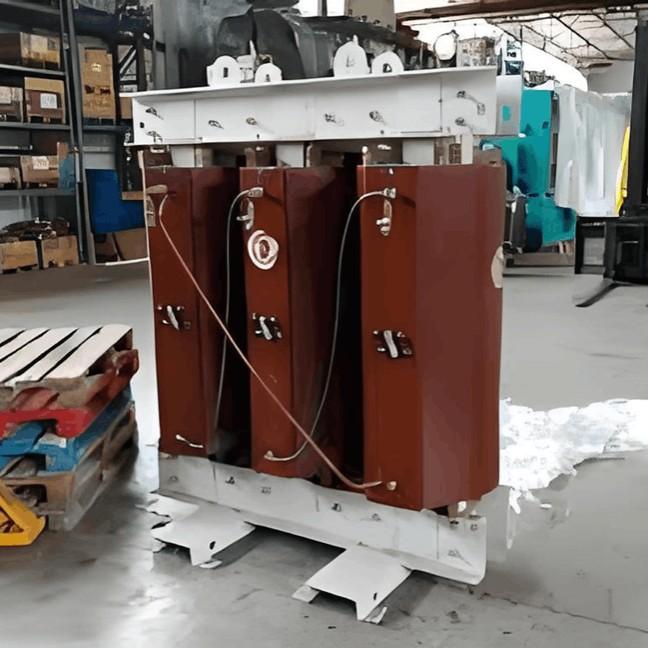
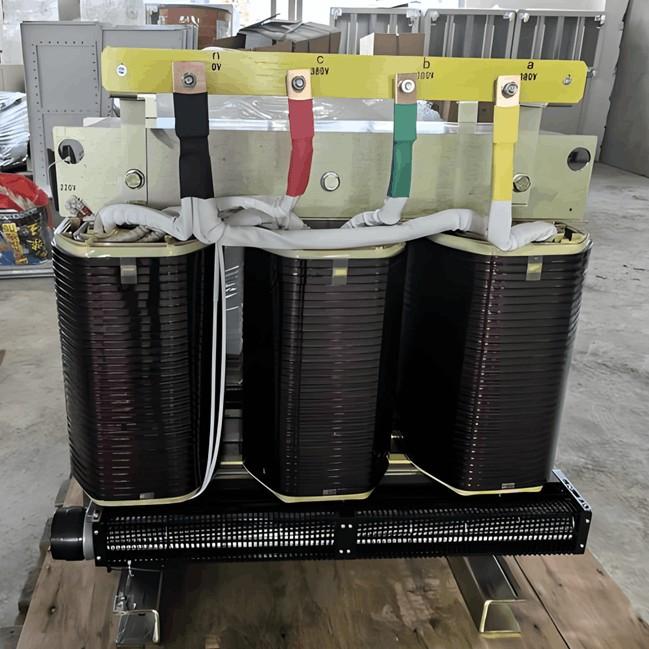
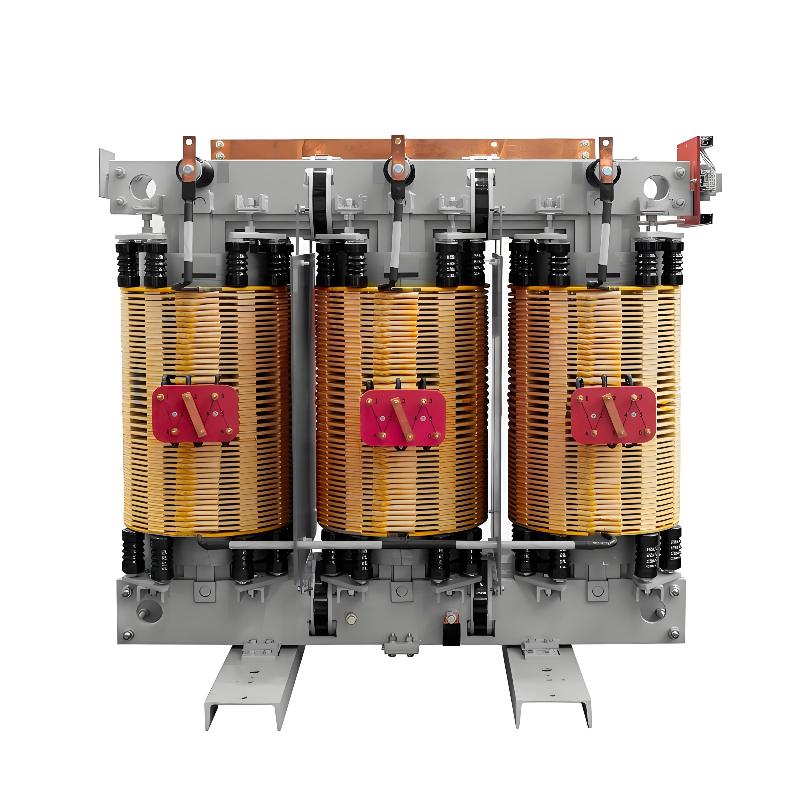
1.Innovative Winding Structures for 10 kV-Class High-Voltage High-Frequency Transformers1.1 Zoned and Partially Potted Ventilated Structure Two U-shaped ferrite cores are mated to form a magnetic core unit, or further assembled into series/series-parallel core modules. Primary and secondary bobbins are mounted on the left and right straight legs of the core, respectively, with the core mating plane serving as the boundary layer. Windings of the same type are grouped on the same side. Litz wire i
12/05/2025
Consult
Tip
Consult
Tip
Metallized Film Caps in SSTs: Design & Selection
In solid-state transformers (SSTs), the DC-link capacitor is an indispensable key component. Its primary functions are to provide stable voltage support for the DC link, absorb high-frequency ripple currents, and serve as an energy buffer. Its design principles and lifetime management directly impact the overall system efficiency and reliability. Aspect Core Considerations and Key Technologies Role and Necessity Stabilize DC link voltage, suppress voltage fluctuations, and provide
11/11/2025
Consult
Tip
Consult
Tip
How SGCC & CSG Are Pioneering SST Technology
I. Overall SituationOverall, State Grid Corporation of China (SGCC) and China Southern Power Grid (CSG) currently maintain a pragmatic stance toward solid-state transformers (SSTs)—actively supporting R&D while prioritizing pilot demonstrations. Both grid companies are advancing SST feasibility through technology research and demonstration projects, laying the groundwork for potential large-scale deployment in the future. Project State Grid (and Affiliated Units) China Southern Powe
11/11/2025
Consult
Tip
Consult
Tip
Why is it difficult to increase the voltage level?
The solid-state transformer (SST), also known as a power electronic transformer (PET), uses voltage level as a key indicator of its technological maturity and application scenarios. Currently, SSTs have reached voltage levels of 10 kV and 35 kV on the medium-voltage distribution side, while on the high-voltage transmission side, they remain in the stage of laboratory research and prototype validation. The table below clearly illustrates the current status of voltage levels across different appli
11/03/2025
Consult
Tip
Consult
Tip
Fluxgate Sensors in SST: Precision & Protection
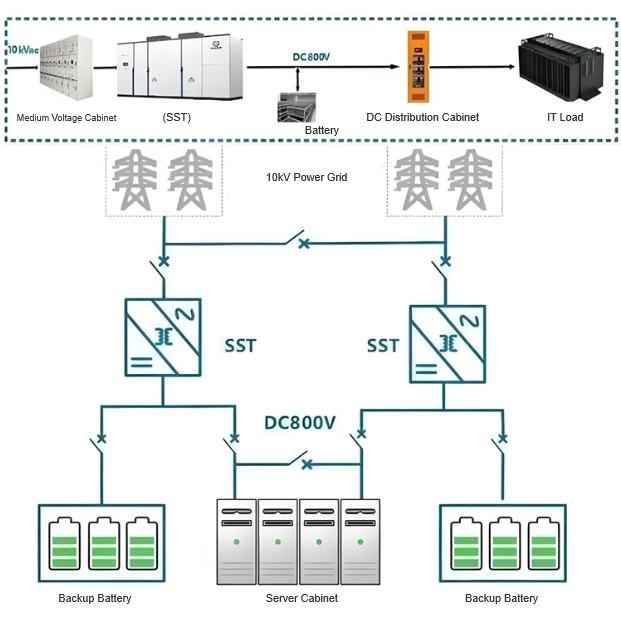
What is SST?SST stands for Solid-State Transformer, also known as Power Electronic Transformer (PET). From the perspective of power transmission, a typical SST connects to a 10 kV AC grid on the primary side and outputs approximately 800 V DC on the secondary side. The power conversion process generally involves two stages: AC-to-DC and DC-to-DC (step-down). When the output is used for individual equipment or integrated into servers, an additional stage to step down from 800 V to 48 V is require
11/01/2025
Consult
Tip
Consult
Tip
How SSTs Revolutionize Data Center Power at 800V DC
Optimized SEO-Friendly Abstract: NVIDIA’s 800V DC Architecture and the Rise of Solid-State Transformers in Next-Gen AI Data CentersOn October 16, 2025, NVIDIA published its landmark white paper, “800 VDC Architecture for Next-Generation AI Infrastructure,” signaling a pivotal shift in power delivery for AI-driven data centers. As large-scale AI models and next-gen CPUs/GPUs push computational demands to unprecedented levels, rack-level power consumption has surged from 10 kW in 2020 to 150 kW in
10/31/2025
Consult
Tip
Consult
Tip
Why Chinese SSTs Cost 4x Less Than US Units
Current Price Level of SST SystemsCurrently, SST products are in the early stages of development. There is significant variation in solutions and technical routes among both overseas and domestic suppliers. The widely accepted average value per watt is between 4 to 5 RMB. Taking a typical 2.4 MW SST configuration as an example, at 5 RMB per watt, the total system value could reach 8 million to 10 million RMB. This estimate is based on pilot projects in data centers in the U.S. and Europe (such a
10/31/2025
Consult
Tip
Consult
Tip
Solid-State Transformer Selection: Key Decision Criteria
The table below covers key decision criteria from requirements to implementation in the core dimensions of solid-state transformer selection, which you can compare item by item. Evaluation Dimension Key Considerations & Selection Criteria Explanation & Recommendations Core Requirements and Scenario Matching Primary Application Objective: Is the goal to achieve extreme efficiency (e.g., AIDC), require high power density (e.g., microgrid), or improve power quality (e.g., s
10/30/2025
Consult
Tip
Consult
Tip
Design Challenges in SST Auxiliary Power and Cooling Systems
Two Critical and Challenging Subsystems in Solid-State Transformer (SST) DesignAuxiliary Power Supply and Thermal Management System.Although they do not directly participate in the main power conversion, they serve as the "lifeline" and "guardian" ensuring stable and reliable operation of the main circuit.Auxiliary Power Supply: The System's "Pacemaker"The auxiliary power supply provides power for the "brain" and "nerves" of the entire solid-state transformer. Its reliability directly determines
10/30/2025
Consult
Tip
Consult
Tip
SST Technology: Full-Scenario Analysis in Power Generation, Transmission, Distribution, and Consumption
I. Research BackgroundPower System Transformation NeedsChanges in energy structure are placing higher demands on power systems. Traditional power systems are transitioning toward new-generation power systems, with the core differences between them outlined as follows: Dimension Traditional Power System New-Type Power System Technical Foundation Form Mechanical Electromagnetic System Dominated by Synchronous Machines and Power Electronic Equipment Generation-Side Form M
10/28/2025
Consult
Tip
Consult
Tip
Send inquiry
+86
Click to upload file
Download
Get the IEE Business Application
Use the IEE-Business app to find equipment, obtain solutions, connect with experts, and participate in industry collaboration anytime, anywhere—fully supporting the development of your power projects and business.