• Product
  • Suppliers
  • Manufacturers
  • Solutions
  • Free tools
  • Knowledges
  • Experts
  • Communities
Search


Free Expert Guides on Power Systems, Circuit Design & Electrical Troubleshooting

Access free engineering resources from IEE Business—covering power design, circuit layout, equipment selection, and troubleshooting. Expert-developed guides help engineers, procurement, and project teams make better decisions. Stay ahead on smart grids, renewables, efficiency, and AI tools. Improve reliability, reduce downtime, and enhance outcomes with real-world solutions. Explore our knowledge hub today.
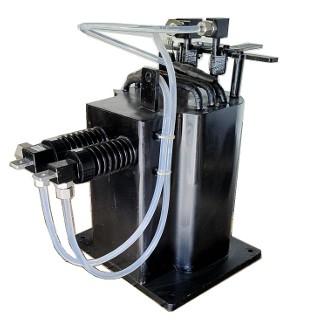
SST Transformer Core Loss Calculation and Winding Optimization Guide
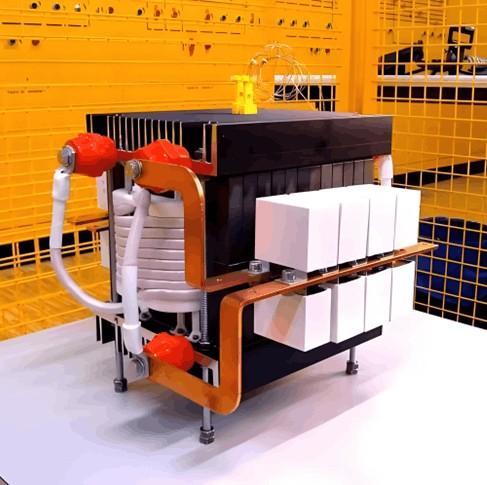
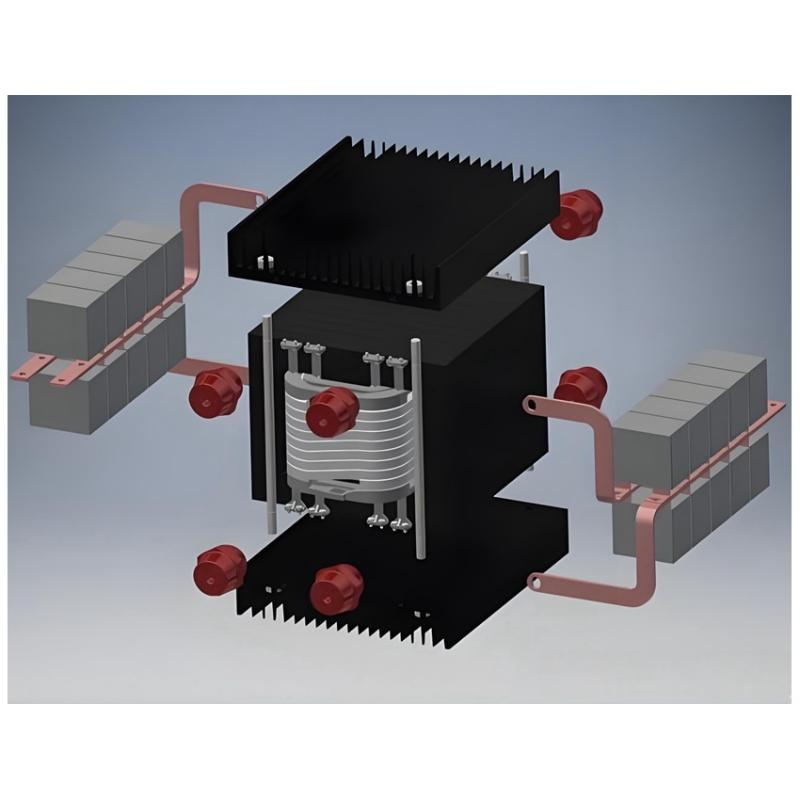
SST High-Frequency Isolated Transformer Core Design and Calculation Material Characteristics Impact:Core material exhibits varying loss behavior under different temperatures, frequencies, and flux densities. These characteristics form the foundation of overall core loss and require precise understanding of nonlinear properties. Stray Magnetic Field Interference:High-frequency stray magnetic fields around windings can induce additional core losses. If not properly managed, these parasitic losses
10/27/2025
Consult
Tip
Consult
Tip
Upgrade Traditional Transformers: Amorphous or Solid-State?
I. Core Innovation: A Dual Revolution in Materials and StructureTwo key innovations:Material Innovation: Amorphous AlloyWhat it is: A metallic material formed by ultra-rapid solidification, featuring a disordered, non-crystalline atomic structure.Key Advantage: Extremely low core loss (no-load loss), which is 60%–80% lower than that of traditional silicon steel transformers.Why it matters: No-load loss occurs continuously, 24/7, throughout a transformer’s lifecycle. For transformers with low loa
10/27/2025
Consult
Tip
Consult
Tip
Design of a Four-Port Solid-State Transformer: Efficient Integration Solution for Microgrids
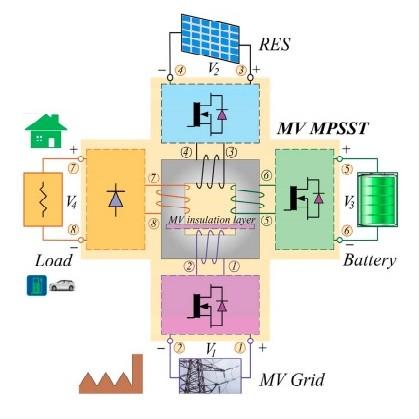
The use of power electronics in industry is increasing, ranging from small-scale applications such as chargers for batteries and LED drivers, to large-scale applications like photovoltaic (PV) systems and electric vehicles. Typically, a power system consists of three parts: power plants, transmission systems, and distribution systems. Traditionally, low-frequency transformers are used for two purposes: electrical isolation and voltage matching. However, 50-/60-Hz transformers are bulky and heavy
10/27/2025
Consult
Tip
Consult
Tip
SST vs Traditional Transformer: Key Advantages
Solid-State Transformers (SST): The Future of Intelligent Power ConversionA solid-state transformer (SST), also known as a power electronic transformer (PET), is a static power conversion device that integrates power electronics, high-frequency transformation, and advanced control systems based on electromagnetic induction. It enables the conversion of electrical energy from one set of voltage, current, and frequency characteristics to another—while offering active control, bidirectional power f
10/27/2025
Consult
Tip
Consult
Tip
Solid-State Transformer Development Cycle and Core Materials Explained
Development Cycle of Solid-State TransformersThe development cycle for solid-state transformers (SST) varies depending on the manufacturer and technical approach, but it generally includes the following stages: Technology Research and Design Phase: The duration of this phase depends on the complexity and scale of the product. It involves researching relevant technologies, designing solutions, and conducting experimental validations. This phase can take several months to several years. Prototype
10/27/2025
Consult
Tip
Consult
Tip
How SSTs Improve Power Quality & Grid Stability
Solid-State Transformers (SST): Enabling Intelligent, Efficient, and Flexible Power SystemsThe solid-state transformer (SST), also known as an Electronic Power Transformer (EPT), is a static power conversion device that integrates power electronic circuitry with high-frequency energy transfer based on electromagnetic induction. It enables the transformation of electrical energy from one set of voltage, current, and frequency characteristics to another—while offering far greater control and funct
10/27/2025
Consult
Tip
Consult
Tip
What Are the Application Areas of Solid-State Transformers? A Complete Guide
Solid-state transformers (SST) offer high efficiency, reliability, and flexibility, making them suitable for a wide range of applications: Power Systems: In the upgrade and replacement of traditional transformers, solid-state transformers show significant development potential and market prospects. SSTs enable efficient, stable power conversion along with intelligent control and management, helping to enhance the reliability, adaptability, and intelligence of power systems. Electric Vehicle (EV)
10/27/2025
Consult
Tip
Consult
Tip
Why Use Solid-State Transformers in Smart Grids?
Solid-State Transformers (SST): The Future of Smart Power ConversionSolid-state transformers (SSTs), also known as smart transformers, Power Electronic Transformers (PETs), or Electronic Power Transformers (EPTs), represent a transformative advancement in electrical power systems. Unlike conventional transformers, SSTs leverage power electronic converters, high-frequency magnetic components, and intelligent control systems to deliver not only voltage transformation but also advanced grid managem
10/27/2025
Consult
Tip
Consult
Tip
How to Correctly Calculate SST Transformer kVA Capacity?
ransformer Capacity Selection: Ensuring Reliable and Efficient Power System OperationTransformer capacity refers to the apparent power at the transformer’s main tap position. The value indicated on the nameplate is known as the rated capacity, typically expressed in kilovolt-amperes (kVA). In practical operation, improperly sized transformers can lead to either under-loading (due to oversizing) or overloading/overcurrent conditions, which may result in equipment overheating, reduced efficiency,
10/27/2025
Consult
Tip
Consult
Tip
What is a solid state transformer? How does it differ from a traditional transformer?
Solid State Transformer (SST)A Solid State Transformer (SST) is a power conversion device that uses modern power electronics technology and semiconductor devices to achieve voltage transformation and energy transfer.Key Differences from Conventional Transformers Different Operating Principles Conventional Transformer: Based on electromagnetic induction. It changes voltage through electromagnetic coupling between primary and secondary windings via an iron core. This is essentially a direct "mag
10/25/2025
Consult
Tip
Consult
Tip
Send inquiry
+86
Click to upload file
Download
Get the IEE Business Application
Use the IEE-Business app to find equipment, obtain solutions, connect with experts, and participate in industry collaboration anytime, anywhere—fully supporting the development of your power projects and business.