• Product
  • Suppliers
  • Manufacturers
  • Solutions
  • Free tools
  • Knowledges
  • Experts
  • Communities
Search


Free Expert Guides on Power Systems, Circuit Design & Electrical Troubleshooting

Access free engineering resources from IEE Business—covering power design, circuit layout, equipment selection, and troubleshooting. Expert-developed guides help engineers, procurement, and project teams make better decisions. Stay ahead on smart grids, renewables, efficiency, and AI tools. Improve reliability, reduce downtime, and enhance outcomes with real-world solutions. Explore our knowledge hub today.
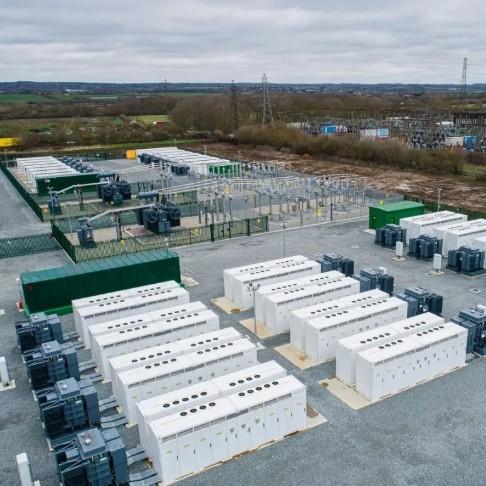
From Research to Deployment: The Innovation Leap in the UK's Solid-State Transformer Development
I. Overview of Solid-State Transformers (SST)A Solid-State Transformer (SST) is an advanced power conversion device that integrates power semiconductors, high-frequency transformers, and control circuits.Compared with traditional transformers, SST supports AC/AC, AC/DC, and DC/DC conversions, and features advantages such as bidirectional power flow, intelligent control, and a compact design.Its main topologies include single-stage, two-stage (with LVDC or HVDC links), and three-stage structures,
09/22/2025
Consult
Tip
Consult
Tip
Seizing the Power Future: The Strategic Evolution of Solid-State Transformer Technology in the United States
DG Matrix and Resilient Power say their solid - state transformers can reduce the cost, time, and complexity of supplying power to data centers, electric vehicle (EV) charging hubs, and the like. For decades, electrical engineers have dreamed of a device that can seamlessly connect solar panels, battery systems, and on - site generators to high - power equipment such as EV chargers or data center servers without the need for a large amount of expensive hardware to make them work together.Now, th
09/22/2025
Consult
Tip
Consult
Tip
What is a Solid-State Transformer? 2025Tech, Structure & Principles Explained
1. What is a Solid-State Transformer (SST)?1.1 Fundamentals and Limitations of Conventional TransformersThe article first reviews the history (e.g., Stanley's 1886 patent) and basic principles of conventional transformers. Based on electromagnetic induction, traditional transformers consist of silicon steel cores, copper or aluminum windings, and insulation/cooling systems (mineral oil or dry-type). They operate at fixed frequencies (50/60 Hz or 16⅔ Hz), with fixed voltage transformation ratios,
09/19/2025
Consult
Tip
Consult
Tip
What is CSST Bonding ?
What is CSST Bonding ?CSST Bonding DefinitionCSST (Corrugated Stainless-Steel Tubing) bonding is defined as connecting a conductor to the CSST gas pipe and grounding system to ensure safetyNecessity of CSST BondingProper bonding reduces the risk of fires or explosions caused by lightning strikes or power surges.Proper Bonding TechniqueA bonding wire should connect to the rigid gas piping or directly to the CSST fitting, ensuring a secure and continuous path to the ground.Code ComplianceCSST bond
08/05/2024
Consult
Tip
Consult
Tip
Send inquiry
+86
Click to upload file
Download
Get the IEE Business Application
Use the IEE-Business app to find equipment, obtain solutions, connect with experts, and participate in industry collaboration anytime, anywhere—fully supporting the development of your power projects and business.