• Product
  • Suppliers
  • Manufacturers
  • Solutions
  • Free tools
  • Knowledges
  • Experts
  • Communities
Search


Free Expert Guides on Power Systems, Circuit Design & Electrical Troubleshooting

Access free engineering resources from IEE Business—covering power design, circuit layout, equipment selection, and troubleshooting. Expert-developed guides help engineers, procurement, and project teams make better decisions. Stay ahead on smart grids, renewables, efficiency, and AI tools. Improve reliability, reduce downtime, and enhance outcomes with real-world solutions. Explore our knowledge hub today.
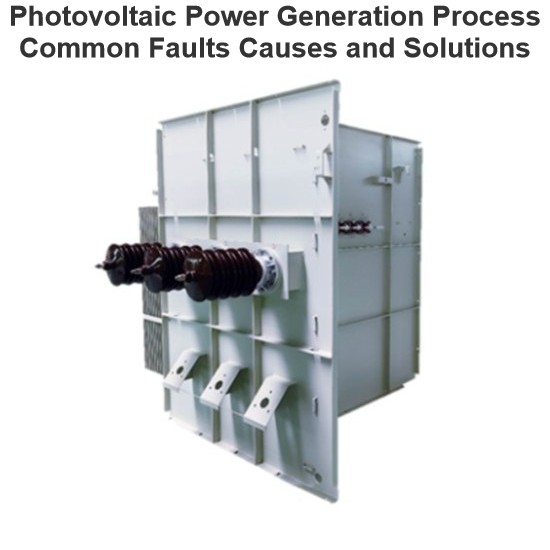
Photovoltaic Power Generation Process Common Faults Causes and Solutions
1. Brief Introduction to the Photovoltaic Power Generation ProcessThe operation process of photovoltaic power generation is as follows: First, individual solar panels are connected in series to form photovoltaic modules, and the modules are arranged in parallel through combiner boxes to form a photovoltaic array. Solar energy is converted into direct current (DC) by the photovoltaic array, and then converted into three-phase alternating current (AC) through a three-phase inverter (DC - AC). Subs
08/02/2025
Consult
Tip
Consult
Tip
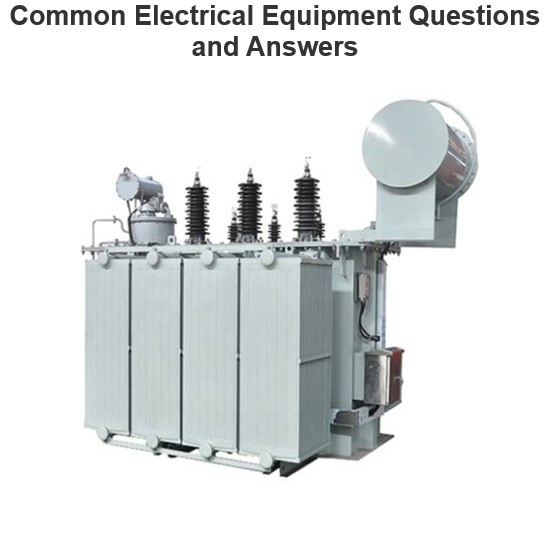
Common Electrical Equipment Questions and Answers
Why is a ZnO surge arrester installed between the power capacitor and its breaker?A ZnO surge arrester is installed to prevent overvoltage caused by switching operations, thereby ensuring the safe operation of electrical equipment. What is the difference between an energy meter and a power meter?A power meter indicates the instantaneous power output or consumption, while an energy meter records the total energy produced, transmitted, or consumed over a specific period. What are the requirements
08/02/2025
Consult
Tip
Consult
Tip
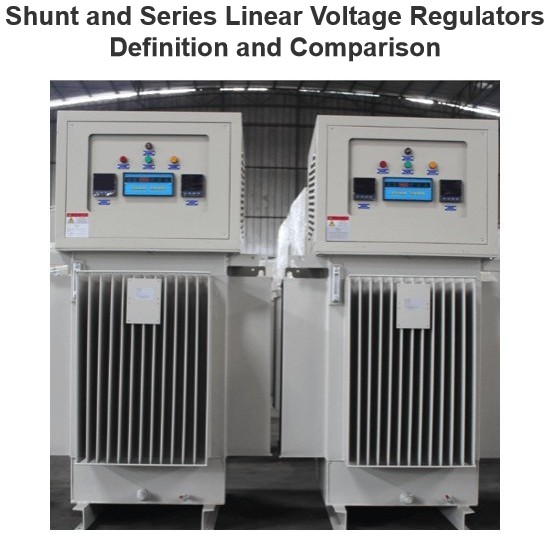
Shunt and Series Linear Voltage Regulators Definition and Comparison
Linear voltage regulators are mainly classified into shunt voltage regulators and series voltage regulators. The key difference between the two lies in their control element configurations: in a shunt voltage regulator, the control element is connected in parallel with the load, whereas in a series voltage regulator, the control element is connected in series with the load. These two regulator circuits operate on distinct principles, thus each having its own advantages and disadvantages, which w
08/02/2025
Consult
Tip
Consult
Tip
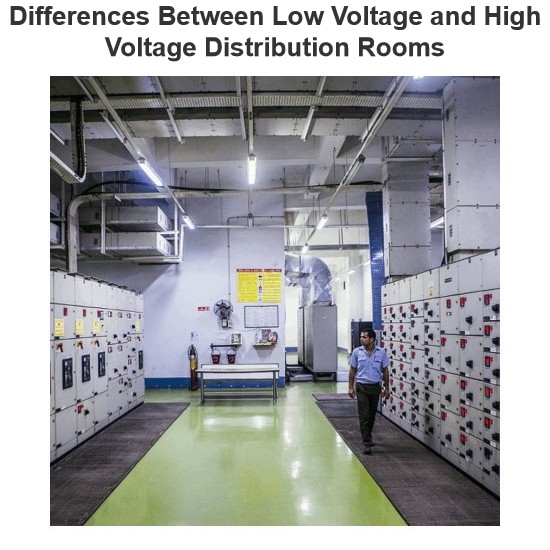
Differences Between Low Voltage and High Voltage Distribution Rooms
1 Power and Voltage Levels Low-Voltage Distribution Room: Typically refers to distribution equipment operating at 1000V or lower, with a focus on 400V rooms fed by 10kV or 35kV station transformers. It has relatively small power capacity and is primarily responsible for distributing electricity to end users, households, and directly connected equipment. High-Voltage Distribution Room: Encompasses distribution equipment with higher voltage levels, usually 6kV to 10kV. It features larger power cap
08/02/2025
Consult
Tip
Consult
Tip
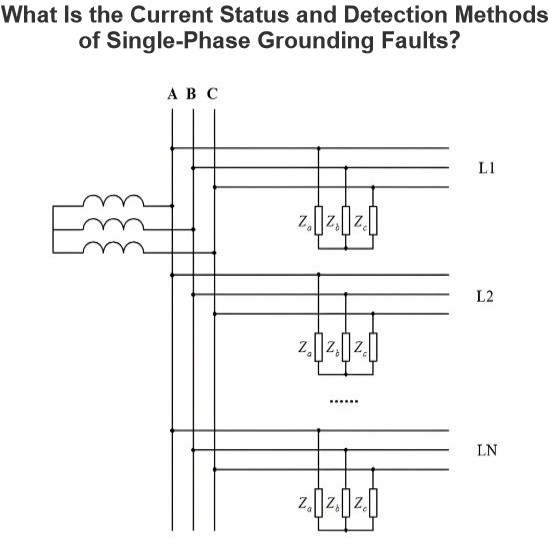
What Is the Current Status and Detection Methods of Single-Phase Grounding Faults?
Current Status of Single-Phase Grounding Fault DetectionThe low accuracy of single-phase grounding fault diagnosis in non-effectively grounded systems is attributed to several factors: the variable structure of distribution networks (such as looped and open-loop configurations), diverse system grounding modes (including ungrounded, arc-suppression coil grounded, and low-resistance grounded systems), the increasing annual ratio of cable-based or hybrid overhead-cable wiring, and complex fault typ
08/01/2025
Consult
Tip
Consult
Tip
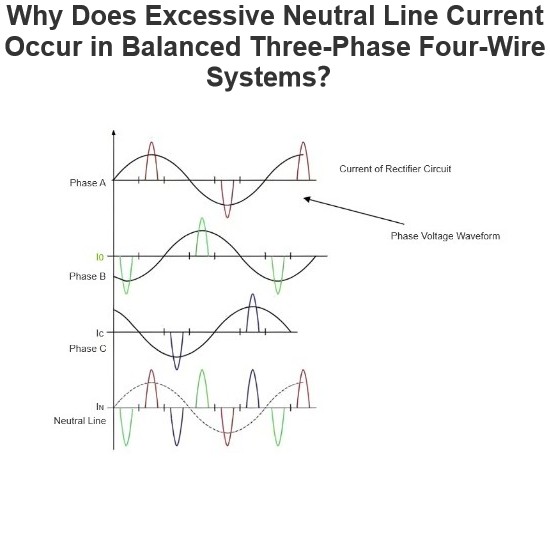
Why Does Excessive Neutral Line Current Occur in Balanced Three-Phase Four-Wire Systems?
In a three-phase four-wire power distribution system, it is a consensus among industry insiders that the neutral line current should be very small when the three-phase loads are balanced. However, more and more phenomena are subverting this concept.For example, the advertising light boxes around a building use fluorescent lighting with electronic ballasts. The loads on the three-phase lines are balanced, with each phase current being approximately 90A, but the neutral line current reaches 160A.I
08/01/2025
Consult
Tip
Consult
Tip
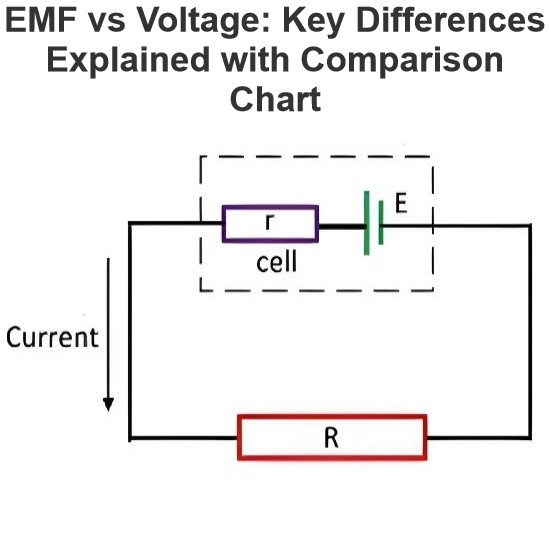
EMF vs Voltage: Key Differences Explained with Comparison Chart
One of the key differences between electromotive force (EMF) and voltage is that EMF refers to the energy supplied to charges, while voltage represents the energy required to move a unit charge from one point to another. Other distinctions between the two are detailed in the comparison chart below.Comparison ChartDefinition of VoltageVoltage is defined as the energy required to move a unit charge from one point to another. It is measured in volts (V) and denoted by the symbolV. Voltage is induce
08/01/2025
Consult
Tip
Consult
Tip
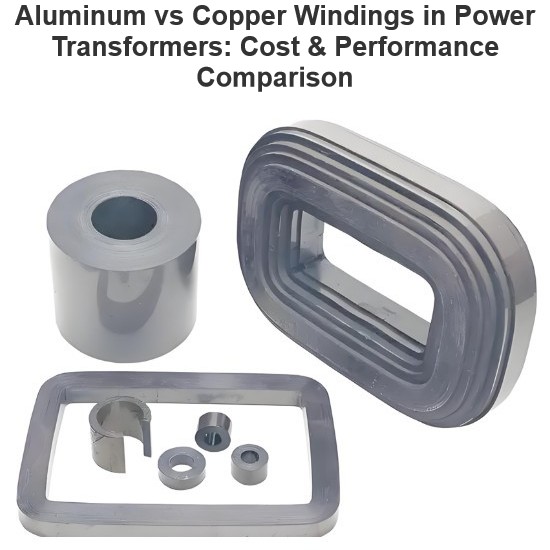
Aluminum vs Copper Windings in Power Transformers: Cost & Performance Comparison
Currently, the market price of copper remains high, fluctuating in the range of 70,000 to 80,000 yuan per ton. In contrast, the price of aluminum stays low, lingering in the range of 18,000 to 20,000 yuan per ton. For power transformers, replacing copper windings with aluminum windings in design will undoubtedly significantly reduce the material cost of products, bringing substantial cost savings to end customers.For a long time, it has been widely believed in the industry that aluminum windings
08/01/2025
Consult
Tip
Consult
Tip
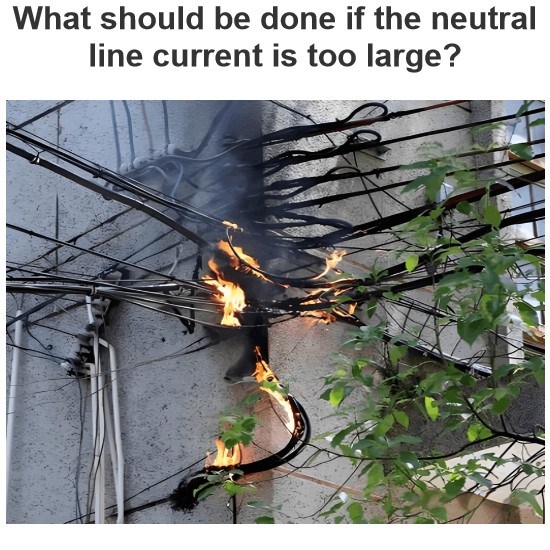
What should be done if the neutral line current is too large?
As we all know, if an electrical line exceeds its rated load, it will overheat severely, and may even cause a fire. For safety reasons, overcurrent protection devices are therefore installed on lines. Whenever the current in the line exceeds the rated value, the overcurrent protection device will automatically cut off the line to prevent fire. The "excessive neutral line current" mentioned here refers to the phenomenon where the neutral line current is excessively high (more than 1.5 times the p
08/01/2025
Consult
Tip
Consult
Tip
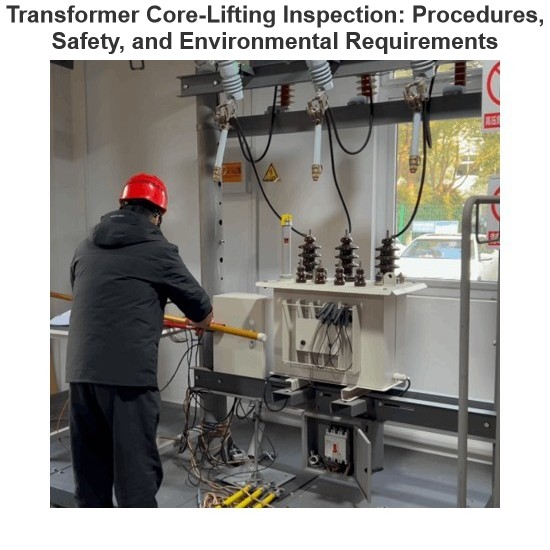
Transformer Core-Lifting Inspection: Procedures, Safety, and Environmental Requirements
1.Environmental Requirements for Transformer Core-Lifting Inspection1.1 General Environmental ConditionsCore - lifting operations are preferably carried out indoors. For large transformers that have to be operated outdoors due to specific conditions, sufficient measures must be taken to prevent moisture and dust contamination.Core - lifting should not be conducted during rainy or snowy weather or when the relative humidity exceeds 75%.The ambient air temperature during core - lifting should not
08/01/2025
Consult
Tip
Consult
Tip
Send inquiry
+86
Click to upload file
Download
Get the IEE Business Application
Use the IEE-Business app to find equipment, obtain solutions, connect with experts, and participate in industry collaboration anytime, anywhere—fully supporting the development of your power projects and business.