• Product
  • Suppliers
  • Manufacturers
  • Solutions
  • Free tools
  • Knowledges
  • Experts
  • Communities
Search


Free Expert Guides on Power Systems, Circuit Design & Electrical Troubleshooting

Access free engineering resources from IEE Business—covering power design, circuit layout, equipment selection, and troubleshooting. Expert-developed guides help engineers, procurement, and project teams make better decisions. Stay ahead on smart grids, renewables, efficiency, and AI tools. Improve reliability, reduce downtime, and enhance outcomes with real-world solutions. Explore our knowledge hub today.
What is the reason behind transmission lines being single stranded and not twisted around each other at high voltages?
Why are high voltage transmission lines mostly single strand and not twistedThe design and material selection of high-voltage transmission lines are based on a variety of factors, including safety, efficiency, construction difficulty and cost-effectiveness. Here are some explanations for why high-voltage transmission lines are mostly single-stranded and not twisted:Safety and reliabilityHigh voltage transmission lines usually carry high voltage, which has extremely high requirements for safety a
10/05/2024
Consult
Tip
Consult
Tip
What is the reason for high voltage lines having a larger diameter than low voltage lines?
Analysis of reasons why the diameter of high voltage line is larger than that of low voltage lineThe diameter of the high-voltage line is larger than that of the low-voltage line, mainly due to the following reasons:Energy conservation and power matchingAccording to the law of conservation of energy, the transformer keeps the power constant while converting the voltage. Even at different voltage levels, the total power of input and output is the same 1. Since the higher the voltage, the smaller
10/04/2024
Consult
Tip
Consult
Tip
Can two copper wires of different sizes be safely twisted together?
Safety of stranding two copper wires of different specificationsBefore discussing whether two copper wires of different specifications can be safely twisted together, we need to consider several key factors, including the electrical performance of the wire, mechanical strength, and the requirements of the installation environment. Here's an analysis based on search results:Electrical performanceThe specific cross-sectional design of stranded copper wire gives it resistance characteristics simila
09/29/2024
Consult
Tip
Consult
Tip
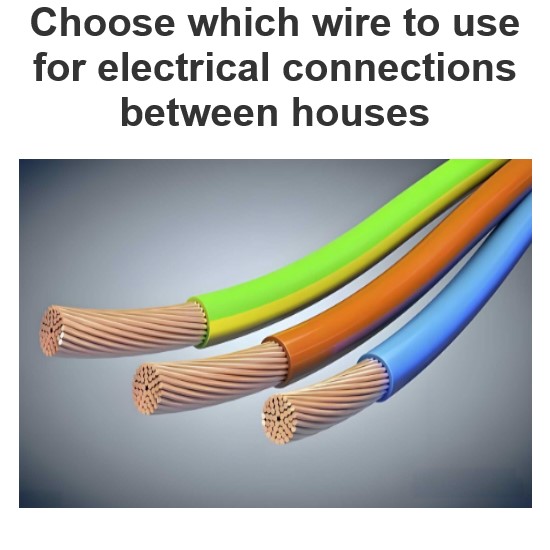
Choose which wire to use for electrical connections between houses
The type of wire used for electrical connections between two buildings or houses, such as in a situation where power needs to be shared or distributed, typically depends on several factors including the distance between the buildings, the load requirements (current draw), the voltage level, and environmental conditions. Here are some common types of wires and cables that might be used:Aluminum WireAluminum wire is commonly used for overhead power lines due to its light weight and good conductivi
09/25/2024
Consult
Tip
Consult
Tip
Determination of strand size
The number and diameter of strands in a cable depend on the specific purpose of the cable, rated current, operating voltage, environmental conditions, and safety requirements.Method for determining the size of stranded wireCalculate current carrying capacity Current density: First determine the maximum current that the cable needs to carry. The required cross-sectional area is then calculated based on the material of the cable (such as copper or aluminum) and the allowable current density. Formu
09/23/2024
Consult
Tip
Consult
Tip
Electric Cable Faults
Cable Faults DefinitionCable faults are issues in electric cables that disrupt the flow of electricity, including short circuits, earth faults, and open circuits.Causes of Cable FaultsFaults can be caused by damaged insulation due to water, moisture, ageing, or improper handling.Fault Type There may be a short circuit between two conductors, There may be earth fault, i.e., fault between conductor and ground, There may be open circuit caused due to disconnection of the conductor.Detection Methods
07/24/2024
Consult
Tip
Consult
Tip
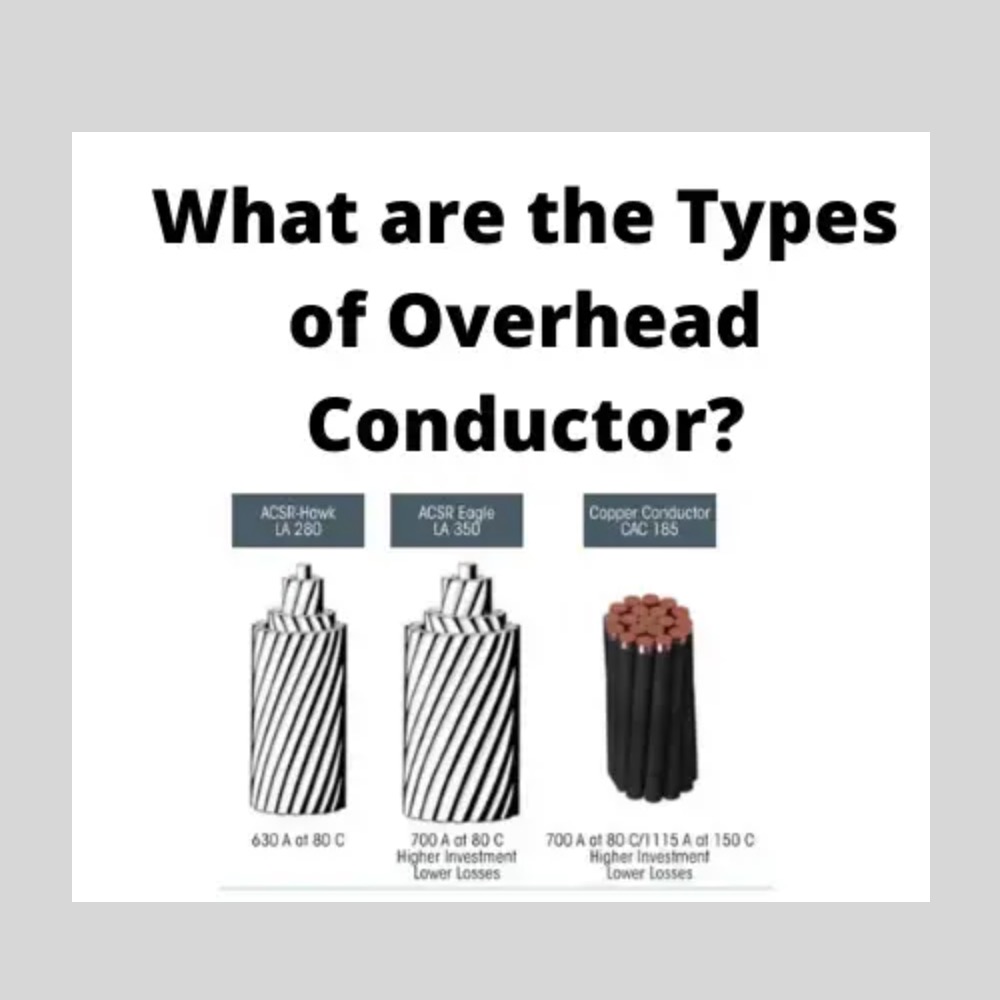
Types of Overhead Conductor
Conductor is a physical medium to carry electrical energy form one place to other. It is an important component of overhead and underground electrical transmission and distribution systems. The choice of conductor depends on the cost and efficiency. An ideal conductor has following features. It has maximumelectrical conductivity. It has high tensile strength so that it can withstand mechanical stresses. It has least specific gravity i.e. weight/unit volume. It has least cost without sacrificing
03/22/2024
Consult
Tip
Consult
Tip
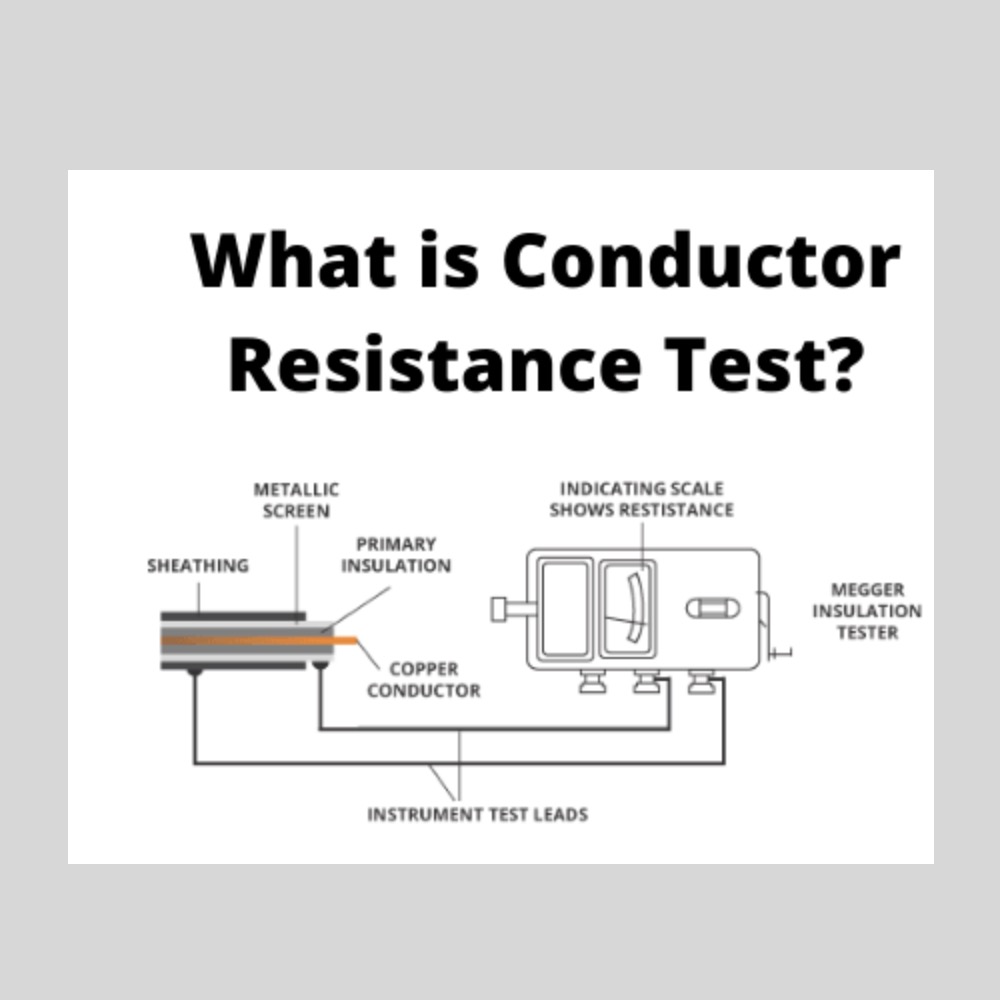
Conductor Resistance Test of Electrical Power Cables
This test is used to determine the DC resistance of copper or aluminum conductors. Resistance of a conductor tells us how easily a conductor allows the flow of current through it. Higher the resistance, lesser the current will flow though the conductor. Resistance of a conductor is influenced by conductor dimension and construction, conditions like, temperature and resistivity. It is normally expressed as ohms per km.This test will make use of either Kelvin Double Bridge with accuracy of 0.2 per
03/22/2024
Consult
Tip
Consult
Tip
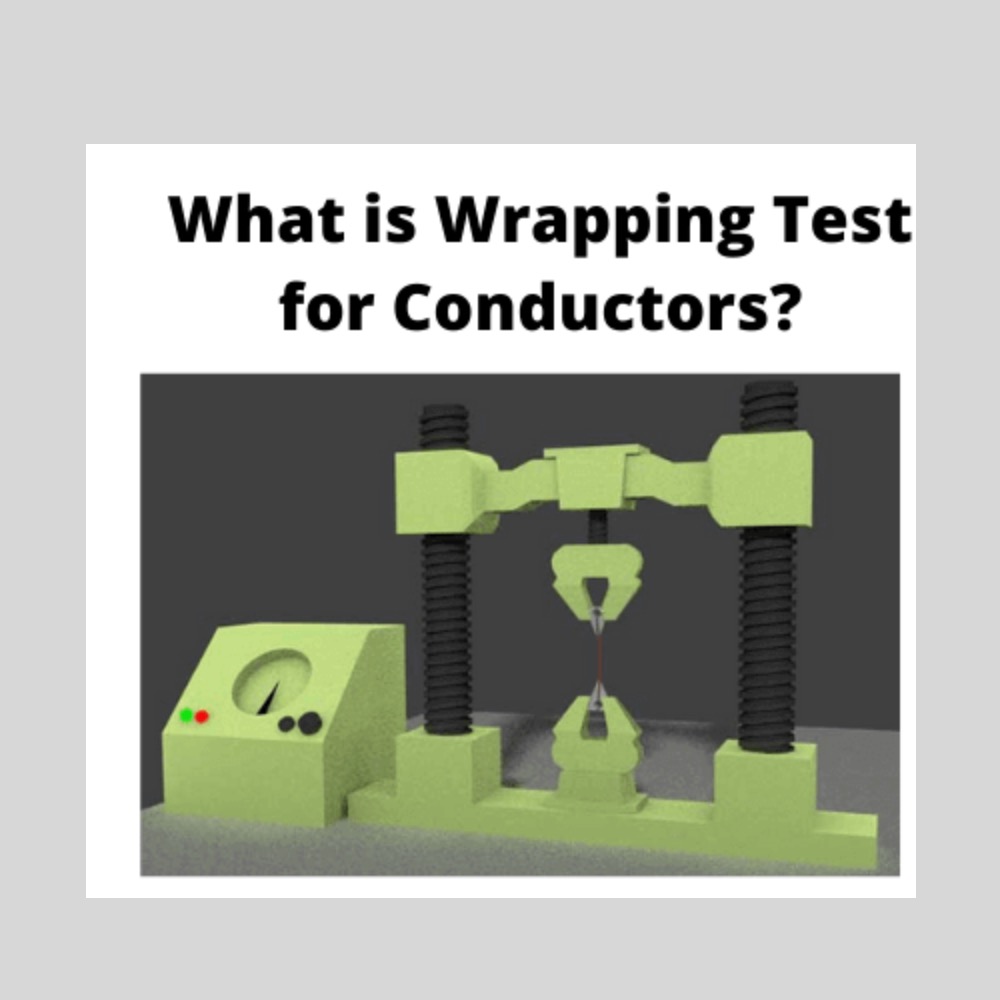
Wrapping Test for Conductors
This test is done on aluminum wire used as conductor in power cables to determine its ductility. Ductility of a conductor is nothing but the property of how easily it can be wound and twisted. Higher the ductility, easily the material can be wound and twisted without its breaking. This property plays the significant role during manufacturing and installation process where the cable is subjected to torsion due to axial twist and might break. Hence, this wrapping test ensures suitability of alumin
03/22/2024
Consult
Tip
Consult
Tip
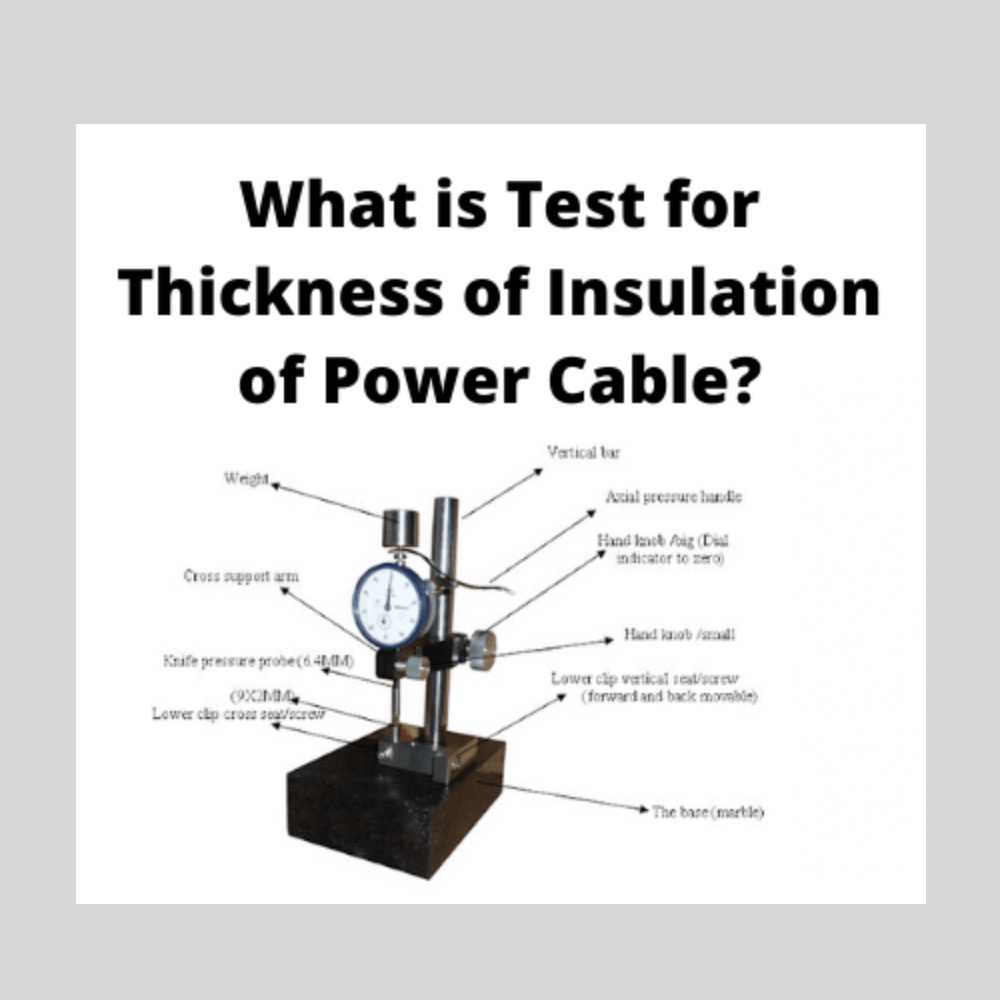
Test for Thickness of Insulation of Power Cable
This test covers the technique to confirm the thickness of insulation and sheath of electric power cables. Adequate thickness of insulation and sheath is provided to power cable meet up the voltage stresses and mechanical stresses imposed on the cable during its service life. The measurement of such thickness is necessary to verify whether it is as per specified limit or not. These dimensions ensure safe and reliable performance of the cable.Apparatus required to test for thickness of insulation
03/22/2024
Consult
Tip
Consult
Tip
Send inquiry
+86
Click to upload file
Download
Get the IEE Business Application
Use the IEE-Business app to find equipment, obtain solutions, connect with experts, and participate in industry collaboration anytime, anywhere—fully supporting the development of your power projects and business.