Bridge circuit is nothing but the electrical circuit configuration which is used to measure unknown values of the resistance, impedance, induction, and capacitance. Many bridges like Wheatstone bridge, Maxwell Bridge, Kelvin Bridge, and many more are very useful to measure quantities with accuracy and working on the same principle. Here is a brief description of functioning of some of the bridges given below:Wheatstone BridgeA Wheatstone bridge is an electrical circuit developed by Charles Wheat
03/12/2024
Consult
Tip
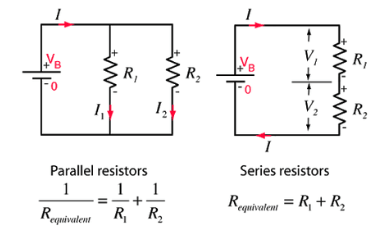
What is an Electrical Circuit?An electrical circuit is a combination of two or more electrical components that are interconnected by conducting paths. The electrical components may be active components, or inactive components, or some combination of the two.What is a DC Circuit?There are two types of electricity – direct current (DC) and alternating current (AC). The circuit that deals with direct current or DC, is referred to as the DC circuit, and the circuit that deals with alternating curren
03/12/2024
Consult
Tip
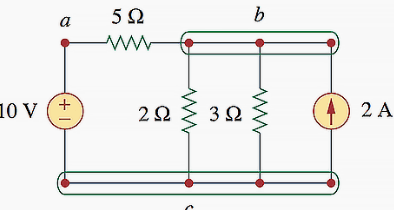
An electric circuit based on three concepts, namely, node, branch and loop. As per definition, an electric network is a combination of interconnected circuit elements. A network may or may not provide closed path to the electric current to flow. But, an electrical circuit may be a combination of one or more networks which gives closed path to the electric current. That means, when one or more networks are interconnected together to complete one or more paths to the current, an electric circuit i
03/12/2024
Consult
Tip
What is a Dual Network?Two electrical networks are said to bedual networksif themesh equationsof one network is equal to thenode equationof the other.The dual network is based on Kirchhoff Current Law and Kirchhoff Voltage Law. Applying Kirchhoff Voltage Law in the network A, above we get, Applying Kirchhoff Current Law in the network B, above we get, Here we have found that equations (i) and (ii) are similar in their mathematical form. Equation (i) is in mesh form and equation (ii) is in nodal
03/12/2024
Consult
Tip
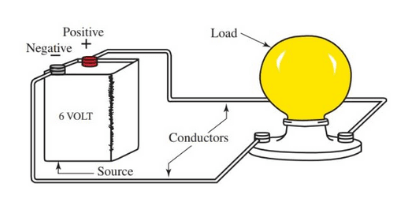
What is an Electrical Circuit?An electrical circuit (also known as an electrical network or electric circuit) is an interconnection of various active and passive components in a prescribed manner to form a closed path. Electric current must be able to flow from the source through some conductive medium and then back to the other terminal of the source.The main parts of an ideal electric circuit are: Electrical sourcesfor delivering electricity to the circuit and are mainly electric generators an
03/12/2024
Consult
Tip
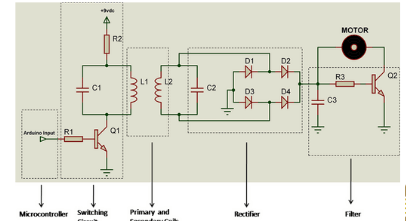
What are Active and Passive Circuit Elements (Components)?Active and passive components form the two main types of electronic circuit elements. Anactive componentsupplies energy to anelectric circuit, and hence has the ability to electrically control the flow of charge. Apassive componentcan only receive energy, which it can either dissipate or absorb.Types of Electronic ComponentsElectronic elements that make up a circuit are connected together by conductors to form a complete circuit. If these
03/12/2024
Consult
Tip
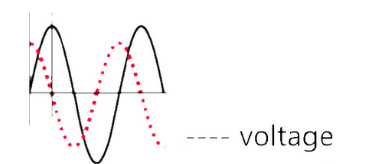
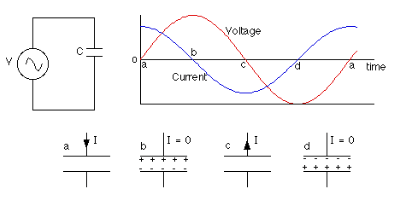
What is ELI the ICE man?ELI the ICE man is used to remember the relationship between current and voltage in an inductor and capacitor. ELI the ICE man stands for the fact that voltage [E] leads current [I] in an inductor [L] (that’s the ELI part) and current [I] leads voltage [E] in a capacitor [C] (that’s the ICE part).ELI the ICE man is a mnemonic. That is to say that it’s a learning technique that aids information retention in human memory.So ELI the ICE man helps us remember that: ELI: Volta
03/12/2024
Consult
Tip
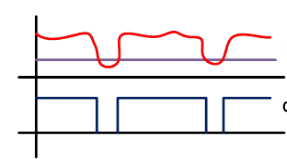
What is a Schmitt Trigger?A Schmitt Trigger is a comparator circuit with hysteresis implemented by applying positive feedback to the noninverting input of a comparator or differential amplifier. A Schmitt Trigger uses two input different threshold voltage level to avoid noise in the input signal. The action from this dual-threshold is known as hysteresis.The Schmitt Trigger was invented by American scientist Otto H Schmitt in 1934.The normal comparator contains only one threshold signal. And it
03/12/2024
Consult
Tip
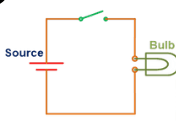
What is an Open Circuit?An open circuit is defined as an electric circuit in which current does not flow. Current can only flow in a circuit if it finds a continuous path—known as a “closed circuit”. If there’s a break anywhere in the circuit, you have an open circuit, and current can not flow.In an open circuit, the two terminals are disconnected. Hence the continuity of the circuit is broken. But while current cannot flow through the circuit, there is some voltage drop between two points of a
03/12/2024
Consult
Tip
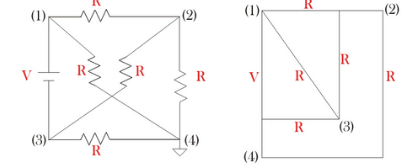
A planar circuit is a circuit that can be drawn on a flat surface without any wires crossing each other. A non-planar circuit is a circuit that cannot be drawn on a flat surface without any wires crossing each other. Planar and non-planar circuits have different properties and methods of analysis. In this article, we will explain what planar and non-planar circuits are, how to analyze them using graph theory and loop current method, and what are some applications of these circuits in electrical
03/12/2024
Consult
Tip






