• Product
  • Suppliers
  • Manufacturers
  • Solutions
  • Free tools
  • Knowledges
  • Experts
  • Communities
Search


Free Expert Guides on Power Systems, Circuit Design & Electrical Troubleshooting

Access free engineering resources from IEE Business—covering power design, circuit layout, equipment selection, and troubleshooting. Expert-developed guides help engineers, procurement, and project teams make better decisions. Stay ahead on smart grids, renewables, efficiency, and AI tools. Improve reliability, reduce downtime, and enhance outcomes with real-world solutions. Explore our knowledge hub today.
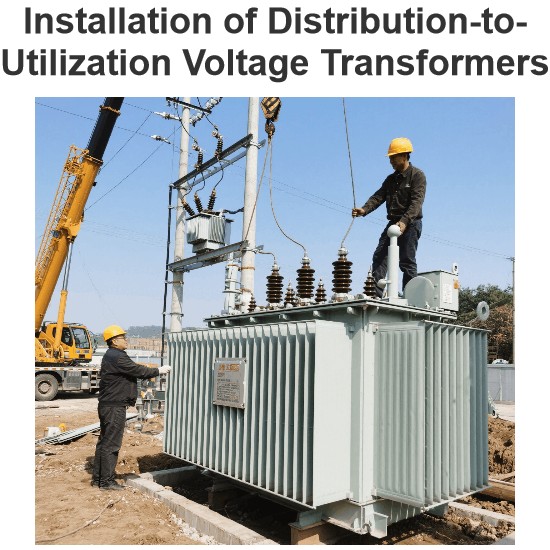
Installation of Distribution-to-Utilization Voltage Transformers
A. Aerial MountingA1. Unit Capacities, Mounting Methods, and TypesFor aerial transformer installations, three - phase units or banked single - phase units can be used. Transformers, whether single or in banks, with an individual unit or combined capacity greater than 300 kVA shall not be mounted on a single wooden pole. Special structural considerations are required for single - pole installations with a capacity greater than 100 kVA.Pole - platform mounting (two - pole structure) will not be us
04/14/2025
Consult
Tip
Consult
Tip
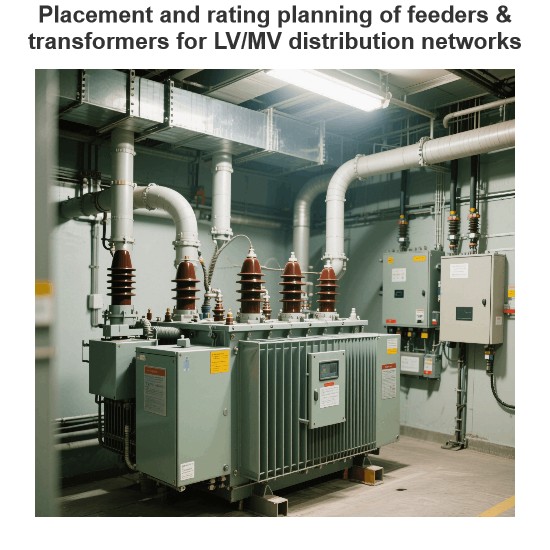
Placement and rating planning of feeders & transformers for LV/MV distribution networks
Allocation and Sizing of Distribution Transformers and FeedersDistribution network planning is largely characterized by the allocation and sizing of distribution transformers. The location of these transformers directly dictates the length and route of medium - voltage (MV) and low - voltage (LV) feeders. Therefore, the location and rating of transformers, along with the length and size of MV and LV feeders, need to be determined in a coordinated manner.To achieve this, an optimization process i
04/14/2025
Consult
Tip
Consult
Tip
Intelligent and digital distribution transformer
IoT and Edge Computing Technologies Enable Real-Time Perception Multi-Dimensional Sensor Networks: Future distribution transformers will integrate high-precision temperature sensors, vibration sensors, partial discharge sensors, and dissolved gas analysis (DGA) sensors to achieve comprehensive monitoring of equipment operating conditions. For example, ultrasonic sensors can detect partial discharge signals to identify insulation aging or internal defects in advance, preventing sudden failures. E
04/14/2025
Consult
Tip
Consult
Tip
Distribution transformer filled with mineral oil
Why Mineral Oil?As you may already know, mineral - oil - filled distribution transformers are the most common type of distribution transformers. They are among the most crucial components and can be found in electrical supply systems across the globe.Although the insulating oil is a flammable liquid, the reliability of oil - immersed transformers has been well - proven over numerous years in power supply systems where ensuring a secure power supply is of utmost importance.However, mineral oil is
04/14/2025
Consult
Tip
Consult
Tip
Thermal and Mechanical Performance Testing of Distribution Transformers: Ensuring Reliability and Longevity
IntroductionIn the complex landscape of power distribution, distribution transformers play a pivotal role. These transformers are tasked with stepping down voltage from the primary distribution levels to the appropriate utilization voltages for end-users. Their proper functioning is crucial for maintaining a stable and efficient power grid. This article delves into two essential aspects of distribution transformer assessment: thermal performance testing and mechanical performance testing, while
04/12/2025
Consult
Tip
Consult
Tip
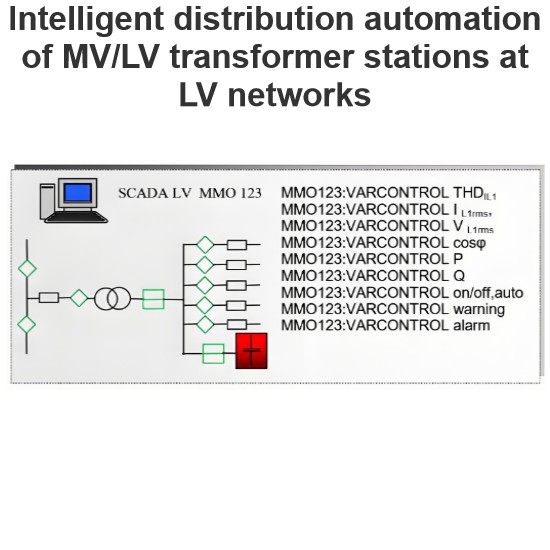
Intelligent distribution automation of MV/LV transformer stations at LV networks
Advanced Power Quality ManagementUnlike passive filters, active filters do not generate connection overvoltages, as the charge is not trapped in capacitors in the same way. The typical structure of active filters comprises an inductor, namely a filter coil, and a power electronic converter, that is, switches and capacitor - based energy storage.The active filter converter is usually controlled to generate opposite - phase harmonic waveforms, thereby reducing or eliminating harmonic propagation.
04/12/2025
Consult
Tip
Consult
Tip
Selecting Energy Efficient Distribution Transformers
Definition of Transformer LossesTransformer losses can be mainly categorized into two types: no - load losses and load losses. These losses are ubiquitous across all types of transformers, irrespective of their application scenarios or power ratings.However, there are two additional types of losses: extra losses induced by harmonics, and losses that are especially relevant for larger transformers – cooling or auxiliary losses, which result from the use of cooling equipment such as fans
04/12/2025
Consult
Tip
Consult
Tip
Difference between Power Transformer and Distribution Transformer
Main DifferencesPower transformers are applied in high - voltage transmission networks for step - up and step - down operations (with voltage levels such as 400 kV, 200 kV, 110 kV, 66 kV, 33 kV). Their rated capacity is generally above 200 MVA. In contrast, distribution transformers are utilized in low - voltage distribution networks as a means to connect end - users (with voltage levels such as 11 kV, 6.6 kV, 3.3 kV, 440 V, 230 V). Their rated capacity is usually less than 200 MVA.Transformer S
04/12/2025
Consult
Tip
Consult
Tip
Distribution transformer calculations – MS Excel Spreadsheet
Four Fast Transformer CalculationsThe distribution transformer calculations spreadsheet enables rapid computations for the following: ascertaining the MV/LV transformer rating, calculating the rating of the overcurrent protection device on the low - voltage side of the transformer, determining the prospective short - circuit current, and computing the sizes of natural ventilation openings required for the transformer room.Determining the MV/LV Transformer RatingInput Parameters: Primary Rated Vo
04/12/2025
Consult
Tip
Consult
Tip
Network distribution transformers serving grid and spot networks
Housed in VaultsNetwork transformers, which are distribution transformers serving grid and spot networks, are large - sized three - phase units.According to ANSI C57.12.40 - 1982, network units are typically categorized as vault - type or subway - type: Vault - type transformers: Suitable for occasional submerged operation. Subway - type transformers: Suitable for frequent or continuous submerged operation.Network transformers are also employed in buildings, typically in the basement. In such ca
04/12/2025
Consult
Tip
Consult
Tip
Send inquiry
+86
Click to upload file
Download
Get the IEE Business Application
Use the IEE-Business app to find equipment, obtain solutions, connect with experts, and participate in industry collaboration anytime, anywhere—fully supporting the development of your power projects and business.