• Product
  • Suppliers
  • Manufacturers
  • Solutions
  • Free tools
  • Knowledges
  • Experts
  • Communities
Search


Free Expert Guides on Power Systems, Circuit Design & Electrical Troubleshooting

Access free engineering resources from IEE Business—covering power design, circuit layout, equipment selection, and troubleshooting. Expert-developed guides help engineers, procurement, and project teams make better decisions. Stay ahead on smart grids, renewables, efficiency, and AI tools. Improve reliability, reduce downtime, and enhance outcomes with real-world solutions. Explore our knowledge hub today.
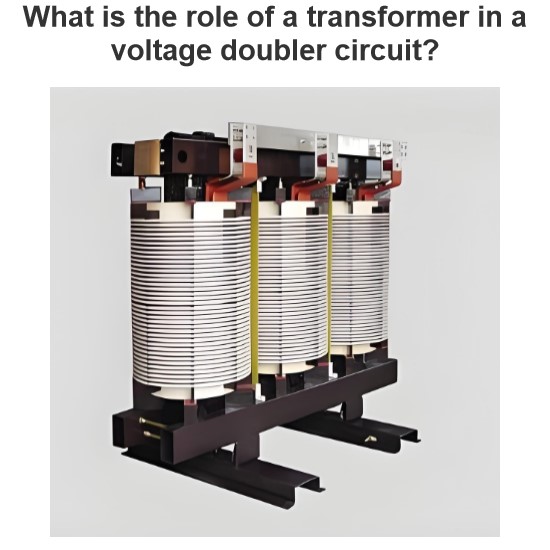
What is the role of a transformer in a voltage doubler circuit?
Role of Transformers in Voltage Multiplier CircuitsTransformers play a crucial role in voltage multiplier circuits, but they alone cannot achieve voltage multiplication. Voltage multiplier circuits typically combine transformers with rectifying elements (such as diodes and capacitors) to achieve voltage doubling or tripling. Here is an explanation of the role of transformers in voltage multiplier circuits and how using two transformers can increase the output voltage.1. Basic Role of Transformer
11/14/2024
Consult
Tip
Consult
Tip
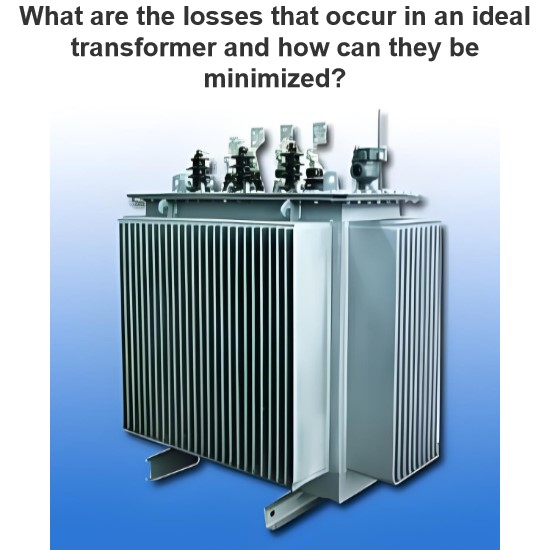
What are the losses that occur in an ideal transformer and how can they be minimized?
An ideal transformer is a theoretical model that assumes no losses. However, in practical applications, transformers always experience some losses. These losses can be primarily categorized into two types: copper losses (resistance losses) and iron losses (core losses). Below is a detailed explanation of these losses and how to minimize them:1. Copper LossesDefinitionCopper losses are the energy losses due to the resistance of the transformer windings. When current flows through the windings, th
11/12/2024
Consult
Tip
Consult
Tip
Is there a relationship between the voltage of a transformer and the distance it travels?
Relationship Between Transformer Voltage and Transmission DistanceThere is indeed a relationship between the voltage of a transformer and the distance over which power is transmitted. This relationship primarily affects the efficiency, losses, and economic feasibility of power transmission. Here is a detailed explanation:1. Transmission LossesOhmic Losses: During power transmission, the resistance of the conductors causes ohmic losses (I²R losses). These losses are proportional to the square of
11/12/2024
Consult
Tip
Consult
Tip
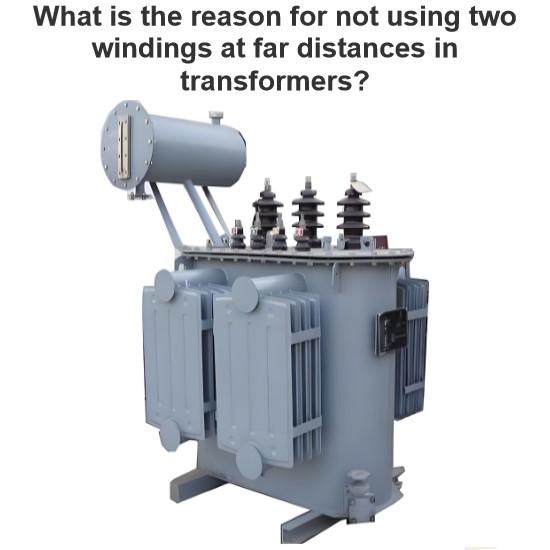
What is the reason for not using two windings at far distances in transformers?
In transformer design, it is typically not advisable to use widely separated windings (i.e., primary and secondary windings with a significant physical distance between them). Here are the main reasons for avoiding widely separated windings:1. Reduced Magnetic Coupling EfficiencyMagnetic Coupling: Transformers work on the principle of electromagnetic induction, where alternating current in the primary winding generates an alternating magnetic field, which induces a voltage in the secondary windi
11/09/2024
Consult
Tip
Consult
Tip
Why is it not possible to use only one winding as both the primary and secondary in a transformer?
The primary reason why a single winding cannot be used as both the primary and secondary of a transformer lies in the fundamental principles of transformer operation and the requirements of electromagnetic induction. Here is a detailed explanation:1. Electromagnetic Induction PrincipleTransformers work based on Faraday's law of electromagnetic induction, which states that a changing magnetic flux through a closed loop induces an electromotive force (EMF) in that loop. Transformers utilize this p
11/07/2024
Consult
Tip
Consult
Tip
What are the main causes for distribution transformer failure?
Main Causes of Distribution Transformer FailuresDistribution transformers are essential components in power systems, used to convert high-voltage electricity to low-voltage electricity for end-users. Transformer failures can be caused by various factors. The following are some common reasons for distribution transformer failures:1.Overloading Cause: Operating the transformer beyond its rated capacity for extended periods. Consequence: Excessive heat generation, leading to the degradation of insu
11/01/2024
Consult
Tip
Consult
Tip
What is a short circuit in a transformer?
A transformer short circuit occurs when a low-impedance path unexpectedly forms between two points of different potentials within or outside the transformer, leading to a sudden and significant increase in current. This situation can cause severe damage to the transformer and related equipment. The following provides a detailed explanation of transformer short circuits, including what happens during a short circuit and how to prevent or reduce the occurrence of short circuits.What is a Transform
10/31/2024
Consult
Tip
Consult
Tip
What are the consequences of connecting a higher output voltage than input in an isolation transformer?
Consequences of Connecting an Output Voltage Higher than the Input Voltage in an Isolation TransformerIn an isolation transformer, if the output voltage is set higher than the input voltage, it can lead to a series of serious consequences. The basic principle of an isolation transformer is to convert the input voltage to the desired output voltage through electromagnetic induction. The turns ratio of the transformer determines the relationship between the input and output voltages. If the output
10/29/2024
Consult
Tip
Consult
Tip
What are the practical uses of transformers in power electronics?
Transformers play a crucial role in power electronics, with their primary uses including the following aspects:Voltage transformationThe most fundamental function of a transformer is voltage transformation, which can adjust the voltage level at different stages of power generation, transmission, and distribution. Specifically, transformers can step up the electrical energy generated by power plants for long-distance transmission, reducing energy loss; at the end of transmission, transformers can
10/28/2024
Consult
Tip
Consult
Tip
What is everything you need to know about copper winding wire?
Basic Knowledge of Copper Winding WireCopper winding wire, also known as electromagnetic wire, is a type of insulated wire specifically designed for manufacturing coils or windings in electrical products. Its primary function is to generate a magnetic field through current flow or to produce current by cutting magnetic lines of force, thus enabling the mutual conversion between electric and magnetic energy. Here are some key points about copper winding wire:1. Definition and PurposeCopper windin
10/26/2024
Consult
Tip
Consult
Tip
Send inquiry
+86
Click to upload file
Download
Get the IEE Business Application
Use the IEE-Business app to find equipment, obtain solutions, connect with experts, and participate in industry collaboration anytime, anywhere—fully supporting the development of your power projects and business.