• Product
  • Suppliers
  • Manufacturers
  • Solutions
  • Free tools
  • Knowledges
  • Experts
  • Communities
Search


Free Expert Guides on Power Systems, Circuit Design & Electrical Troubleshooting

Access free engineering resources from IEE Business—covering power design, circuit layout, equipment selection, and troubleshooting. Expert-developed guides help engineers, procurement, and project teams make better decisions. Stay ahead on smart grids, renewables, efficiency, and AI tools. Improve reliability, reduce downtime, and enhance outcomes with real-world solutions. Explore our knowledge hub today.
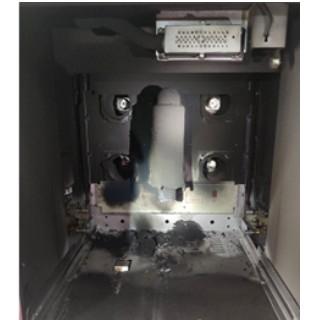
Low-Voltage Vacuum Breaker Coil Types & Failures
Trip and Close Coils in Low-Voltage Vacuum Circuit BreakersThe trip and close coils are the core components that control the switching state of low-voltage vacuum circuit breakers. When the coil is energized, it generates a magnetic force that drives a mechanical linkage to complete the opening or closing operation. Structurally, the coil is typically made by winding enameled wire on an insulating bobbin, with an outer protective layer, and the terminals are fixed to the housing. The coil operat
10/18/2025
Consult
Tip
Consult
Tip
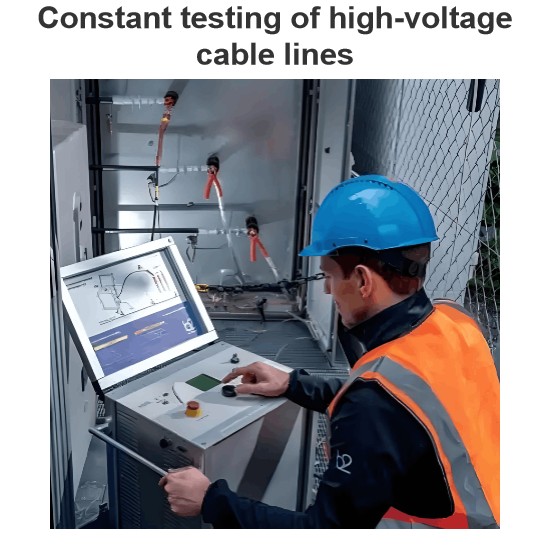
Constant testing of high-voltage cable lines
1. Definition of High-Voltage Cable Line Constant TestingHigh-voltage cable line constant testing refers to the systematic measurement, using specialized instruments, of electrical parameters such as resistance, inductance, capacitance, and conductance before a cable line is commissioned or after major maintenance. The aim is to obtain fundamental data characterizing the electromagnetic properties of the cable, serving as a critical testing phase that provides accurate parameter support for powe
09/03/2025
Consult
Tip
Consult
Tip
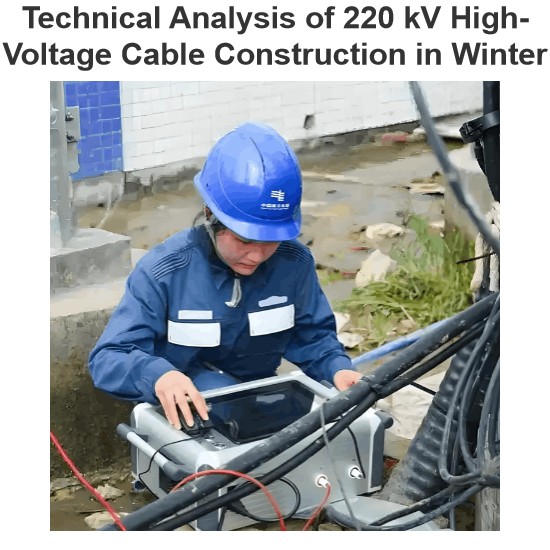
Technical Analysis of 220 kV High-Voltage Cable Construction in Winter
1.Work Environment Requirements and Safeguard MeasuresBased on technical requirements for cable equipment storage, laying, transportation, laying, transposition, testing, and cable terminations, the project owner and construction units have conducted extensive trials and implemented protective measures regarding ambient temperature, humidity, bending radius, traction control, and route optimization. These measures ensure high-voltage cable quality and on-site safety under harsh winter conditions
09/03/2025
Consult
Tip
Consult
Tip
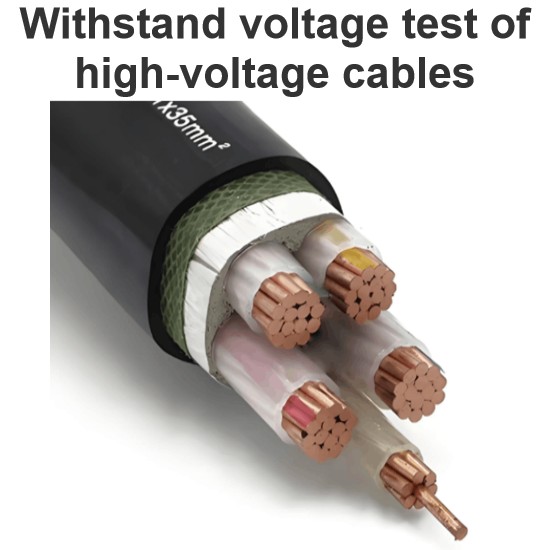
Withstand voltage test of high-voltage cables
Withstand voltage test is an insulation test, but it is a destructive test that can reveal insulation defects difficult to detect in non-destructive testing.The test cycle for high-voltage cables is three years, and it must be conducted after non-destructive tests. In other words, the withstand voltage test is performed only after all non-destructive tests have been passed.Most high-voltage cables used today are cross-linked polyethylene (XLPE) cables, which can have large cross-sections and cov
09/03/2025
Consult
Tip
Consult
Tip
Analysis of Abnormal Causes of High-Voltage Cable Grounding Circulation and Typical Cases
I. Introduction to Cable Grounding Loop CurrentCables rated 110 kV and above use a single-core structure. The alternating magnetic field generated by the operating current induces a voltage on the metallic sheath. If the sheath forms a closed circuit through the earth, a grounding loop current will flow on the metallic sheath. Excessive grounding loop current (loop current exceeding 50 A, more than 20% of the load current, or a ratio of maximum-to-minimum phase current greater than 3) not only a
09/03/2025
Consult
Tip
Consult
Tip
Considerations and Recommendations for Flame-Retardant Selection of High-Voltage Cables
1.Flame-Retardant Cable Classification StandardsThe flame-retardant standard system is divided into two main categories. The first category follows the "Classification of Burning Behavior for Electric and Optical Fiber Cables" GB 31247. Cables complying with this standard system are widely used in densely populated areas such as high-speed railways and subways. This standard imposes strict requirements on parameters such as smoke density, heat release, and total smoke production, and cables typi
09/03/2025
Consult
Tip
Consult
Tip
Repair of high-voltage cable metallic sheaths
I. Functions of Metallic Sheaths and Necessity of RepairThe metallic sheath of high-voltage cables is a metal shielding structure laid outside the insulation layer, including types such as lead sheaths, aluminum sheaths, and steel wire armor. Its core functions include mechanical protection (resisting external impact and compression), electrochemical corrosion protection (isolating moisture and soil pollutants), electromagnetic shielding (reducing electromagnetic interference to the environment)
09/03/2025
Consult
Tip
Consult
Tip
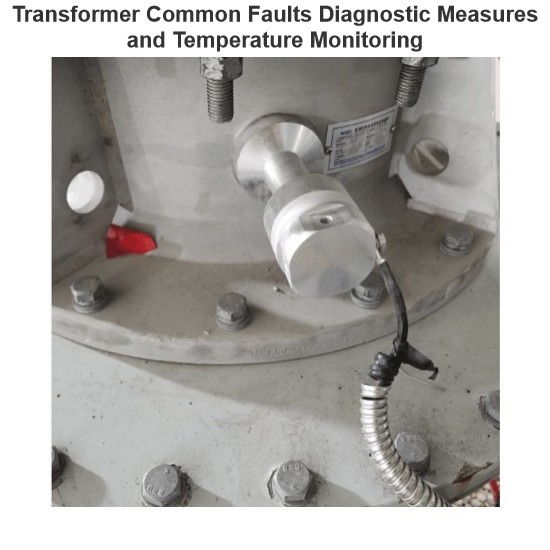
Transformer Common Faults Diagnostic Measures and Temperature Monitoring
1.Common Faults and Diagnostic Measures1.1 Transformer Oil Leakage1.1.1 Oil Leakage from Tank Weld SeamsFor oil leakage at flat joints, direct welding is applicable. For leakage at corners or joints reinforced with stiffeners, the exact leakage point is often difficult to locate, and re-leakage may occur after welding due to internal stress. For such cases, repair welding with an added iron plate is recommended: for two-surface joints, the iron plate can be cut into a spindle shape for welding;
08/07/2025
Consult
Tip
Consult
Tip
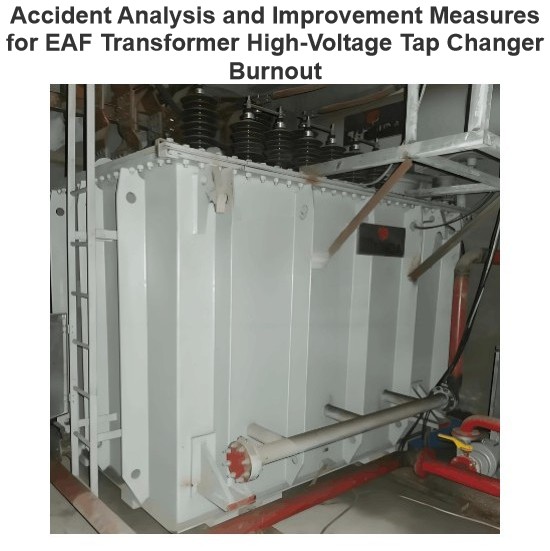
Accident Analysis and Improvement Measures for EAF Transformer High-Voltage Tap Changer Burnout
Currently, the company operates two electric arc furnace (EAF) transformers. The secondary voltage ranges from 121 V to 260 V, with a rated current of 504 A / 12,213 A. The high-voltage side has a total of eight tap positions, utilizing motor-driven off-circuit voltage regulation. The equipment is equipped with a reactor of corresponding capacity, connected in series to designated taps on the high-voltage side. These transformers have been in operation for over 20 years. Throughout this period,
08/07/2025
Consult
Tip
Consult
Tip
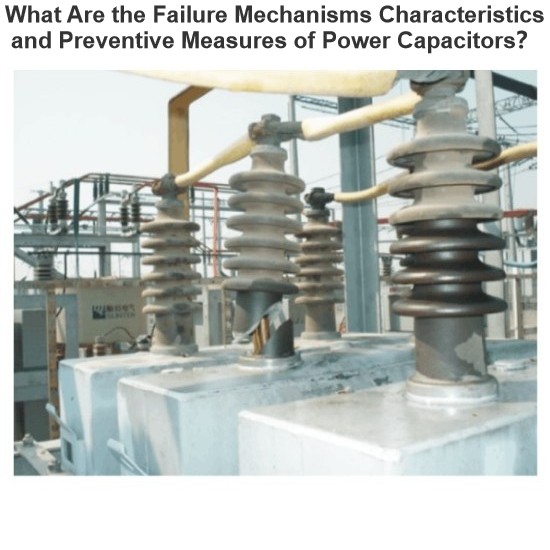
What Are the Failure Mechanisms Characteristics and Preventive Measures of Power Capacitors?
1 Failure Mechanisms of Power CapacitorsA power capacitor primarily consists of a housing, capacitor core, insulating medium, and terminal structure. The housing is typically made of thin steel or stainless steel, with bushings welded to the cover. The capacitor core is wound from polypropylene film and aluminum foil (electrodes), and the interior of the housing is filled with liquid dielectric for insulation and heat dissipation.As a fully sealed device, common failure types of power capacitors
08/05/2025
Consult
Tip
Consult
Tip
Send inquiry
+86
Click to upload file
Download
Get the IEE Business Application
Use the IEE-Business app to find equipment, obtain solutions, connect with experts, and participate in industry collaboration anytime, anywhere—fully supporting the development of your power projects and business.